2026 Top Trends in Cast Metal Parts Industry for Manufacturing Innovators?
The cast metal parts industry is experiencing rapid transformation as we move towards 2026. Manufacturers are challenged to keep pace with technological advancements and changing market demands. Innovations in materials and processes are shaping the future of this sector.
Moreover, the emphasis on sustainability is redefining how cast metal parts are produced. Companies are exploring eco-friendly practices. As they adopt new techniques, the need for skilled workers also rises. This industry is not just about metal; it’s about people, skills, and innovation.
However, challenges persist. Market fluctuations and supply chain issues can disrupt progress. Navigating these hurdles requires resilience and adaptability. In this dynamic environment, manufacturers must continuously reflect and evaluate their strategies. Embracing the future of cast metal parts involves both risk and opportunity.
2026 Forecast: Growth Projections for the Cast Metal Parts Industry
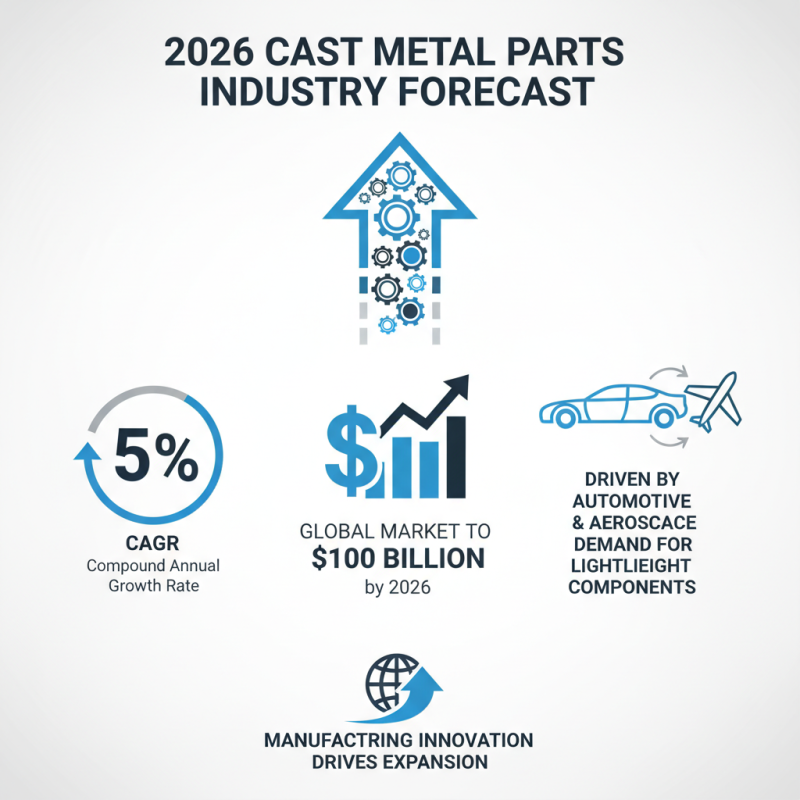
The cast metal parts industry is poised for significant growth in 2026, with projections indicating a compound annual growth rate (CAGR) of around 5%. This growth is fueled by the rising demand for lightweight components in the automotive and aerospace sectors. According to a recent market analysis report, the global market size for cast metal parts is expected to exceed $100 billion by 2026. As manufacturing innovators navigate through this expansion, understanding these trends will be crucial.
Investing in advanced casting technologies can enhance production efficiency. Techniques like additive manufacturing are gaining traction. They allow for intricate designs that conventional methods cannot achieve. However, the industry faces challenges, such as sustainability. Manufacturers must balance production demands with environmental responsibilities.
Tip: Stay updated on material innovations. Using alternative materials can reduce costs significantly. Explore opportunities in recycled metals to stay competitive.
The economic landscape is shifting. Companies must be agile in adapting to new market needs. Emerging economies present both risks and opportunities. Verifying supplier credibility is critical. Quality assurance processes should be revisited and bolstered to maintain standards.
Impact of Advanced Manufacturing Technologies on Cast Metal Production
The cast metal parts industry is witnessing a transformation driven by advanced manufacturing technologies. Innovations such as 3D printing, automation, and artificial intelligence are redefining production processes. A recent report indicates that companies utilizing these technologies can reduce production costs by up to 30%. This paradigm shift increases efficiency, but it also demands a skilled workforce capable of leveraging new tools.
On the production floor, smart automation systems are enhancing precision. Technologies such as IoT and machine learning are enabling predictive maintenance, resulting in a significant drop in unexpected downtimes. This transition is not without challenges, though. Many manufacturers struggle with integrating these technologies into existing processes. Moreover, the skill gap in the workforce poses a risk to fully harnessing these advancements.
Despite these hurdles, the long-term benefits are compelling. Advanced manufacturing approaches not only streamline operations but also improve product quality. A survey found that 75% of industry leaders believe these innovations will create higher quality cast metal parts. Navigating this landscape requires both investment and a commitment to continuous learning, as success will depend on adaptability in a rapidly evolving market.
2026 Top Trends in Cast Metal Parts Industry
Sustainability Trends Driving Change in Metal Casting Processes
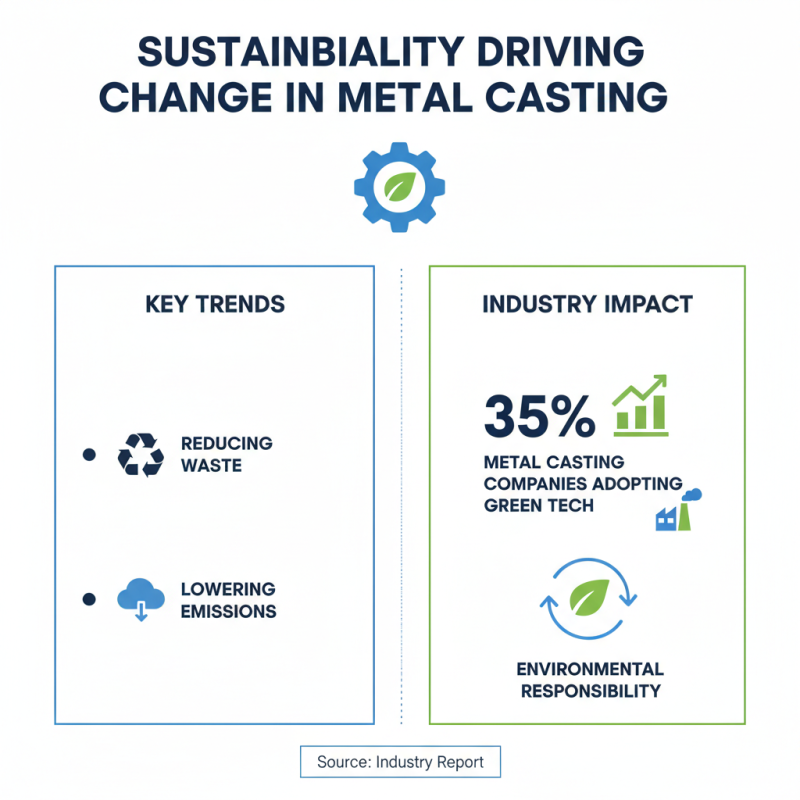
Sustainability is reshaping the metal casting industry. Manufacturers are focusing on reducing waste and emissions. According to a recent industry report, up to 35% of metal casting companies are adopting green technologies. This shift is not just a trend; it reflects a broader commitment to environmental responsibility.
Water recycling systems are becoming standard in casting facilities. These systems can save up to 90% of water compared to traditional methods. Moreover, energy-efficient furnaces are being designed to cut energy use by 25%. Still, challenges remain. The initial costs of implementing sustainable technologies can be high. Many plants hesitate, fearing that the upfront investment may not yield immediate returns.
Recycling of scrap metal is also on the rise. Studies show that over 70% of metal castings now contain recycled materials. This process not only conserves resources but also reduces the carbon footprint. Yet, some manufacturers struggle with quality control when using recycled materials. Ensuring consistent quality while going green poses a significant hurdle. Addressing these challenges is essential for truly sustainable growth in the sector.
Role of Automation in Enhancing Efficiency of Cast Metal Manufacturing
Automation is reshaping the cast metal parts industry. It significantly enhances manufacturing efficiency. Robots can handle repetitive tasks with precision, reducing human error. Automated systems streamline workflows, leading to faster production cycles. This increase in speed contributes to meeting market demands promptly.
Despite these advancements, there are challenges. Implementing automated systems requires investment and training. Not all facilities are equipped for such changes. Some workers may feel threatened by automation, leading to resistance. A smooth transition is crucial to maintain morale and productivity. Regular feedback from employees can help identify areas for improvement.
Monitoring automation performance remains essential. Data analytics can uncover inefficiencies in automated processes. Continuous adjustments based on real-time data improve overall effectiveness. Striking a balance between automation and human insight is vital for long-term success. The future of cast metal manufacturing relies on this partnership.
Emerging Materials and Alloys Transforming the Cast Metal Parts Market
The cast metal parts industry is undergoing a transformation. Emerging materials and alloys are pushing the boundaries of what’s possible in manufacturing. New lightweight alloys, for example, offer enhanced strength and durability. They are designed to withstand higher temperatures while maintaining performance. This is critical for industries like automotive and aerospace, where precision is vital.
Tips: Experiment with different alloys. Understand how they behave under stress. This can lead to better product performance. Also, consider the recyclability of materials. Sustainable practices are gaining traction.
As innovations roll out, the need for skilled workforce increases. Engineers must stay updated on material science advancements. This knowledge is essential in leveraging new materials effectively. However, not all new alloys have been tested in action. There’s a risk in relying on unproven options. Balancing innovation with reliability is key. Investing in research and development can pave the way for safe adoption of these materials.
2026 Top Trends in Cast Metal Parts Industry for Manufacturing Innovators
| Trend |
Description |
Impact on Industry |
Emerging Materials/Alloys |
| Sustainable Manufacturing |
Focus on eco-friendly processes and materials to reduce carbon footprint. |
Encourages innovation and attracts environmentally conscious customers. |
Recycled aluminum alloys |
| Advanced Simulation Techniques |
Utilizing software to simulate casting processes for better outcomes. |
Reduces waste and improves efficiency in production. |
High-strength steel alloys |
| 3D Printing Technologies |
Integration of additive manufacturing for mold and part production. |
Allows for complex designs and rapid prototyping. |
Titanium alloys |
| Smart Manufacturing |
Incorporating IoT and AI to optimize manufacturing processes. |
Enhances monitoring and predictive maintenance. |
Copper-based alloys |
| High-Performance Alloys |
Development of alloys designed for extreme environments. |
Increases durability and extends product lifespan. |
Nickel superalloys |


 0086-15925850312

 CONTACT NUMBER