Why Choose Die Casting Aluminum Parts for Your Manufacturing Needs?
Die casting aluminum parts have become a cornerstone in modern manufacturing. According to a recent report by MarketsandMarkets, the global die casting market is projected to reach USD 85.7 billion by 2025, with aluminum parts leading the way. This growth is due to the unique properties of aluminum. It offers excellent strength-to-weight ratios and corrosion resistance, making it ideal for various industries.
Using die casting for aluminum parts ensures precision and efficiency. The process allows for complex shapes, reducing the need for secondary operations. Notably, the automotive sector utilizes these parts for engine components and structural applications. The ability to produce lightweight yet durable components is critical for meeting stringent fuel efficiency regulations. However, it is essential to consider the initial tooling costs, which may pose challenges for smaller manufacturers.
Investing in die casting aluminum parts can yield long-term benefits. These parts often require minimal finishing and can be recycled, contributing to sustainability efforts. As manufacturers push for innovation, optimizing production methods becomes crucial. Companies must evaluate their specific needs, balancing costs with the advantages of integrating die casting aluminum parts into their production lines.
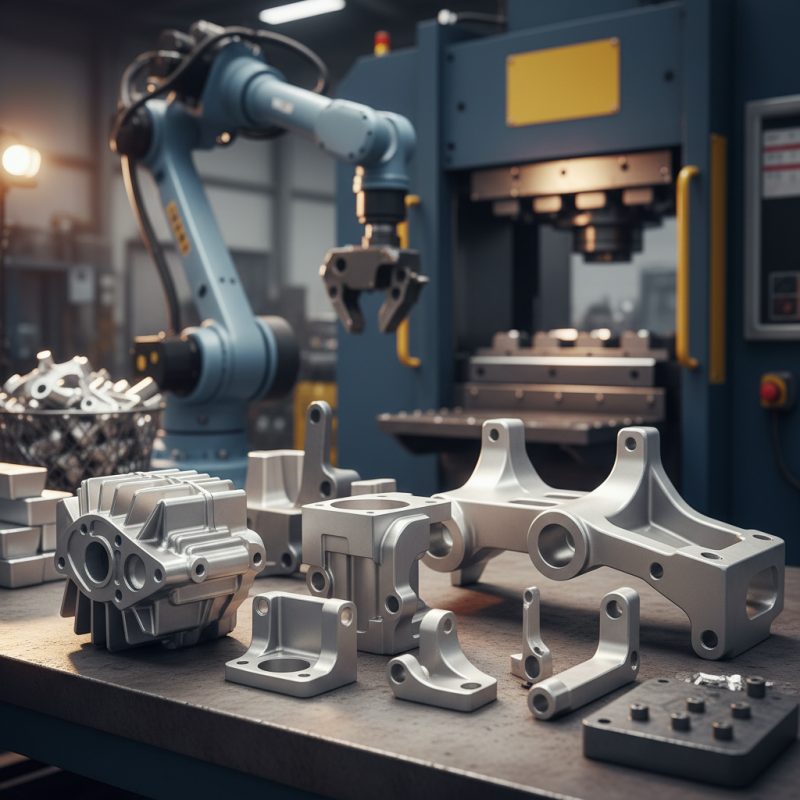
Benefits of Die Casting Aluminum in Manufacturing Processes
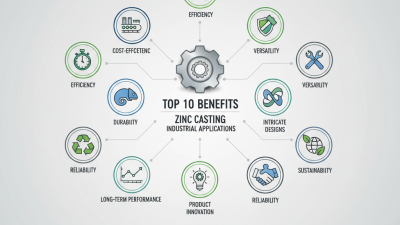
Die casting aluminum is increasingly popular in manufacturing. This method provides a high level of precision. The process allows for complex shapes and detailed designs. Aluminum die casting offers durability alongside lightweight properties. Parts made this way resist corrosion and are reliable in demanding environments.
When considering die casting aluminum, it is essential to understand the production speed. This method produces large quantities quickly. However, initial setup can be time-consuming. The trade-off may lead to higher costs upfront, but long-term savings emerge.
Another crucial aspect is the sustainability of aluminum. Die-cast aluminum is recyclable, making it an eco-friendly choice. However, not all processes optimize energy efficiency. Manufacturers should focus on improving practices.
Balancing efficiency and quality can be challenging. Continued investment in technology and training is vital for maximizing the benefits of aluminum die casting.
Comparison of Aluminum Die Casting vs. Other Metal Casting Methods
When comparing aluminum die casting to other metal casting methods, several key factors stand out.
Aluminum die casting is known for its excellent dimensional accuracy.
This precision makes it ideal for intricate designs. The process allows for complex shapes that often require less machining.
Other methods, like sand casting, may not achieve the same level of detail.
This can lead to higher production costs due to extra work needed.
Another important aspect is the material properties.
Aluminum die casting produces lightweight yet durable parts.
This is crucial for industries requiring high strength-to-weight ratios, such as automotive or aerospace.
In contrast, processes like investment casting might offer better surface finish but typically at a higher price.
While aluminum die casting is efficient, it may not be suitable for all applications.
Some thicker parts or specific alloys may pose challenges.
This reflects the need for careful material selection based on project requirements.
Lastly, while aluminum die casting offers rapid production cycles,
it does require significant initial setup. This can be a barrier for small volume production.
Evaluating the long-term benefits versus initial costs is essential.
In some cases, other casting methods may provide better solutions.
Overall, each casting method has its pros and cons.
Understanding these differences can lead to more informed manufacturing decisions.
Applications of Die Cast Aluminum Parts Across Various Industries
Die cast aluminum parts are vital in various industries. Their lightweight yet sturdy nature makes them ideal for applications in automotive, aerospace, and consumer electronics. In automotive manufacturing, these parts reduce vehicle weight. This enhances fuel efficiency and overall performance. Components like engine blocks and transmission housings often use die cast aluminum. These elements must withstand high stress, making aluminum's strength crucial.
In the aerospace sector, die cast aluminum parts play a significant role. They are used in structural components and brackets. The high strength-to-weight ratio ensures structural integrity while maintaining lightness. This is vital for safety and efficiency in flight. Additionally, consumer electronics benefit from die cast aluminum. Products like smartphones and laptops often feature aluminum casings. These casings provide durability and aesthetic appeal.
Yet, not every application shines. The initial setup costs for die casting can be high. Also, the process may not suit low-volume production runs. Companies must evaluate their needs carefully. They should consider both the advantages and potential obstacles. A balance between performance and cost is essential for successful manufacturing. Understanding these dynamics is key to leveraging die cast aluminum effectively.
Why Choose Die Casting Aluminum Parts for Your Manufacturing Needs? - Applications of Die Cast Aluminum Parts Across Various Industries
| Industry |
Application |
Benefits |
| Automotive |
Engine components, transmission cases |
Lightweight, strength, and thermal efficiency |
| Aerospace |
Aircraft frames, landing gear |
High strength-to-weight ratio, durability |
| Electronics |
Enclosures, heat sinks |
Thermal management, precise dimensions |
| Consumer Goods |
Household appliances, tools |
Cost-effective, versatile design |
| Construction |
Building hardware, fittings |
Corrosion resistance, structural reliability |
| Medical Devices |
Surgical instruments, housings |
Precision, safety, and hygiene |
Key Factors Influencing Die Casting Aluminum Part Quality
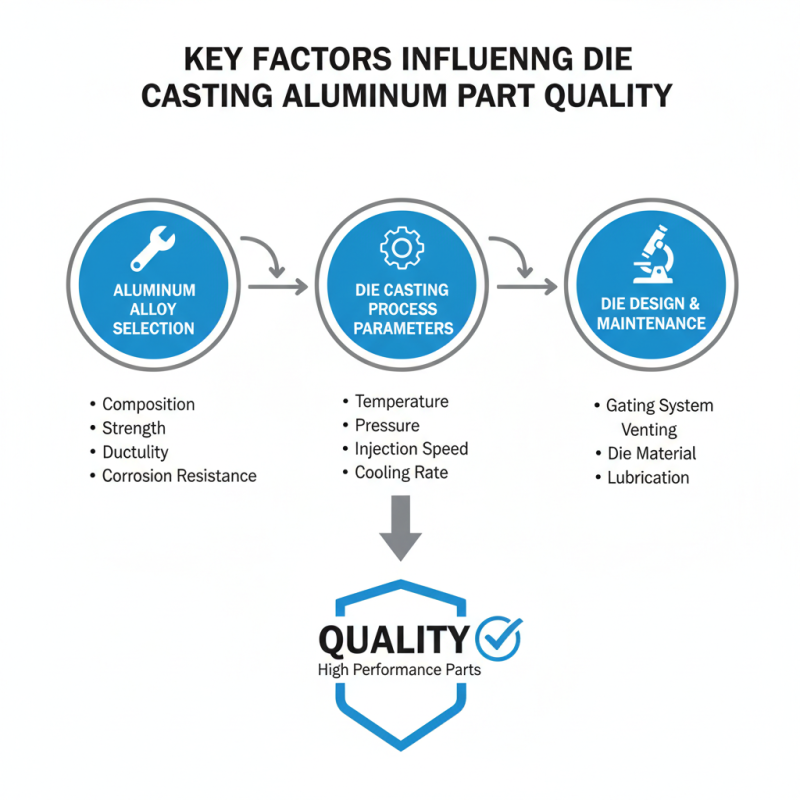
When it comes to die casting aluminum parts, quality is paramount. Key factors play a critical role in this process. The choice of aluminum alloy significantly affects the final product. Different alloys have varying properties, impacting strength, ductility, and corrosion resistance. Selecting the right alloy ensures the parts meet design specifications effectively.
Another crucial aspect is the casting process itself. Temperature control during the melting and pouring stages is essential. If the aluminum is not maintained at the optimal temperature, defects like porosity can arise. High pressure is also vital in filling the mold efficiently. However, achieving the right balance can be challenging. Too little pressure may lead to incomplete casts, while too much can cause deformation.
Additionally, mold quality can influence the final outcome. High-quality molds reduce surface imperfections and provide better dimensional accuracy. However, investing in advanced molds may seem daunting. It's a balance between cost and quality assurance. Therefore, manufacturers must regularly assess their processes and materials. Continuous improvement is critical to producing reliable and durable aluminum parts.
Cost Efficiency and Sustainability of Aluminum Die Casting Techniques
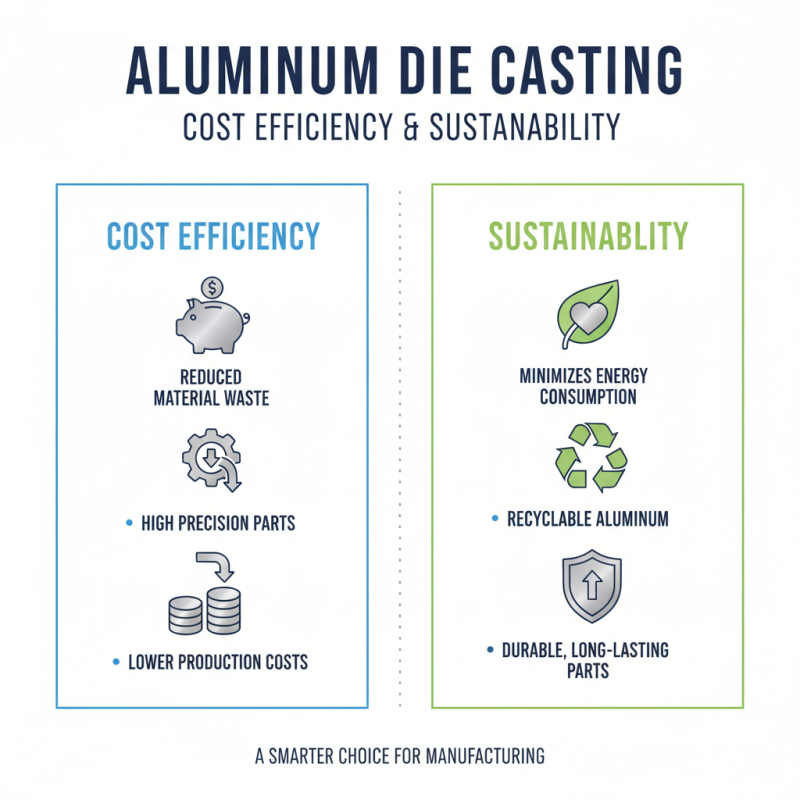
Aluminum die casting has become a popular choice for manufacturers looking for cost efficiency and sustainability. The process involves pouring molten aluminum into a mold, creating highly precise parts. This method not only reduces waste but also minimizes energy consumption, making it an environmentally friendly option. The durability of aluminum ensures that parts maintain their integrity longer, contributing to overall sustainability.
When considering aluminum die casting, remember to evaluate the initial setup costs. While these may be higher than other methods, the long-term savings in material costs and labor can be substantial. Look for local suppliers who understand the nuances of local markets, as this can lead to better pricing and quicker turnarounds.
It's crucial to assess the design of your parts. Intricate designs might lead to increased costs due to complex molds. Reflect on whether your designs can be simplified without sacrificing quality. Always communicate clearly with your manufacturing team about the projections and any adjustments that may be needed along the process. This transparency can prevent costly errors and delays, ultimately enhancing your project's success.


 0086-15925850312

 CONTACT NUMBER