Top 10 Cast Aluminum Parts Manufacturers in China You Should Know?
When it comes to manufacturing, cast aluminum parts play a crucial role across various industries. They provide strength, lightness, and corrosion resistance. As demand rises, understanding the landscape of manufacturers is essential.
China stands out in this field. It excels in producing high-quality cast aluminum parts at competitive prices. However, not all manufacturers meet the same standards. Some lack quality control or professional experience. Choosing the right supplier can be challenging.
By exploring the top 10 manufacturers in China, businesses can make informed decisions. Each company has unique strengths and challenges. Evaluating them through a lens of expertise and reliability is vital for securing quality cast aluminum parts. This insight is not just useful; it's necessary for long-term success.
Top Trends in the Cast Aluminum Parts Manufacturing Industry in China
The cast aluminum parts manufacturing industry in China is evolving rapidly. As technology improves, manufacturers are adopting innovative techniques. They focus on automation and advanced materials to enhance efficiency. This trend is crucial for meeting global demand.
Sustainability is also becoming a priority. Many manufacturers are exploring eco-friendly practices. They aim to reduce waste and improve energy efficiency. However, implementing these changes can be challenging. Not all companies are equipped to transition smoothly.
Quality control remains a significant concern. Some manufacturers struggle with consistency. Rigorous testing and inspection protocols are essential, but not universally applied. Ensuring reliability in cast aluminum parts is vital for various applications. The industry needs to address these gaps for long-term growth.
Key Factors Driving the Growth of Cast Aluminum Parts Manufacturers
The growth of cast aluminum parts manufacturers in China is influenced by several key factors. One important driver is the increasing demand for lightweight materials across industries. According to industry reports, the global cast aluminum market is expected to grow at a CAGR of 6.5% from 2021 to 2026. This rise is driven primarily by the automotive and aerospace sectors. Companies are increasingly opting for aluminum components due to their superior strength-to-weight ratio compared to other metals.
Additionally, technological advancements play a crucial role. Manufacturers are investing in advanced casting techniques and automated processes to enhance precision and efficiency. This shift is reflected in the 2022 report from a leading market analysis firm, which noted a 15% increase in production efficiency for manufacturers adopting new technologies. However, not all companies have kept pace, leading to production discrepancies that can impact quality.
Another factor is the growing focus on sustainability. Many manufacturers are now using recycled aluminum, aligning with global sustainability goals. In 2023, reports showed that around 30% of aluminum used in casting processes came from recycled sources. While this is a positive trend, it also presents challenges in terms of maintaining material quality and consistency. The quest for sustainability must be balanced with production expectations, making it a complex journey for manufacturers.
Analysis of Quality Standards Among Leading Chinese Cast Aluminum Producers
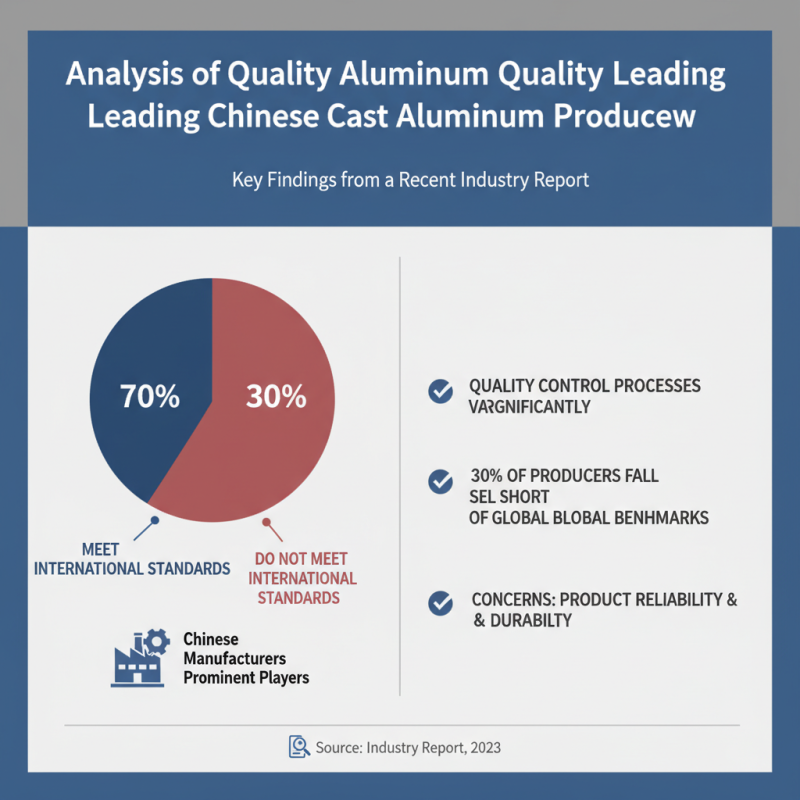
In the realm of cast aluminum production, quality standards play a crucial role. Chinese manufacturers are prominent players in this sector, yet their quality control processes vary significantly. According to a recent industry report, about 30% of Chinese cast aluminum producers do not meet international quality benchmarks. This discrepancy raises concerns regarding product reliability and durability.
Leading companies often adhere to standards like ISO 9001 and ASTM B26. However, it is essential to note that some smaller manufacturers may lack certification or enforce weak quality checks. Studies indicate that 25% of products fail basic quality assessments. This situation emphasizes the need for thorough supplier evaluations and certifications when sourcing cast aluminum parts.
Innovation is pivotal. Advanced technologies like automated casting and real-time monitoring systems are becoming more common. These methods help enhance quality assurance. However, not all producers invest in such technologies, highlighting their potential drawbacks. The industry must adapt to remain competitive and prevent quality discrepancies in the future.
Market Share and Competitive Landscape of Top Chinese Manufacturers
China is a leading player in the cast aluminum parts manufacturing sector. Many companies are competing for market share, showcasing innovative processes and quality control. The competitive landscape is diverse, featuring numerous manufacturers who focus on different industry needs, from automotive to aerospace. However, not all companies deliver consistent quality, which can impact performance.
The market remains dynamic. A study shows that several manufacturers have gained significant traction in recent years. Their success often comes from implementing cutting-edge technology and investing in workforce training. When selecting a manufacturer, consider factors like production capacity, quality certifications, and supplier reliability.
Tip: Always check for customer testimonials. Direct feedback from clients can reveal a manufacturer's strength or weaknesses. This will help in making informed decisions.
Quality control is critical in cast aluminum production. However, some manufacturers still struggle with maintaining high standards across their operations. Investigate their quality assurance processes before partnering.
Tip: Conduct site visits if possible. Observing manufacturing processes firsthand can provide valuable insights into operational efficiency.
Top 10 Cast Aluminum Parts Manufacturers in China
| Rank |
Manufacturer Type |
Annual Revenue (Million USD) |
Market Share (%) |
Key Product Category |
| 1 |
Large Scale Manufacturer |
150 |
25 |
Automotive Parts |
| 2 |
Medium Scale Manufacturer |
120 |
20 |
Industrial Components |
| 3 |
Small Scale Manufacturer |
80 |
15 |
Consumer Goods |
| 4 |
Export-Oriented Manufacturer |
100 |
18 |
Aerospace Components |
| 5 |
OEM Manufacturer |
75 |
12 |
Electrical Components |
| 6 |
Custom Manufacturer |
60 |
10 |
Marine Parts |
| 7 |
Established Manufacturer |
55 |
9 |
Heavy Equipment |
| 8 |
Emerging Manufacturer |
50 |
8 |
Furniture Components |
| 9 |
Niche Manufacturer |
40 |
6 |
Specialty Parts |
| 10 |
Local Manufacturer |
30 |
5 |
Miscellaneous Parts |
Innovative Technologies Shaping the Future of Cast Aluminum Production in China
Innovative technologies are transforming cast aluminum production in China. The industry is embracing automation to enhance efficiency. Robotics play a crucial role in streamlining manufacturing processes. They minimize human error and improve product consistency.
Additive manufacturing, often known as 3D printing, is also gaining traction. This technology allows for rapid prototyping of complex designs. It reduces material waste, aligning with sustainability goals. However, the cost of machinery for 3D printing can be high, which may limit its accessibility.
Artificial intelligence is another driving force. AI systems can predict defects and optimize production schedules. Nonetheless, integrating AI requires significant investment and may involve a learning curve. Companies must ensure their workforce is prepared for these shifts. The pace of change is fast, demanding constant adaptation.


 0086-15925850312

 CONTACT NUMBER