0086-15925850312
Leave Your Message
-
CONTACT NUMBER
-

-
 CONTACT NUMBER
Choosing among China’s top Die Casting Components manufacturers requires more than comparing factory size or website rankings. A dependable supplier should show repeatable process control, trained engineers, verified material data, and measurable inspection results. Look for aluminum, zinc, or magnesium alloy experience that matches your application. Ask about tooling design, mold-flow analysis, vacuum assistance, trimming, machining, and surface finishing. These details often determine whether a component survives vibration, heat, and repeated assembly.
Professor Diran Apelian, a respected materials scientist and manufacturing expert, has said, “Manufacturing is not just making things; it is creating value.” This principle fits die casting closely. A low quotation may lose its appeal when porosity causes leaks, flash delays assembly, or unstable dimensions create expensive sorting work. A strong Chinese manufacturer should provide CMM reports, tensile or pressure testing when required, traceability records, and clear corrective-action procedures. Certifications can support credibility, but they do not replace process evidence. Ask for recent production examples, not only attractive samples.
The comparison is rarely perfect. Supplier rankings change. Public information can also be incomplete. Therefore, this guide evaluates manufacturers through practical evidence, including engineering communication, tooling capability, quality consistency, delivery performance, and after-sales support. The best choice may not be the largest factory. It may be the partner that detects a casting defect before shipment, explains its cause clearly, and improves the process without hiding inconvenient results. That is where experience becomes visible.
What Are Die Casting Components?
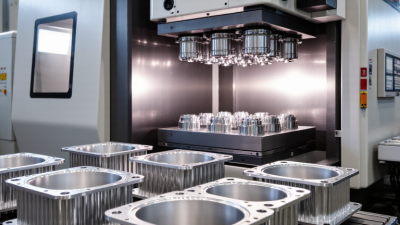
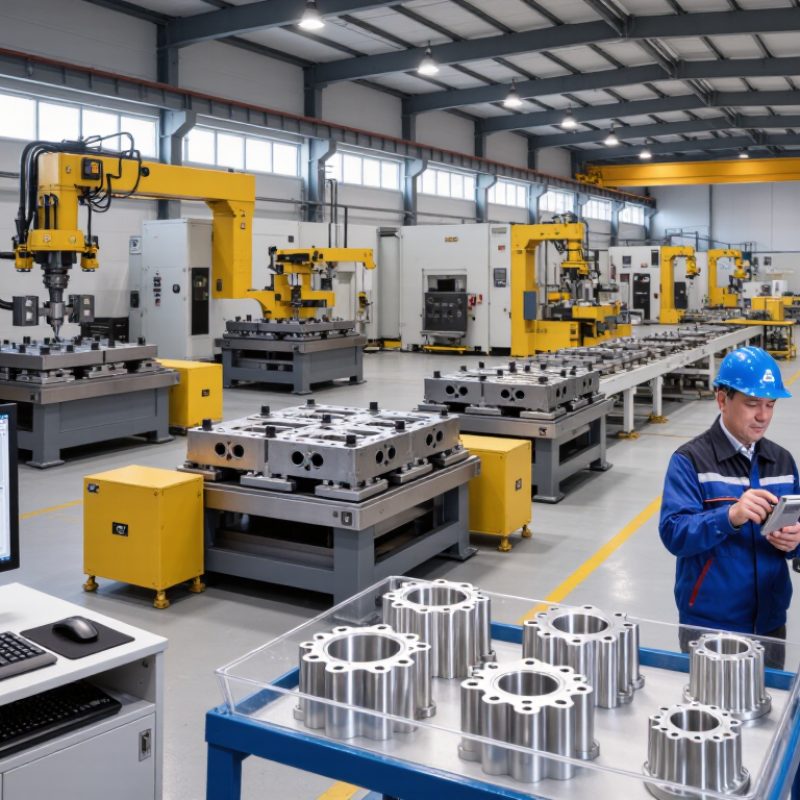
Die casting components are metal parts formed by forcing molten alloy into a reusable steel mold. The process uses high pressure, often between 10 and 175 MPa, to fill narrow cavities quickly. Components can include housings, brackets, heat sinks, covers, and structural connectors. Aluminum, zinc, and magnesium alloys are common choices because they combine low weight with useful strength and corrosion resistance.
Grand View Research estimated the global die casting market at about USD 87 billion in 2023. Its report also projects strong growth through 2030, driven by vehicle electrification, industrial equipment, and lightweight design. The International Aluminium Institute reported that global primary aluminum production exceeded 70 million tonnes in 2023. That supply supports wider use of aluminum die castings, although availability does not guarantee responsible sourcing.
A finished component needs more than a clean appearance. Engineers check porosity, flash, dimensional tolerance, surface finish, and fatigue performance. X-ray inspection can reveal internal voids that ordinary visual checks miss. In practical production, mold temperature and injection speed strongly affect results. Small changes matter.
Die casting is efficient, but not perfect. Thin walls may reduce weight, yet they can increase filling risks. I have seen specifications focus heavily on cost while giving too little attention to repair access. That is a mistake worth reconsidering. Reliable suppliers should provide material certificates, process records, and inspection evidence for each production batch.
| Category | Typical Information | Practical Manufacturing Relevance |
|---|---|---|
| Definition | Die casting components are metal parts formed by injecting molten or semi-molten non-ferrous alloy into a reusable steel die under pressure. | The process produces repeatable shapes with relatively high dimensional consistency and efficient cycle times. |
| Common Alloys | Aluminum, zinc, and magnesium are the most widely used die casting alloy families. | Aluminum offers low density and good corrosion resistance; zinc supports fine detail; magnesium provides very low weight. |
| High-Pressure Die Casting | Molten alloy is injected rapidly into the die at high pressure, commonly using cold-chamber or hot-chamber machines. | Suitable for medium- to high-volume production of thin-walled and detailed parts. |
| Gravity Die Casting | Metal fills the mold primarily through gravity rather than high injection pressure. | Often selected for thicker sections, lower production volumes, and applications requiring reusable metal molds. |
| Typical Part Thickness | High-pressure aluminum and zinc parts can commonly include wall sections around 1–3 mm, depending on geometry and alloy. | The final minimum wall depends on flow length, alloy fluidity, die design, cooling, and structural requirements. |
| Dimensional Capability | As-cast tolerances are commonly specified according to part size, geometry, alloy, and applicable casting standards; tighter features may require machining. | A qualified supplier should confirm tolerances from the engineering drawing instead of applying one general tolerance to every feature. |
| Surface Finish | Die-cast surfaces are generally smoother than sand-cast surfaces, but gates, parting lines, ejector marks, and porosity may remain. | Deburring, shot blasting, polishing, machining, painting, powder coating, anodizing, or plating may be specified. |
| Typical Components | Housings, covers, brackets, heat sinks, motor parts, valve bodies, handles, connector shells, and structural enclosures. | Complex shapes can often be consolidated into one casting, reducing the number of assembled pieces. |
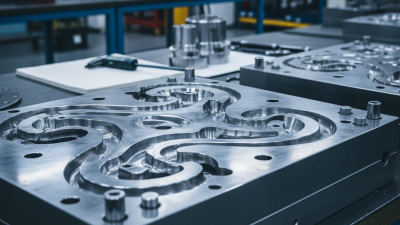
| Design Features | Draft angles, uniform wall thickness, radiused corners, ribs, bosses, overflow wells, and properly positioned gates and vents are important. | Design-for-manufacturing review can reduce porosity, distortion, die wear, machining allowance, and ejection problems. |
| Common Defects | Porosity, cold shuts, misruns, flash, soldering, hot tearing, sink marks, distortion, and dimensional variation. | Process control, die temperature management, venting, shot-profile adjustment, and inspection help prevent or identify defects. |
| Secondary Machining | CNC milling, turning, drilling, tapping, reaming, and thread forming may be used after casting. | Machining is normally reserved for critical datums, sealing faces, precision holes, and threaded features. |
| Quality Inspection | Dimensional inspection, visual inspection, alloy verification, leak testing, X-ray or computed tomography, hardness testing, and surface analysis may be used. | The inspection plan should match the part’s safety, pressure, sealing, structural, and appearance requirements. |
| Tooling Considerations | Die life depends on alloy, thermal cycling, lubrication, production volume, die steel, cooling design, and maintenance. | Tooling quotations should identify cavity count, expected life, spare inserts, maintenance scope, and ownership terms. |
| Supplier Evaluation | Review alloy capability, machine capacity, die design, simulation, machining, finishing, testing, traceability, and corrective-action systems. | A capable manufacturer should provide samples, process documentation, inspection records, and a clear production ramp-up plan. |
| Best-Fit Production Volume | Die casting generally becomes more cost-effective as production volume increases because tooling costs are distributed across more parts. | For prototypes or very small batches, CNC machining, additive manufacturing, or temporary tooling may be more economical. |
Note: Capability ranges are typical industry guidance. Final material grades, tolerances, inspection methods, and production quantities should be confirmed against the approved engineering drawing and applicable standards.