Leave Your Message

Top 10 CNC Machining Companies for Global Buyers

Choosing a reliable partner from the Top 10 CNC Machining Companies for Global Buyers requires more than comparing hourly rates. Cnc Machining quality depends on equipment, process control, material knowledge, and communication. A polished website is not proof of consistent production.

This guide examines manufacturers through practical buyer concerns. These include machining tolerances, inspection methods, surface finishing, production capacity, and international shipping experience. We also consider whether each company explains its certifications, engineering support, and quality records clearly. A capable supplier should discuss drawings, datums, thread standards, and material certificates without avoiding difficult questions.

Real projects reveal the difference. A prototype may require tight tolerances and quick design feedback. A production order may need stable batch accuracy, documented inspections, and repeatable packaging. Look for evidence such as coordinate measuring machine reports, sample parts, factory photographs, and transparent lead times. Ask how rejected parts are handled.

No ranking can predict every buyer’s result. Supplier performance may change with workload, personnel, or material availability. That matters.

The companies featured here represent useful options for different industries and order sizes. Some may excel at rapid prototypes, while others support larger production runs. Their suitability still depends on your drawings, destination, budget, and quality expectations. Independent verification remains wise before signing a contract. A small trial order can expose communication gaps early. Careful buyers should compare technical capability with service reliability, not marketing language alone.
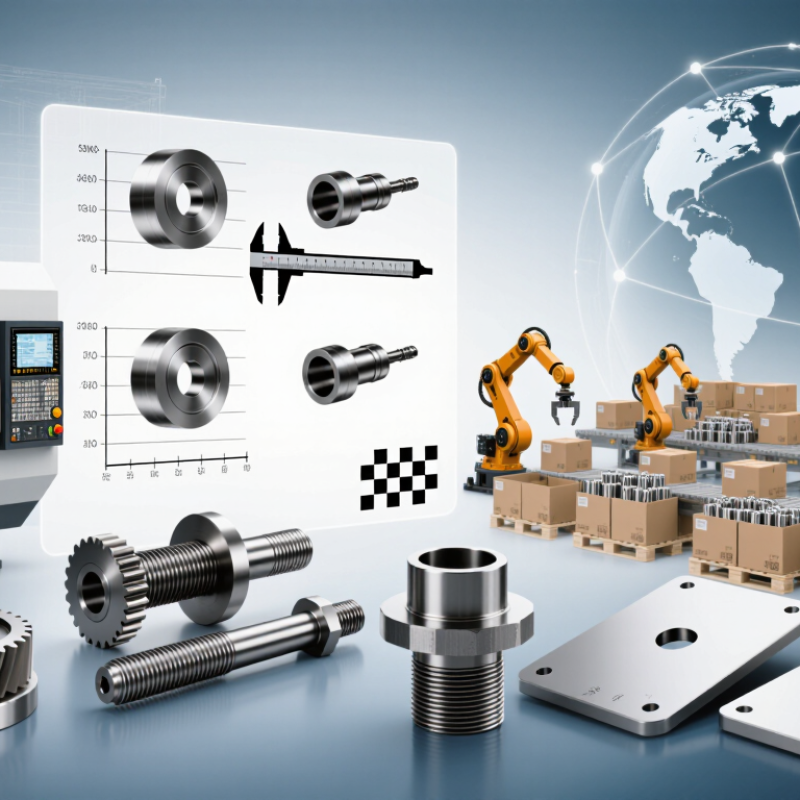
Top 10 CNC Machining Companies for Global Buyers

Scope and Criteria for Ranking the Top 10 CNC Machining Companies

This ranking evaluates CNC machining companies serving international buyers across prototypes, low-volume production, and repeat manufacturing. The scope includes three-axis, five-axis, turning, milling, and hybrid machining services. It also considers common materials, including aluminum, stainless steel, engineering plastics, and titanium.

The criteria focus on measurable evidence rather than polished websites. Technical capability receives strong weight, including achievable tolerances, surface finishes, machining size, and documented inspection methods. Quality systems matter too. Reviewers should examine calibration records, first-article reports, material certificates, and traceability procedures. Reliable suppliers explain how they control variation between batches.

Delivery performance and communication are equally practical. A capable company should provide clear quotations, realistic lead times, protected drawings, and responsive engineering feedback. Global buyers also need secure packaging, export documentation, and predictable shipping coordination. Customer experience can be assessed through verified project history, sample parts, and references where available.

No ranking is perfect. Public information may hide production bottlenecks or inconsistent subcontracting. A low quoted price can also conceal inspection gaps or expensive revisions. For this reason, the final ten should reflect combined evidence, not promotional claims. Independent audits and small trial orders can reveal details that online research misses. That limitation deserves attention.
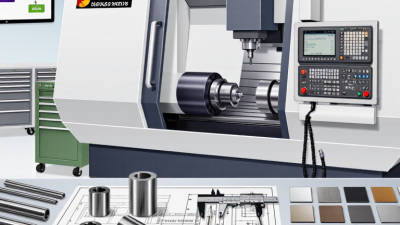
Core Capabilities and Services Offered by Each CNC Machining Company

Top 10 CNC Machining Companies for Global Buyers

The leading ten CNC machining companies differ mainly in process depth, inspection control, and delivery flexibility. Most support three-axis and five-axis milling, CNC turning, Swiss machining, and complex aluminum or steel parts. Several also offer EDM, laser cutting, surface finishing, heat treatment, and light assembly. These services matter when one supplier must manage a complete production route.

Grand View Research estimated the global CNC machine market at more than 80 billion dollars in 2023. Its forecast also indicates steady growth through 2030. This expansion reflects demand for tighter tolerances, shorter development cycles, and automated production. Strong suppliers therefore provide rapid prototyping, design-for-manufacturing reviews, and scalable batch production. They should also explain achievable tolerances, not simply promise “high precision.”

Quality evidence separates experienced providers from capable-looking workshops. Buyers should check ISO 9001 systems, material certificates, coordinate-measuring-machine reports, and first-article inspection records. The International Organization for Standardization reports that millions of organizations use ISO 9001 worldwide, but certification alone proves limited technical ability. Ask for sample inspection formats. Request clear process controls. A supplier may offer excellent milling yet struggle with thin walls, deep cavities, or cosmetic surfaces. That weakness deserves honest discussion. Shipment tracking, export documentation, secure data handling, and realistic lead-time planning complete the service picture. Fancy equipment helps, but disciplined communication often decides whether production succeeds.

Industry Expertise, Materials, and Manufacturing Standards

Top 10 CNC Machining Companies for Global Buyers

Industry Expertise, Materials, and Manufacturing Standards

Choosing among the top CNC machining companies requires more than comparing hourly rates. Experienced teams understand how aluminum, stainless steel, titanium, engineering plastics, and tool steel behave during cutting. They can recommend suitable tools, surface finishes, tolerances, and inspection methods for each part. Their expertise should match your industry, whether aerospace, medical equipment, robotics, automotive, or industrial automation.

Manufacturing standards reveal how consistently a supplier works. Look for documented quality procedures, calibrated measuring equipment, traceability, and clear inspection reports. Ask whether the company follows recognized quality systems and can provide material certificates. A capable supplier should explain how it manages first-article inspection, process control, and nonconforming parts. A polished website is not proof of reliable production. Real evidence matters more.

Tips: Request a sample inspection report before placing a large order. Confirm material grades, tolerance ranges, lead times, and packaging details in writing. Ask who reviews your drawings and how design questions are handled. Strong communication often prevents expensive rework. Still, no supplier is perfect. Even experienced machinists can miss an unclear note or overlook a difficult corner radius. I would therefore send a detailed drawing, model, and critical-feature list. Small misunderstandings become costly when production has already started.

Top 10 CNC Machining Companies for Global Buyers - Industry Expertise, Materials, and Manufacturing Standards

An anonymized comparison of representative CNC machining capability profiles for international sourcing and supplier evaluation.

Rank Supplier Profile Typical Global Coverage Core Manufacturing Expertise Commonly Supported Materials Typical Machining Capability Representative Work Envelope Relevant Standards Typical Prototype Lead Time
1 Profile 01
High-Precision Production
North America, Europe, Asia-Pacific Multi-axis milling, CNC turning, Swiss-type machining, precision inspection, repeat production Aluminum 6061-T6 and 7075-T6, stainless steel 304/316L, titanium Grade 5, brass, engineering plastics Typical CNC dimensional tolerance: ±0.025 mm; tighter tolerances subject to feature, material, and inspection method Small to medium components; approximately 600 × 500 × 500 mm milling envelope ASME Y14.5, ISO 2768, ISO 286, ISO 9001 quality framework 5–10 business days
2 Profile 02
Aerospace-Oriented Manufacturing
North America, Western Europe, Middle East 5-axis machining, thin-wall parts, complex contours, difficult-to-machine alloys, traceable inspection Aluminum alloys, titanium alloys, nickel-based alloys, stainless steel, high-performance polymers Typical capability: ±0.025–0.050 mm; GD&T applied according to drawing requirements Medium-sized structural and rotational parts; approximately 1,000 × 600 × 600 mm envelope ASME Y14.5, ISO 9001, material traceability, calibrated measurement procedures 7–15 business days
3 Profile 03
Rapid Prototyping and Low Volume
United States, Canada, Europe, East Asia Rapid CNC prototyping, design-for-manufacturing review, low-volume batches, surface finishing coordination Aluminum, mild steel, stainless steel, brass, copper, acetal, nylon, PEEK-type engineering polymers Typical capability: ±0.05 mm; standard general tolerances applied where drawings do not specify otherwise Small and medium prototypes; approximately 500 × 400 × 400 mm envelope ISO 2768, ASME Y14.5, first-article inspection practices 3–7 business days
4 Profile 04
Medical and Clean-Component Focus
North America, Europe, Singapore, Japan Fine milling, micro-machining, precision turning, burr control, controlled cleaning, documented inspection 316L stainless steel, titanium Grade 5, cobalt-chromium alloys, aluminum, PEEK, acetal Typical capability: ±0.025–0.050 mm; surface finish may reach approximately Ra 0.8 µm with suitable processing Small precision components; approximately 400 × 300 × 300 mm envelope ISO 9001, ISO 13485 environment where applicable, ASME Y14.5, ISO 286 7–14 business days
5 Profile 05
Large-Part CNC Manufacturing
North America, Europe, Australia, Southeast Asia Large-format 3-axis and 5-axis milling, heavy-duty turning, welded-to-machined assemblies, structural components Aluminum plate, carbon steel, stainless steel, alloy steel, cast iron, titanium where equipment permits Typical capability: ±0.05–0. dan mm depending on part size, thermal stability, and datum strategy Large components; milling envelopes can exceed 2,000 × 1,000 × 800 mm ASME Y14.5, ISO 2768, ISO 9001 quality systems, welding procedures where applicable 10–20 business days
6 Profile 06
Automotive and High-Volume Production
North America, Mexico, Europe, China, India High-repeatability CNC production, automated loading, turning centers, in-process gauging, batch traceability Aluminum alloys, carbon steel, stainless steel, brass, copper, engineering plastics Typical capability: ±0.025–0.050 mm for controlled production features Small to medium parts; approximately 800 × 500 × 500 mm milling envelope ISO 9001, IATF 16949 where applicable, ASME Y14.5, statistical process control 7–21 business days
7 Profile 07
Swiss-Type Small-Part Specialist
Europe, North America, Japan, South Korea Swiss turning, sliding-head machining, bar-fed production, small-diameter shafts, bushings, and connectors Stainless steel, titanium, brass, aluminum, nickel-based alloys, acetal, PEEK-type polymers Typical capability: ±0.01–0.025 mm on suitable small features; dependent on geometry and material Small turned parts; typical bar capacities approximately 3–32 mm ISO 286, ISO 2768, ASME Y14.5, ISO 9001 quality framework 5–12 business days
8 Profile 08
Complex 5-Axis Components
Germany, Italy, United Kingdom, United States, Taiwan Simultaneous 5-axis machining, impellers, housings, manifolds, sculpted surfaces, collision-controlled programming Aluminum, titanium, stainless steel, nickel-based alloys, tool steel, carbon-fiber-compatible tooling materials Typical capability: ±0.025–0.050 mm; surface-contour accuracy depends on toolpath and inspection strategy Medium-sized complex parts; approximately 800 × 700 × 600 mm envelope ASME Y14.5, ISO 2768, ISO 9001, CMM inspection procedures 10–20 business days
9 Profile 09
Industrial Equipment and Tooling
Europe, North America, India, Southeast Asia Fixtures, jigs, molds, machine components, repair parts, medium-volume production, heat-treatment coordination Tool steel, alloy steel, stainless steel, aluminum, brass, bronze, acetal, nylon Typical capability: ±0.05 mm; hardened or heat-treated components may require finish machining Medium to large parts; approximately 1,500 × 800 × 700 mm envelope ISO 2768, ASME Y14.5, ISO 9001, hardness and material certification practices 10–25 business days
10 Profile 10
Cost-Optimized Global Production
China, Vietnam, India, Eastern Europe, Mexico 3-axis and 4-axis milling, CNC turning, sheet-metal coordination, batch production, export packaging Aluminum, stainless steel, mild steel, brass, copper, zinc alloys, ABS, nylon, acetal Typical capability: ±0.05–0.10 mm for standard features; tighter requirements available after technical review Small to medium parts; approximately 700 × 500 × 500 mm envelope ISO 2768, ASME Y14.5, ISO 9001 quality practices, incoming material inspection 7–18 business days

Note: The tolerance, size, lead-time, and material ranges shown are industry-standard capability benchmarks rather than claims about any named company. Actual performance depends on machine condition, part geometry, material batch, drawing requirements, inspection equipment, surface treatment, and order volume.

Global Production Capacity, Quality Control, and Delivery Support

Top 10 CNC Machining Companies for Global Buyers

Global buyers should judge CNC suppliers by production capacity, quality control, and delivery support, not website appearance. A credible supplier shows machine types, working envelopes, available shifts, and real monthly output. Ask whether capacity is internal or subcontracted. That detail matters.

The 2023 Logistics Performance Index shows major differences in customs efficiency, infrastructure, and shipment reliability across markets. Therefore, delivery promises need clear assumptions, including material arrival, inspection time, and export clearance.

Quality systems provide stronger evidence than attractive samples. The International Organization for Standardization reported 1,265,216 ISO 9001 certificates across 189 countries and economies in its 2023 survey.

Certification helps, but it does not guarantee every batch is perfect. Buyers should request inspection plans, material certificates, calibration records, and dimensional reports.

Coordinate Measuring Machine results are especially useful for tight-tolerance parts. A supplier should also explain how it handles nonconforming components.

Silence here is a warning.

Delivery support should include milestone tracking, protective packaging, and documented shipping procedures. Confirm who manages customs paperwork and what happens after a missed milestone.

Some suppliers offer impressive lead times by ignoring production queues. That approach rarely survives a complex order.

A practical shortlist of ten companies should compare quoted lead time, on-time history, spare capacity, communication speed, and corrective-action records.

Small trial orders can reveal more than polished presentations.

Even experienced buyers sometimes overlook packaging damage, timezone delays, or unclear drawing revisions. Those failures deserve attention before scaling production.

How International Buyers Can Compare and Select a CNC Partner

Top 10 CNC Machining Companies for Global Buyers

International buyers should compare evidence, not polished websites. Build a shortlist around tolerance control, material range, machine capacity, inspection equipment, and export experience. Ask each supplier for a sample inspection report, material certificate, and a recent production photograph. A 2023 ISO Survey recorded 1,265,216 ISO 9001 certificates worldwide. Certification helps with screening. It does not prove stable machining quality.

Request a video audit of the quality area. Look for calibrated CMM equipment, labeled gauges, controlled storage, and clear nonconformance records. Review first-article procedures, surface-finish methods, and revision control. Suppliers should explain how they protect drawings and manage engineering changes. Confirm Incoterms, packaging standards, customs documents, and realistic lead times. The World Bank’s 2023 Logistics Performance Index shows major differences in customs and shipment reliability across countries. Location affects landed cost.

Use a weighted scorecard. Give quality and communication more weight than the lowest quotation. Test one small batch before signing a large contract. Measure actual dimensions after delivery, not only promised tolerances. Ask difficult questions. Weak answers are useful evidence. A perfect presentation can still hide weak process discipline. My scoring would also include response speed, because delays often appear before quality problems. No scorecard is perfect. Recheck it after the pilot order.