Leave Your Message

China Top 10 Sand Casting Mold Techniques You Should Know?

Sand casting mold techniques play a vital role in the manufacturing industry. They are essential for creating various metal parts efficiently. In China, these methods have evolved significantly, showcasing both tradition and advanced technology.

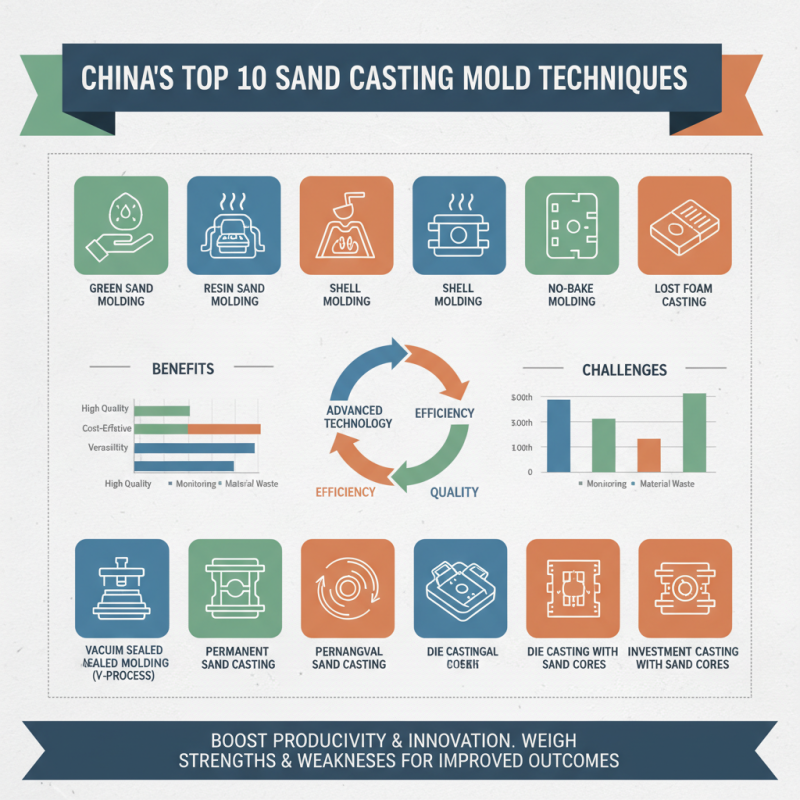
Understanding the top ten sand casting mold techniques can enhance production quality. Each technique offers unique benefits and challenges. Knowing this can help professionals make informed decisions. However, these methods are not without imperfections. Some techniques may yield inconsistent results and require careful monitoring.

Investing time in learning about sand casting mold techniques can boost productivity. This knowledge fosters innovative designs while maintaining cost-effectiveness. It is crucial to weigh both strengths and weaknesses. This balanced approach can lead to improved outcomes in metal casting projects.
China Top 10 Sand Casting Mold Techniques You Should Know?

Overview of Sand Casting and Its Importance in Manufacturing

China Top 10 Sand Casting Mold Techniques You Should Know?

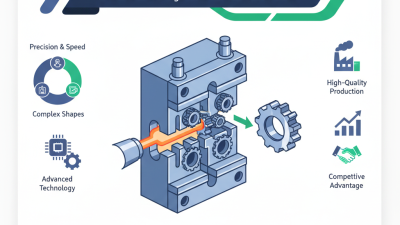
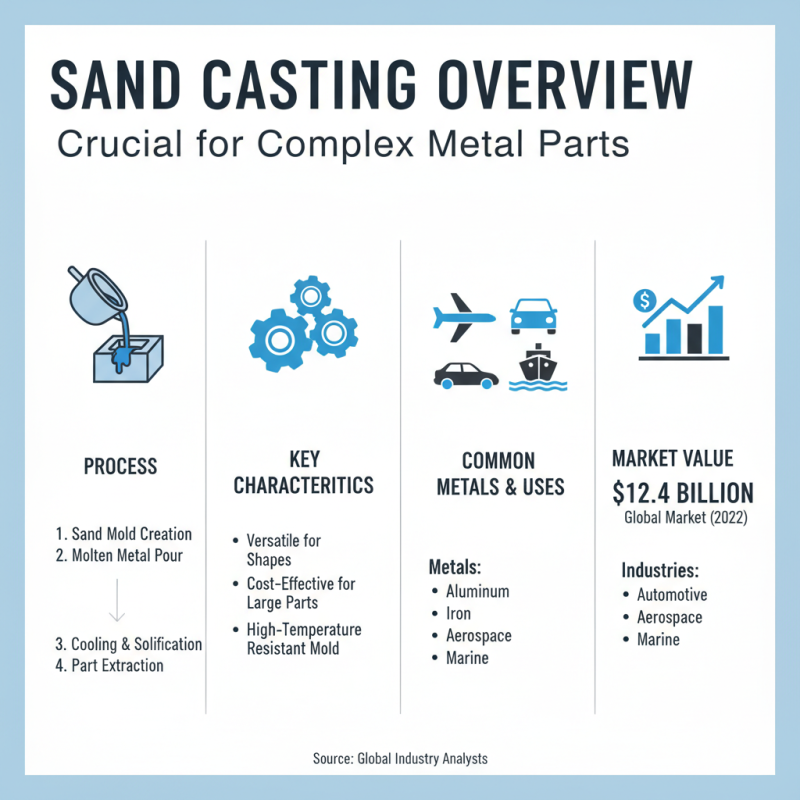
Sand casting is a crucial manufacturing process used across various industries. It allows for the production of complex shapes and large components with relative ease. In 2022, the sand casting market was valued at approximately $12.4 billion, according to a report from the Global Industry Analysts. The method utilizes a mold formed from sand, which can withstand high temperatures, making it ideal for metals like aluminum, iron, and bronze.

The flexibility of sand casting is one of its key advantages. It can accommodate large runs of parts or small orders, ensuring it remains a viable option for manufacturers. However, the process does present challenges. For instance, achieving the desired surface finish can be difficult. Rough surfaces may require additional machining, adding to costs. Additionally, the quality of the sand and the mold-making process significantly impact the final product's reliability. A study by the American Foundry Society indicated that nearly 30% of cast parts fail quality control checks, emphasizing the need for continuous improvement in techniques.

Despite its importance, some manufacturers struggle to fully leverage sand casting's benefits. A lack of skilled labor and outdated machinery can hinder production efficiency. Investing in modern technologies and training could improve outcomes. By addressing these issues, companies can enhance their sand casting processes and maintain competitiveness in the market.
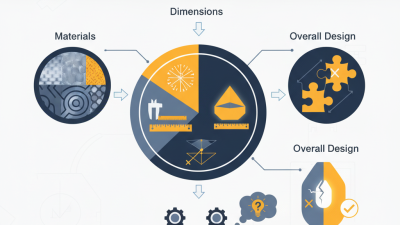
Key Characteristics of Effective Sand Casting Mold Techniques

China Top 10 Sand Casting Mold Techniques You Should Know?

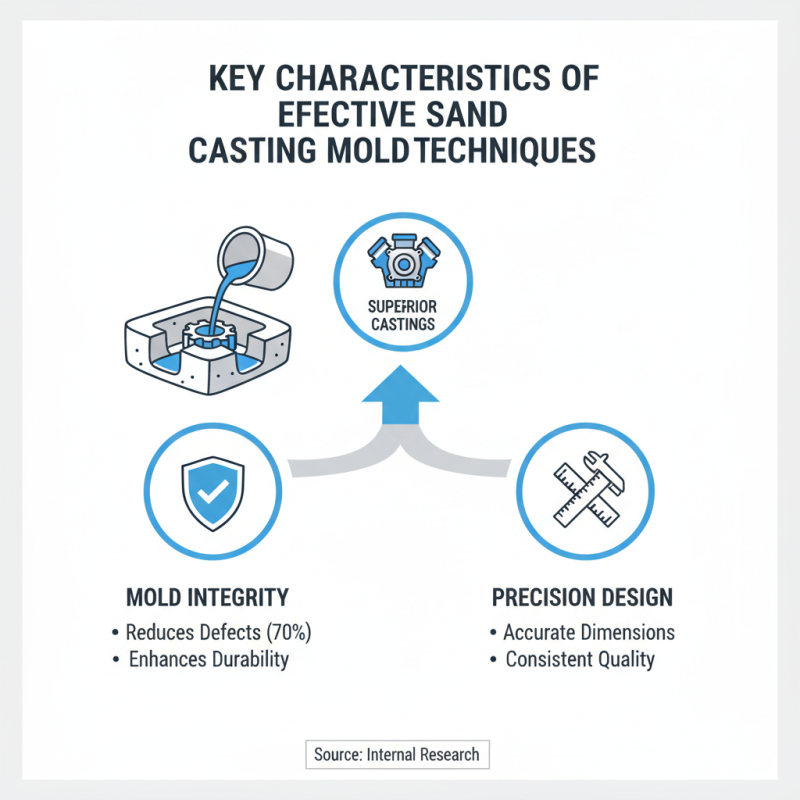
In the realm of sand casting, effective techniques are paramount. The quality of a sand casting mold can greatly influence the final product’s durability and precision. Research indicates that about 70% of casting defects stem from mold design issues. This statistic highlights the importance of mastering techniques that ensure mold integrity.

Key characteristics of successful sand casting mold techniques include proper sand mixture and effective compaction. A well-balanced sand-to-binder ratio is crucial. Industry studies suggest an optimal range of 4-6% binder with a silica sand composition. This mixture enhances mold strength and reduces gas porosity. Compaction methods significantly affect mold density. Using vibrating tables or rammers improves consistency.

Despite advancements, challenges persist. For instance, irregularities in sand grain size can compromise mold quality. Continuous quality control and process adaptations are essential in addressing these imperfections. Additionally, operator skill remains a variable factor. Human error can lead to inconsistent results, further emphasizing the need for ongoing training and refinement in molding practices.

Top 10 Sand Types Used in Chinese Sand Casting Processes

Sand casting is a vital manufacturing process in China, with specific sand types playing a crucial role in its success. The most common sands used include silica, zircon, and olivine sands. Silica sand is the backbone of sand casting due to its availability and thermal stability. Reportedly, over 70% of all foundries in China utilize silica sand. Its fine grains ensure excellent mold accuracy.

Zircon sand, known for its high melting point, is often used for casting steel and iron alloys. It provides a smooth surface finish and is resistant to thermal shock. In recent years, demand for zircon sand has increased by 15%, reflecting its importance in high-performance applications. Olivine sand, while less common, offers unique properties that enhance fluidity and reduce the likelihood of sand erosion during casting.

Despite advancements, challenges remain in sand casting processes. Contamination of sand can lead to defects, impacting casting quality. Research indicates that nearly 20% of defects in sand cast components can be traced back to poor sand quality. Monitoring and optimizing sand types is essential for improving reliability. The choice of sand type can significantly influence production efficiency and the final product's structural integrity.

Innovative Technologies Enhancing Sand Casting in China

In recent years, China has made significant advancements in sand casting technologies. One innovative approach is the use of 3D printing for mold creation. Traditional sand molds are often time-consuming and labor-intensive. By using 3D printing, manufacturers can quickly produce complex shapes with high precision. This technology reduces lead times and can enhance the overall casting quality.

Another notable technique is the integration of automation in the sand casting process. Robotics streamline operations, minimizing human error and improving safety. Smart machinery can monitor parameters in real time, adjusting workflow dynamically. This automation leads to a more efficient production line, although it requires skilled workers to oversee these systems.

While these advancements show promise, challenges remain. Not all foundries can afford these new technologies, limiting their widespread adoption. Additionally, transitioning from conventional methods requires training and adjustment for existing staff. The path to modernization is not without hurdles, but the potential benefits are substantial for those who adapt successfully.

Top 10 Sand Casting Mold Techniques in China

Comparison of Traditional vs. Modern Sand Casting Mold Techniques

The evolution of sand casting techniques showcases a marked contrast between traditional and modern methods. Traditional sand casting often relies on manual labor and simple technology. The process is slower and can introduce variability in quality. According to the American Foundry Society, around 60% of foundries still employ these traditional methods, which can lead to inconsistencies in casting.

In contrast, modern sand casting techniques integrate advanced technology, including computer-aided design (CAD) and automated machinery. These innovations enhance precision and consistency, reducing defects in produced molds. A recent report by Research and Markets suggests that adoption of modern techniques has led to a 20% reduction in production costs for some manufacturers. Automation improves efficiency but raises questions about workforce skills. There is a growing concern about the future of traditional skill sets amid increasing mechanization in the industry.

While modern techniques are more efficient, they require substantial investment. Transitioning can present challenges and uncertainties for smaller foundries. Quality control remains pivotal, as automation does not eliminate all defects. Even with advancements, the industry must constantly assess the balance between technology and craftsmanship.

China Top 10 Sand Casting Mold Techniques You Should Know

Technique Description Advantages Disadvantages Usage
Traditional Sand Casting Using sand molds to create parts with a relatively simple setup. Low cost, widely used. Lower precision, longer lead time. Basic parts, prototypes.
Precision Sand Casting Utilizes tighter tolerances for more precise parts. Higher accuracy, better surface finish. Higher costs, limited production volume. High-end applications, aerospace parts.
Green Sand Casting Mold made of sand mixed with clay and water. Environmentally friendly, good for large batches. Quality depends on the binder. High volume production.
Resin Sand Casting Uses a resin binder that hardens at room temperature. High strength, good dimensional accuracy. Higher material costs. Complex shapes, high precision parts.
Lost Foam Casting Uses foam patterns that evaporate during pouring. Excellent surface finish, no draft angles required. Requires special handling, higher operational costs. Intricate designs, automotive industry.
Lost Wax Casting Wax patterns that melt away to form the mold. High accuracy and detail. Labor-intensive, higher cost. Jewelry, intricate components.
Shell Casting A thin shell of sand and resin forms the mold. Good surface finish and dimensional accuracy. Limited by mold thickness. Automotive parts, light components.
Tilt-Pour Casting Mold is tilted to pour metal in a controlled manner. Reduces turbulence and enhances fill. More complex setup. Heavy machinery, large castings.
3D Printing Mold Casting Utilizes 3D printing to create the mold. Rapid prototyping, complex geometries. Material limitations, slower than traditional methods. Innovative designs, low-volume production.