


 0086-15925850312






Understanding Hydraulic Cylinders and Their Applications
2025-09-19
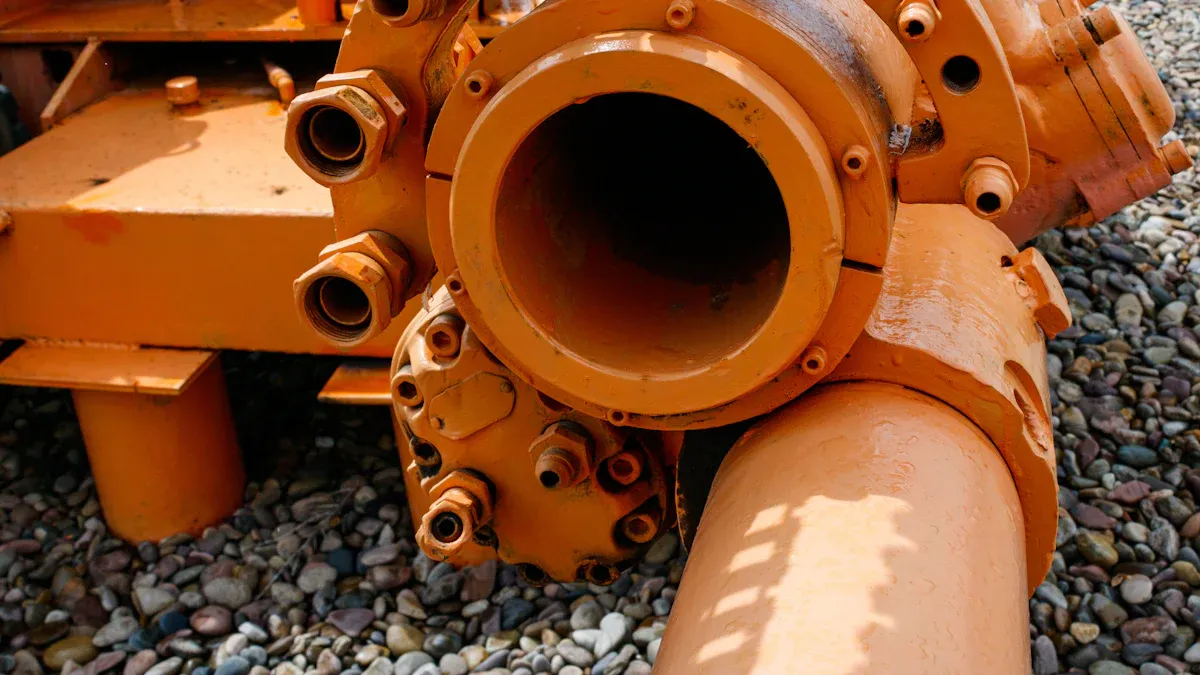
A hydraulic cylinder converts hydraulic energy into mechanical energy, producing linear motion. This device plays a crucial role in various machinery and equipment across multiple industries. For instance, the construction industry experiences a market share growth rate of 7.2%, utilizing hydraulic cylinders in utility construction and residential projects. Similarly, the agricultural sector shows an 8.7% growth rate, employing these cylinders in loaders and tractors.
Key Takeaways
- Hydraulic cylinders convert hydraulic energy into mechanical energy, enabling powerful linear motion in various industries.
- Understanding the components, such as the piston, barrel, and seals, is crucial for effective operation and maintenance of hydraulic cylinders.
- Regular maintenance, including checking for leaks and ensuring proper alignment, is essential for extending the lifespan and reliability of hydraulic cylinders.
How Hydraulic Cylinders Work
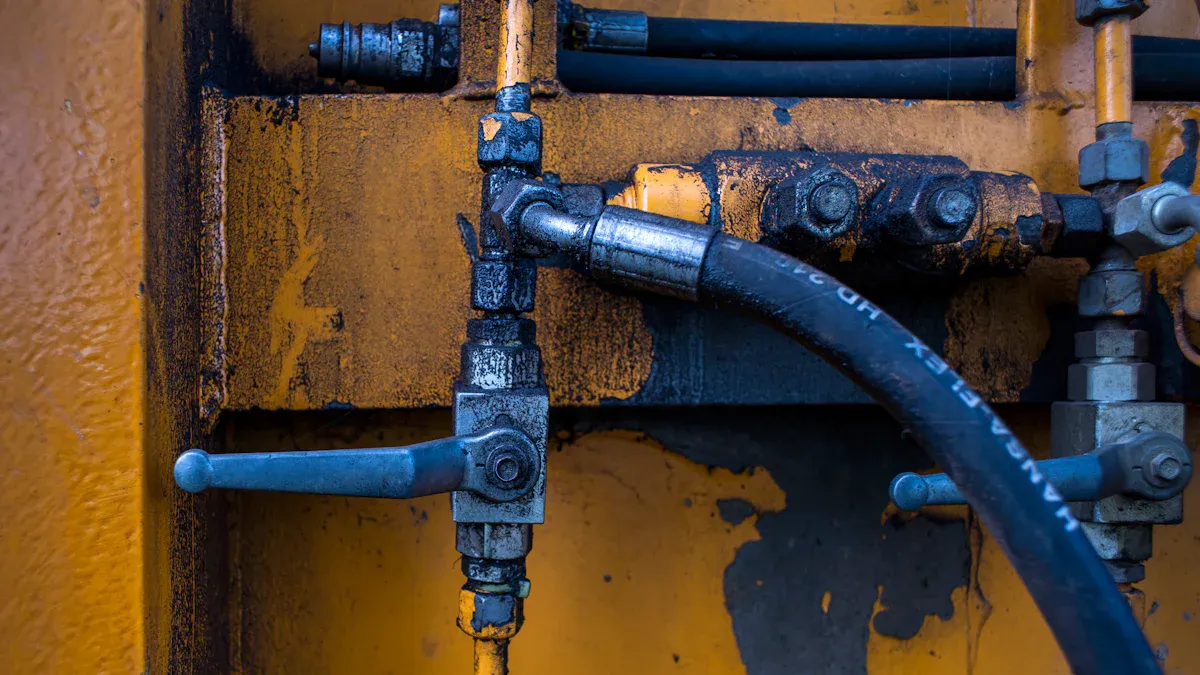
Hydraulic cylinders operate based on fundamental principles of hydraulic energy. These principles govern how hydraulic systems convert fluid pressure into mechanical force.
Basic Principles of Hydraulic Energy
The operation of hydraulic cylinders relies heavily on Pascal's Law. This law states that pressure applied to an enclosed fluid is transmitted equally in all directions. This principle is crucial in hydraulic systems, such as hydraulic cylinders, where a force applied to a smaller piston results in a greater force on a larger piston. The relationship is defined by the equation P = F/A, where P represents pressure, F represents force, and A represents area.
Here are some key principles that explain hydraulic energy conversion:
| Principle | Explanation |
|---|---|
| Pascal's Principle | A change in pressure applied to an enclosed fluid is transmitted undiminished throughout the fluid. |
| Hydraulic Transmission | In a closed container, fluid pressure is equal at each point, allowing small forces to move heavy objects. |
Mechanism of Linear Motion
Hydraulic cylinders convert hydraulic energy into linear motion through a series of mechanical processes. The primary function involves several steps:
- Hydraulic cylinders consist of a piston, a cylindrical barrel, and hydraulic fluid.
- When hydraulic fluid is pumped into the cylinder, it creates pressure against the piston, causing it to move.
- This movement generates linear motion, which can be controlled by regulating the flow of hydraulic fluid.
The operation of hydraulic cylinders is based on Pascal's Law, which states that pressure applied to a fluid is distributed evenly. This allows a small force applied to a smaller area to generate a larger force over a larger area. The hydraulic cylinder effectively amplifies force, enabling it to perform tasks that require significant power.
Main Components of Hydraulic Cylinders
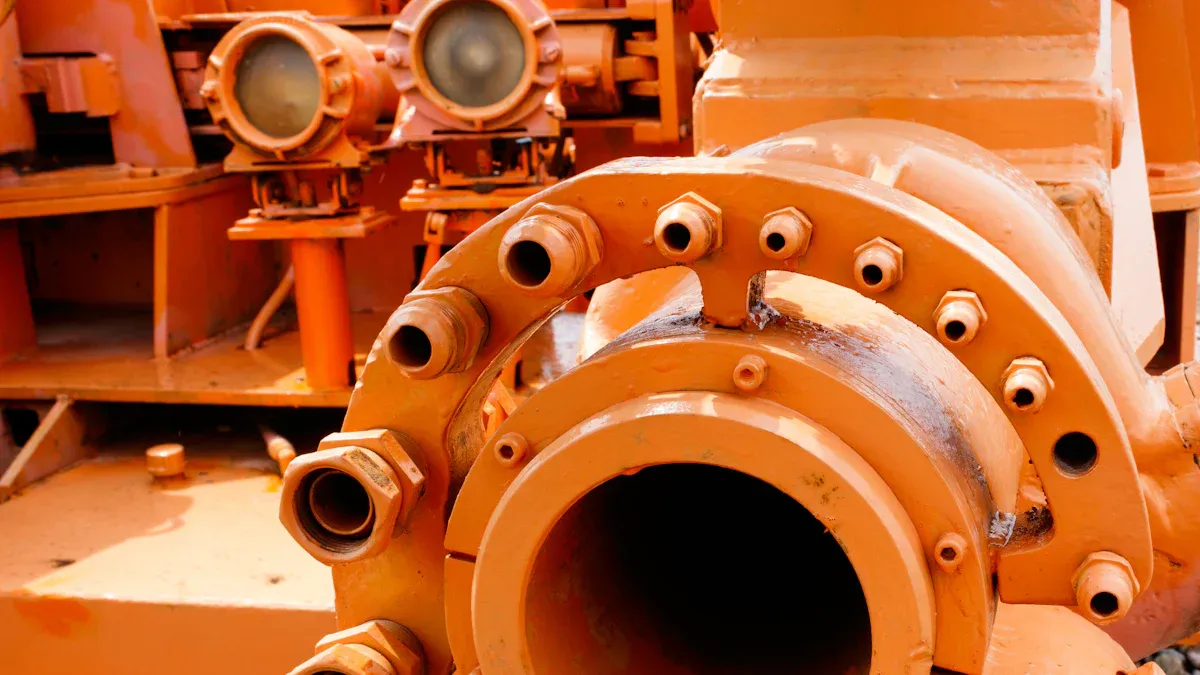
Hydraulic cylinders consist of several key components that work together to facilitate their operation. Understanding these components is essential for grasping how hydraulic systems function effectively.
Cylinder Barrel
The cylinder barrel serves as the main body of the hydraulic cylinder. It houses the piston and internal components, providing a robust structure to withstand high pressure and mechanical forces. Typically made from durable materials like steel, the barrel's design significantly impacts performance and lifespan. A smooth inner surface reduces friction, allowing the piston to move freely. Special coatings enhance corrosion resistance and reduce wear, contributing to long-term reliability. Common materials used for manufacturing cylinder barrels include:
| Material | Mechanical Properties |
|---|---|
| Nickel-based alloys | Exceptional corrosion resistance, high strength-to-weight ratios, high tensile and yield strengths. |
| Titanium | High strength-to-weight ratio, excellent corrosion resistance. |
| Duplex stainless steels | High strength, excellent corrosion resistance, suitable for extreme conditions. |
| Carbon steels | Varying strength and hardness, commonly used for lower pressure applications. |
Piston and Rod
The piston and rod are critical components that convert hydraulic energy into linear motion. The piston moves within the cylinder barrel, driven by hydraulic fluid pressure. Manufacturers often use materials like carbon steel and alloy steel for pistons and rods due to their excellent tensile strength and durability. Hard chrome plating enhances the surface, providing resistance to wear and corrosion.
| Material Type | Description |
|---|---|
| Carbon Steel (C45, SAE 1045) | Excellent tensile strength, durability, and cost-efficient; enhanced with induction hardening. |
| Alloy Steel (4140, 4340, 40Cr) | Higher strength and wear resistance; quenched and tempered for durability. |
Seals and End Caps
Seals and end caps play a vital role in maintaining the efficiency of hydraulic cylinders. They prevent hydraulic fluid from escaping, which is essential for maintaining pressure. The cylinder head and cap function as end seals, containing pressurized hydraulic fluid. End caps form a pressure-tight seal at the cylinder ends, crucial for preventing leaks. Proper sealing ensures optimal performance and reduces maintenance frequency.
- Seals act as barriers to prevent hydraulic fluid from escaping.
- End caps support internal components and prevent fluid leakage.
These components collectively ensure the hydraulic cylinder operates efficiently and reliably.
Types of Hydraulic Cylinders
Hydraulic cylinders come in various types, each designed for specific applications and operational needs. Understanding these types helps in selecting the right cylinder for a project.
Single-Acting Hydraulic Cylinders
Single-acting hydraulic cylinders operate using hydraulic fluid to extend the piston. They rely on external forces, such as gravity or springs, to retract. This design limits movement to one direction, making them suitable for applications where retraction is not critical.
- Key Features:
- One port for hydraulic fluid.
- Moves in one direction only.
- Generally slower due to single-direction movement.
Double-Acting Hydraulic Cylinders
Double-acting hydraulic cylinders can extend and retract using hydraulic pressure. This capability allows for more control and efficiency in operations. They feature two ports for hydraulic fluid, enabling movement in both directions.
| Feature | Single-Acting Cylinder | Double-Acting Cylinder |
|---|---|---|
| Ports | One port for hydraulic fluid | Two ports for hydraulic fluid |
| Movement Direction | Moves in one direction only | Moves in both directions |
| Retraction Mechanism | Relies on external forces (gravity/spring) | Uses hydraulic pressure for both extension and retraction |
| Efficiency | Generally slower due to single-direction movement | More efficient with quicker movement |
Telescopic Hydraulic Cylinders
Telescopic hydraulic cylinders are designed with multiple nested stages, allowing for a long stroke length while conserving space. This design makes them ideal for applications in construction, material handling, and agricultural machinery. Their compact nature is particularly beneficial in environments with limited space, such as dump trucks and cranes.
Specialty Hydraulic Cylinders
Specialty hydraulic cylinders are tailored for unique applications. They offer customization in design and performance, optimizing efficiency for specific tasks. Unlike standard hydraulic cylinders, specialty types can meet precise requirements, enhancing overall functionality.
| Feature | Specialty Hydraulic Cylinders | Standard Hydraulic Cylinders |
|---|---|---|
| Customization | Tailored specifications for specific applications | Off-the-shelf, general specifications |
| Efficiency | Enhanced efficiency for unique applications | Standard efficiency |
| Design Flexibility | Designed to meet precise requirements | Limited design options |
| Performance Optimization | Optimized for specific operating conditions | General performance |
Understanding these types of hydraulic cylinders aids in selecting the appropriate one for various industrial applications.
Applications of Hydraulic Cylinders
Construction Equipment
Hydraulic cylinders play a vital role in construction equipment, enabling powerful and efficient operations. They facilitate various tasks, such as lifting, pushing, and pulling heavy loads. Common applications include:
- Excavators: Hydraulic cylinders control the boom and arm, allowing for precise digging and material handling.
- Bulldozers: These machines use hydraulic cylinders to raise and lower the blade, enhancing grading and earth-moving capabilities.
- Cranes: Hydraulic systems enable smooth lifting and lowering of loads, ensuring safety and efficiency on job sites.
The ability of hydraulic cylinders to generate significant force makes them indispensable in construction, where heavy lifting is routine.
Manufacturing Machinery
In manufacturing, hydraulic cylinders enhance efficiency and precision. They convert hydraulic energy into mechanical power with minimal losses, resulting in faster cycle times and increased productivity. Key benefits include:
- Consistent Force: Hydraulic cylinders provide reliable force for operations like cutting and pressing. This consistency enhances precision and reduces error rates.
- Custom Machining: Manufacturers often create hydraulic cylinder components to exact tolerances. This leads to reduced friction and more efficient fluid transfer.
These features contribute to streamlined manufacturing processes, allowing companies to meet production demands effectively.
Automotive Industry
The automotive industry extensively utilizes hydraulic cylinders for various applications. They enhance functionality and performance in several systems, including:
- Automotive lift systems, such as vehicle hoists and hydraulic car lifts
- Convertible roof mechanisms, enabling seamless transformation
- Suspension systems, allowing for comfortable rides and enhanced stability
- Engine components, facilitating precise valve control and movement
Hydraulic cylinders improve the overall efficiency and reliability of automotive systems, making them essential in modern vehicle design.
Aerospace Applications
In aerospace, hydraulic cylinders must meet stringent performance standards. They ensure the safe and efficient operation of critical systems. Key requirements include:
- High Reliability: Hydraulic cylinders must withstand extreme conditions, including temperature variations, high pressures, and vibrations.
- Lightweight Design: A lightweight structure is critical for enhancing fuel efficiency and increasing payload capacity.
- Precise Control: Accurate and repeatable positioning is essential in systems like landing gear and control surfaces.
- Corrosion Resistance: Hydraulic cylinders must endure exposure to corrosive elements in aerospace environments.
- Compliance with Industry Standards: Adherence to safety, reliability, and certification standards is necessary.
These factors highlight the importance of hydraulic cylinders in maintaining the safety and performance of aerospace systems.
Advantages of Using Hydraulic Cylinders
Hydraulic cylinders offer several advantages that make them essential in various applications. Their design and functionality provide significant benefits in terms of power, control, and durability.
High Power-to-Weight Ratio
Hydraulic cylinders excel in producing high forces relative to their weight. They typically operate at pressures ranging from 1,800 to 3,000 psi, with some systems reaching up to 5,000 psi. This capability allows smaller hydraulic cylinders to generate substantial forces. For example, a 3-inch bore cylinder at 2,200 psi can produce around 15,000 lbf, while a 5-inch bore cylinder can achieve up to 43,000 lbf. This high power-to-weight ratio makes hydraulic cylinders ideal for heavy-duty applications where space and weight constraints exist.
Precise Control Capabilities
Hydraulic cylinders provide exceptional control over mechanical operations. Technologies such as position-sensing SMART cylinders offer real-time feedback on piston position, enabling meticulous control. Additionally, linear feedback hydraulic cylinders ensure accurate positioning and velocity regulation. These features allow for load compensation and real-time adjustments, which are crucial in industries that require precise control over motion and force.
Durability and Reliability
Hydraulic cylinders are known for their durability and reliability. They can operate effectively under various conditions, with lifespans ranging from 1,000 to over 50,000 hours, depending on the materials used. For instance, cylinders made from perfluoroelastomer can last more than 50,000 hours under normal working conditions. Furthermore, reliability metrics, such as average lifetime and characteristic lifetime, indicate that hydraulic cylinders maintain consistent performance over time. The Weibull distribution helps evaluate their reliability, providing insights into their longevity and failure rates.
These advantages highlight why hydraulic cylinders remain a preferred choice in many industrial applications, ensuring efficient and reliable performance.
Common Problems with Hydraulic Cylinders
Hydraulic cylinders can encounter several common problems that affect their performance and longevity. Understanding these issues helps in maintaining efficient operations.
Leaks and Seal Failures
Leaks often stem from seal failures, which can occur due to various factors. Common causes include:
- Fluid contamination from abrasive particles.
- Extreme temperatures affecting seal elasticity.
- Improper installation leading to misalignment.
- Material degradation due to environmental factors.
- External contaminants like dust and grit.
- Excessive backpressure causing seal fractures.
- Pressure shocks leading to failure.
Seal failures can significantly impact hydraulic systems. For instance, exposure to extreme temperatures can cause seals to harden and lose elasticity, leading to cracking and component failure.
Cylinder Misalignment Issues
Misalignment can lead to inefficient operation and premature wear. Factors contributing to misalignment include:
- Manufacturing defects.
- Misaligned machinery.
- Errors during installation.
- Improper mounting.
- Inadequate load balancing.
These issues can result in excessive vibration and stress on the cylinder, ultimately affecting its performance.
Contamination Problems
Contamination poses a serious threat to hydraulic cylinders. It can lead to:
- Increased wear and tear on components like pumps and seals.
- Reduced efficiency from interference with fluid flow.
- Clogging of valves and filters.
- Increased operating temperatures, causing faster degradation.
- Corrosion damage from moisture.
To mitigate contamination risks, implement climate control and air filtration systems. Regularly monitor the cleanliness of hydraulic fluid to ensure optimal performance.
By addressing these common problems, operators can enhance the reliability and efficiency of hydraulic cylinders in various applications.
Hydraulic cylinders serve as essential components across various industries, delivering powerful and efficient solutions for linear motion. Selecting the right hydraulic cylinder involves considering factors such as bore diameter, maximum stroke length, and application requirements. Understanding these aspects aids in optimizing equipment performance and maintenance strategies.
Preventive maintenance is the cornerstone of ensuring the longevity and reliability of hydraulic cylinders. By adopting a proactive approach to maintenance, businesses can avoid costly downtime and extend the service life of their equipment.
FAQ
What is the lifespan of a hydraulic cylinder?
Hydraulic cylinders typically last between 1,000 to over 50,000 hours, depending on materials and operating conditions.
How do I maintain a hydraulic cylinder?
Regularly check for leaks, ensure proper alignment, and monitor fluid cleanliness to maintain optimal performance.
What factors affect hydraulic cylinder performance?
Key factors include fluid viscosity, temperature, seal quality, and alignment of components within the hydraulic system.