2026 Best Casting Parts for Global Buyers to Consider?
In the rapidly evolving world of manufacturing, the significance of Casting Parts is undeniable. According to a recent market report by Grand View Research, the global casting market is projected to reach USD 202.27 billion by 2025, reflecting a compound annual growth rate of 4.7%. This surge highlights the critical role casting plays in diverse industries, from automotive to aerospace.
Renowned industry expert Dr. Emily Tran emphasizes the need for global buyers to stay informed. She noted, “Choosing the right casting parts is essential for enhancing product performance and durability.” As businesses strive for efficiency, understanding various casting processes can lead to better decision-making.
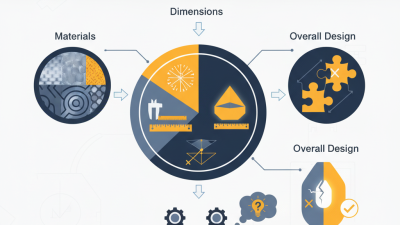
However, not all casting parts are created equal. Different materials and methods can greatly affect the final product's quality. It’s crucial to continuously evaluate and reflect on the options available. Buyers must consider factors like material properties, environmental impact, and manufacturing costs. Failing to do so could lead to subpar results, which may harm a company's reputation.
2026 Global Trends in Casting Parts: Market Growth and Opportunities
In 2026, the global casting parts market is poised for significant growth. The global market is projected to reach USD 200 billion, driven by rising demand in automotive and aerospace sectors. According to recent industry reports, the automotive segment will account for approximately 50% of market share. This highlights substantial opportunities for manufacturers.
Emerging trends indicate an increasing focus on lightweight materials. Companies are exploring advanced alloys and composites. These materials contribute to fuel efficiency and performance. The shift towards electric vehicles is also reshaping demand for specific casting parts. Investors must pay attention to this dynamic shift, as it opens new avenues for innovation.
However, the market is not without challenges. Supply chain disruptions have been frequent, impacting production schedules. Companies often face rising costs due to raw material shortages. It's essential for stakeholders to remain adaptable and find solutions to these ongoing issues. Creating strategic partnerships can be crucial for mitigating risks and seizing opportunities.
2026 Global Trends in Casting Parts: Market Growth and Opportunities
This chart illustrates the projected market growth of different casting parts in 2026. The data showcases the estimated market size in million USD across various categories.
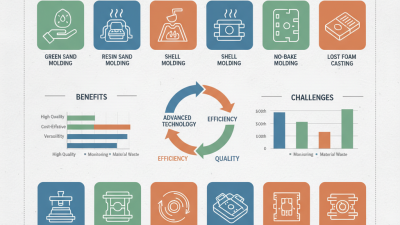
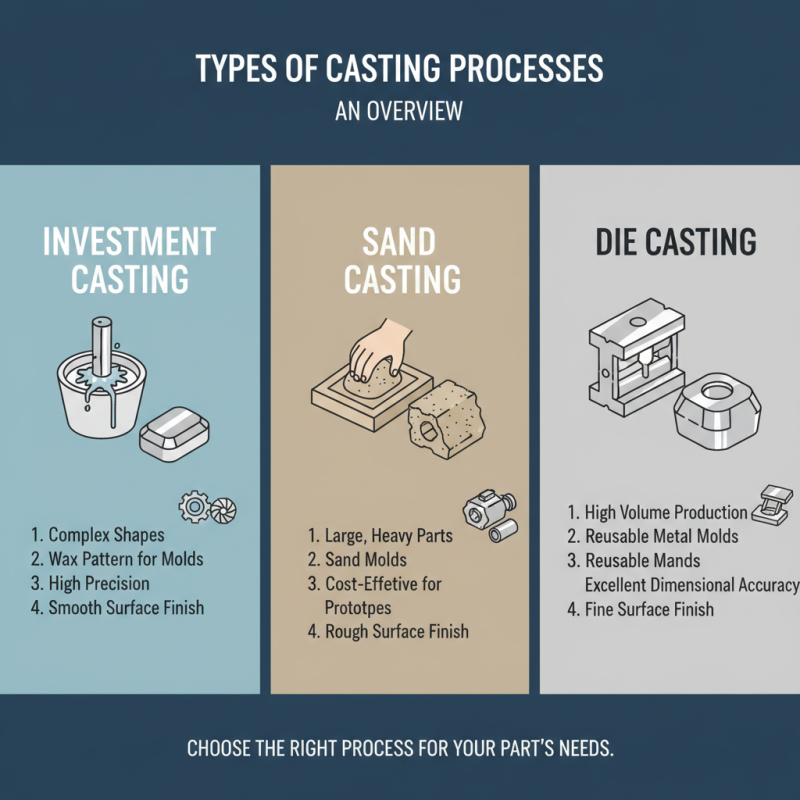
Types of Casting Processes: An Overview of Investment, Sand, and Die Casting
Casting is a crucial manufacturing process that shapes materials into useful parts. There are several methods of casting, each with distinct advantages. Investment casting, for instance, is ideal for complex shapes. This method uses molds made from a wax pattern, which allows for high precision and a smooth surface.
Sand casting is one of the oldest techniques. It involves creating molds from sand mixed with clay. While it's cost-effective, it can yield rougher surfaces. The quality of sand affects the outcome. Inconsistent sand can lead to defects. These issues can result in increased waste and additional production time.
Die casting, on the other hand, is used for high-volume production. Metal is forced into molds at high pressure here. This method produces durable parts with good surface finish. However, it requires substantial initial investment. Companies must weigh the costs against the benefits. Each casting process has its own strengths and weaknesses. Making the right choice can impact product quality and overall efficiency.
Key Materials Used in Casting Parts: Aluminum, Iron, and Composite Insights
When considering casting parts, understanding materials is vital. Aluminum, iron, and composites play significant roles in various applications. Aluminum, light yet strong, is often preferred in automotive and aerospace sectors. According to a report by Grand View Research, the aluminum casting market is projected to grow significantly, driven by demand for lightweight components.
Iron remains a classic choice in heavy machinery. Ductile iron and gray iron provide excellent durability and strength. The World Institute of Standardization emphasizes iron's versatility in multiple industries. Its ability to withstand high stress makes it a go-to for construction and automotive sectors.
Tip: Evaluate project requirements before choosing materials. Different uses may require specific material properties. Also, it's essential to consider the environmental impact of your choices. Composites offer unique benefits, providing tailored properties. They can blend the lightweight characteristics of aluminum with the sturdiness of iron, but they may also incur higher costs.
Being aware of the trade-offs in material selection can lead to better decision-making. Each material has pros and cons, affecting performance and costs. It's crucial to reflect on the specific demands of your project and the lifecycle of the material you choose.
2026 Best Casting Parts for Global Buyers to Consider
| Material Type |
Density (g/cm³) |
Melting Point (°C) |
Common Applications |
Advantages |
| Aluminum |
2.7 |
660 |
Automotive, Aerospace, Consumer Goods |
Lightweight, Corrosion-resistant, Good Machinability |
| Iron |
7.9 |
1200 |
Pipes, Construction, Machinery |
High Strength, Durability, Cost-Effective |
| Composite |
Varies |
200-400 (depending on resin) |
Aerospace, Sporting Goods, Marine |
Lightweight, High Strength-to-Weight Ratio, Corrosion Resistance |
Critical Quality Standards for Casting Parts: Industry Certifications and Compliance
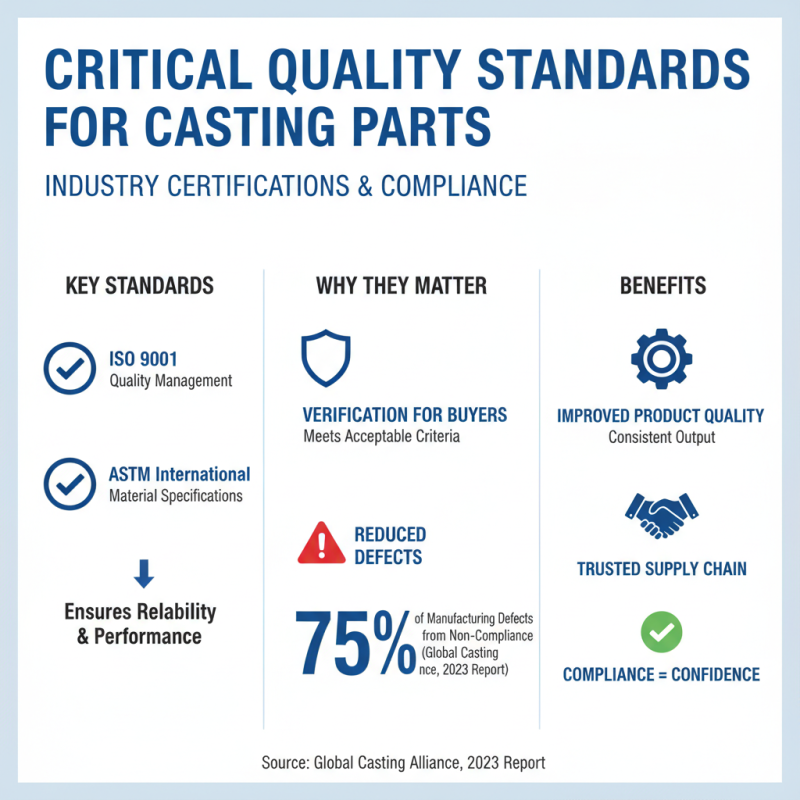
Selecting the best casting parts requires a firm grasp of critical quality standards. Industry certifications such as ISO 9001 and ASTM standards play a key role in ensuring compliance. These certifications help buyers verify that casting parts meet acceptable criteria. According to a 2023 report by the Global Casting Alliance, over 75% of manufacturing defects stem from non-compliance with established standards.
Tips: Always request certifications from suppliers. This simple step saves time and reduces risks.
The process of casting can vary significantly. Different methods, such as sand casting or die casting, each have their own quality benchmarks. For example, a report from the American Foundry Society emphasizes the importance of quality control measures in the die casting process. However, many manufacturers still overlook this crucial aspect.
Tips: Evaluate the casting methods used by suppliers. Understanding these can greatly enhance your procurement strategy.
Emerging Technologies in Casting: 3D Printing and Automation Effects
Emerging technologies are transforming the casting industry dramatically. 3D printing is at the forefront of these changes.
This method allows for complex shapes that traditional methods struggle to achieve. Many manufacturers are finding they can reduce waste with 3D printing. However, this technology requires new skills and training for workers.
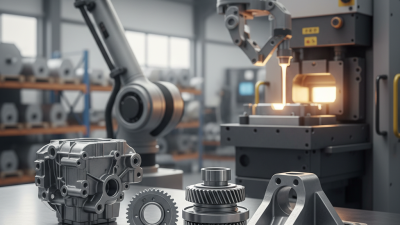
Automation also plays a significant role in modern casting processes. Robotic systems can perform tasks with precision and speed. This not only increases efficiency but also reduces human error.
Yet, it poses potential job displacement concerns. The industry must address this challenge by upskilling the workforce. Innovations like these are essential for keeping pace in a competitive market.
While the benefits are clear, the path forward isn't entirely smooth. Companies must invest in technology but also adapt their business models. Balancing automation, 3D printing, and human skills may seem daunting. Yet, these shifts are necessary to enhance product quality and meet demand. The future of casting relies on finding this balance.


 0086-15925850312

 CONTACT NUMBER