2026 How to Choose the Right Die Casting Mold for Your Project?
Choosing the right Die Casting Mold is critical for any manufacturing project. As industry expert John Smith often says, "The right mold can make or break your product." Understanding the specifics of your project is essential.
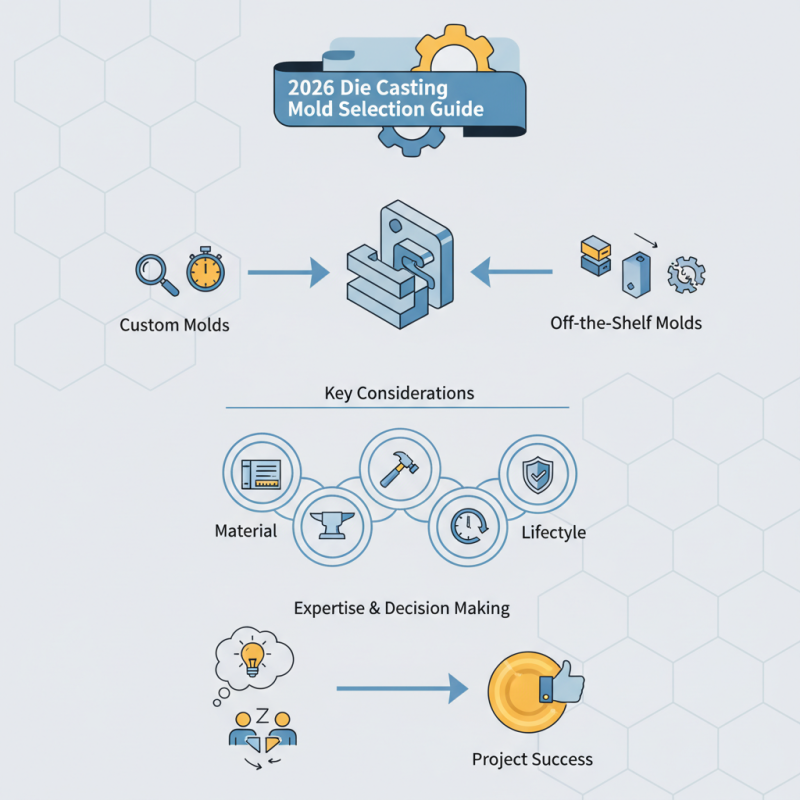
Different projects require different types of Die Casting Molds. A custom mold can significantly impact the final product's quality and production speed. Manufacturers should weigh their options carefully. Sometimes, off-the-shelf molds may suffice, but they often lack the precision needed for complex designs.
Quality matters in selecting the right mold. Inadequate molds can lead to costly defects. The expertise you draw from professionals can lead to better decisions. Reflect on the mold's design, material, and expected lifecycle. Each factor plays a role in the overall success of your project.
Understanding the Basics of Die Casting Molds
Die casting molds are crucial in the manufacturing process, impacting quality and efficiency. Understanding the basics of these molds can enhance project outcomes. Die casting uses molten metal, typically aluminum or zinc, injected into molds at high pressure. According to a report by Mordor Intelligence, the global die casting market is expected to grow by 6.12% from 2021 to 2026. This growth indicates a rising demand for precision and speed in production.
Choosing the right mold involves several factors. The design of the mold must consider the metal's flow characteristics. Poor design can lead to defects like porosity or surface imperfections. A study by the American Foundry Society noted that 15% of die casting defects stem from mold issues. This statistic shows that investing in high-quality mold design is vital.
Material selection also plays a key role. Molds are often made from tool steel or aluminum, each with distinct properties. Steel molds are durable but can be costlier. Aluminum molds offer lower costs and quicker turnarounds but have shorter lifespans. Balancing these factors can be challenging but essential for project success.
Key Factors to Consider When Choosing a Die Casting Mold
When selecting the right die casting mold, several key factors are crucial. Mold material significantly influences cost and durability. Aluminum and steel molds serve different purposes. Aluminum molds are suitable for lower-volume production, while steel molds handle high-volume manufacturing. According to industry reports, steel molds can last up to 10 times longer than aluminum ones, making them a long-term investment.
The complexity of your design is another vital consideration. Intricate designs may require advanced mold features. These can increase production time and cost. A more complicated mold often leads to longer lead times. Research indicates that up to 20% of die casting projects fail due to design issues. Prototyping can help identify potential flaws early in the design phase.
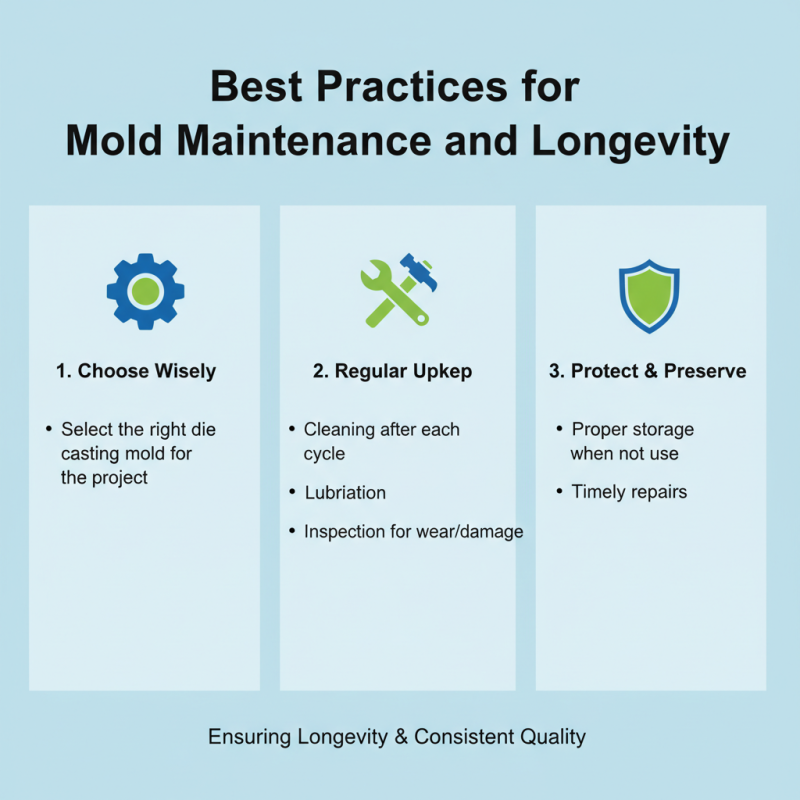
Production volume should also guide your decision. Higher production volumes typically justify the expense of complex molds. For low-volume projects, simpler molds can be more economical. Keep in mind that mold maintenance is essential. Neglecting regular upkeep can reduce mold lifespan significantly. Balancing these factors will ensure a successful die casting project.
2026 How to Choose the Right Die Casting Mold for Your Project? - Key Factors to Consider When Choosing a Die Casting Mold
| Factor |
Description |
Importance Level (1-5) |
| Material Type |
Choose a mold material that can withstand the high temperatures and pressures of die casting. |
5 |
| Design Complexity |
Assess the complexity of the part to determine if the mold design can accommodate detailed features. |
4 |
| Production Volume |
Consider the expected production volume, as high-volume products require more durable molds. |
5 |
| Cost |
Evaluate your budget for mold production and select a mold that fits financial constraints without compromising quality. |
4 |
| Lead Time |
Understand the lead time requirements for mold creation and ensure it aligns with project timelines. |
3 |
Types of Die Casting Molds and Their Applications
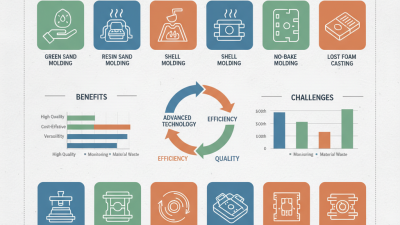
When choosing the right die casting mold, understanding the different types is crucial. There are several common types of die casting molds, each with specific applications. For instance, hot chamber molds are perfect for zinc and lead alloys. They offer faster production rates. In contrast, cold chamber molds are better suited for aluminum and magnesium, providing more versatility. Industry data suggests that around 30% of manufacturers prefer cold chamber molds for larger parts due to lower shrinkage rates.
The selection of die casting molds can significantly impact costs and production efficiency. For high-volume production, using multi-cavity molds is advantageous. This allows for multiple components to be produced simultaneously, increasing output. However, it also requires a careful balance to avoid excessive complexity. Each additional cavity can complicate maintenance and design. Reports indicate that a well-designed mold can reduce production defects by 15-20%.
**Tip:** Always consider the material compatibility of the mold with the end product. Different materials may require specific mold cooling rates.
Precision in mold design can lead to superior quality. However, achieving this requires constant evaluation of the design process. Feedback loops involving production staff can enhance mold performance.
**Tip:** Regularly review and refine mold designs based on production outcomes to improve quality. This iterative process can reduce defects over time.
Comparison of Die Casting Mold Types and Their Applications
Evaluating Material Choices for Die Casting Molds
When selecting materials for die casting molds, it’s essential to understand the properties of each option available. Aluminum, for example, is a popular choice due to its lightweight characteristics. It offers excellent thermal conductivity, which aids in efficient heat distribution during the casting process. However, aluminum may not be suitable for high-temperature applications.
Steel molds are another option. They provide durability and longevity. Steel can withstand the stresses of repeated use without significant wear. Yet, the initial cost is higher than aluminum. This choice may not be ideal for short production runs. Balancing cost against the expected lifespan is crucial.
Consider the complexity of your design. Thin-walled sections might require molds made from specific alloys that can handle intricate details. Material selection can often mean the difference between a successful production run and costly errors. It's important to consult with experts who can provide insights tailored to your specific project needs. Mistakes in material choice can lead to increased costs and delays, so weigh your options carefully.


 0086-15925850312

 CONTACT NUMBER