Leave Your Message

2026 Top High Pressure Unions How to Choose the Best?

Choosing the right High-Pressure Unions is not just a matter of picking the highest pressure rating. The best option must suit the system’s working pressure, temperature, fluid, and connection type. A union that looks robust on a product page may still be wrong for a corrosive medium or a space-constrained installation. Details matter.

This 2026 guide explains how to compare leading options and assess the specifications behind them. Check the pressure rating at the expected operating temperature, not in isolation. Review material compatibility, thread or fitting dimensions, sealing design, and manufacturer documentation. For example, a stainless-steel union may be appropriate in one setup, while another application may require a different alloy or seal material. Confirm that the union matches the connected tubing and assembly method.

Installation conditions matter too. Vibration, repeated servicing, and limited tool access can affect long-term performance. A clear datasheet and traceable product information make comparisons more dependable; claims without supporting specifications deserve caution. No shortlist fits every system. Even careful research can miss a site-specific detail, so verify selections against the equipment requirements and consult a qualified engineer when the consequences of failure are significant. Use the sections ahead to compare options practically, spot common selection mistakes, and narrow the choices to unions suited to your operating conditions—not merely the most impressive catalog description.
2026 Top High Pressure Unions How to Choose the Best?

What High-Pressure Unions Are and How They Work

A high-pressure union is a detachable fitting that joins two sections of pipe or tubing. It lets technicians separate a line for inspection or maintenance without rotating the entire pipe. A typical union has two end pieces, a central body, and a nut that draws the pieces together. Small parts, but they carry serious responsibility.

The seal forms where carefully shaped surfaces meet, or where a compatible sealing element is compressed. The nut supplies clamping force; the seal, not the nut alone, contains the fluid. In some designs, metal surfaces seal directly. Others use an elastomer, which must suit the fluid, temperature, and pressure. A connection may look secure and still leak. That detail is easy to underestimate.

Selection starts with the system’s working pressure, temperature range, fluid, tubing dimensions, and material compatibility. Check the fitting’s rated limits and the manufacturer’s installation instructions; pressure ratings can change with temperature or assembly conditions. Keep sealing faces clean and free of scratches. Tighten to the specified method, rather than guessing by feel. Too little force can leave a leak path; too much may damage the seal or fitting. If the joint will see vibration or repeated pressure changes, consider those conditions before installation, and inspect the connection during maintenance.

2026 Top High-Pressure Unions: How to Choose the Best?

What High-Pressure Unions Are and How They Work

High-pressure unions connect sections of tubing or piping while maintaining a sealed pressure boundary. Use this chart to compare common pressure values in psi and MPa; it shows unit conversions, not product ratings. Choose a union rated for your system’s operating conditions, including pressure, temperature, fluid compatibility, connection type, and applicable standards. Always confirm ratings with the manufacturer.

How Pressure Ratings and Operating Conditions Affect Selection

A high-pressure union should be selected for its working pressure under real operating conditions, not just its maximum published rating. Check whether the stated rating applies at your system’s temperature and with the fluid you plan to use. Heat can reduce allowable pressure, while cold starts may change seal behavior. Small details matter.

Consider pressure spikes, vibration, and frequent connection cycles. A line that normally runs steadily may still experience brief surges during startup or valve closure. The union, seals, and mating connections must suit those conditions as a complete assembly.

A higher rating alone does not guarantee a safer choice. Verify specifications with the supplier and compare them with measured system data.

Even a careful estimate can miss a pressure pulse; that deserves another check. For example, note operating temperature, peak pressure, fluid type, and expected maintenance intervals before comparing options.

If these details are uncertain, pause selection and gather better measurements rather than relying on a generous-looking rating.

Which Materials and Connection Types Suit Different Systems

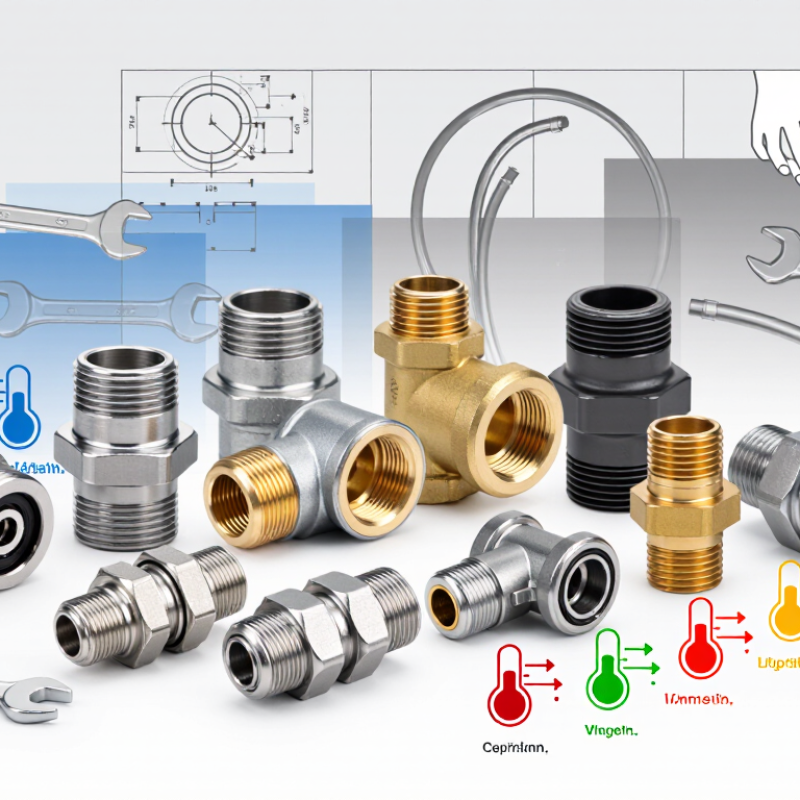
A high-pressure union must match the fluid, temperature, pressure, and maintenance needs of the system. Stainless steel, especially 316, is often selected for corrosion resistance, but chlorides can still cause pitting. Carbon steel can suit many demanding services when its grade and protective coating fit the environment. Alloy steel may be appropriate at elevated temperatures. Brass is not a universal substitute; check its pressure rating and fluid compatibility carefully. Check the rating.

Connection style matters just as much. Threaded unions are convenient where equipment needs regular removal, but vibration and repeated pressure cycling can loosen joints. Socket-weld connections suit some small-bore lines and need careful, qualified installation. Butt-weld ends create a permanent connection and can work well in larger pipelines, though inspection and repair may take more effort. Compression connections are useful with compatible tubing, provided the tube and ferrules are correctly matched.

Look beyond the nominal pressure number. Confirm the rating at operating temperature, the seal material, and any pressure spikes or pulsation. A union that fits the pipe may still be wrong for the medium. In real installations, access for a wrench and room to replace seals are easy to overlook. That detail can become a maintenance headache. Review the system specification and the union’s documented limits before selecting or installing it.

How to Compare High-Pressure Unions for Safety and Compatibility

2026 Top High Pressure Unions: How to Choose the Best?

Comparing high-pressure unions starts with the system, not the product label. Check the maximum working pressure, temperature range, fluid, and connection type in the equipment documentation. The union’s rating must suit the application, and every connected component must be considered. A high-rated fitting cannot compensate for a lower-rated hose or valve.

Check material compatibility against the actual fluid and operating conditions. Compare seal material, thread or end connection, dimensions, and pressure ratings using technical data sheets. Confirm whether the connection requires a specific assembly method. Small details matter.

Tips: Match connection standards before ordering, verify pressure and temperature limits, and inspect threads and sealing surfaces for damage before installation. Do not guess.

Ask for traceable specifications and relevant test or inspection records when the application requires them. In practice, paperwork can be incomplete, which makes comparisons less tidy; pause and confirm uncertain details with a qualified supplier or engineer. After installation, follow the equipment maker’s inspection and maintenance guidance. Look for leaks, corrosion, deformation, or loosened connections, and take the system out of service if a defect is suspected.

How to Install, Inspect, and Replace High-Pressure Unions

Installing a high-pressure union starts with isolation, not a wrench. Shut down the system, vent trapped fluid, and verify zero pressure with suitable instruments. Pressure can remain in a small branch line. Never guess. Check the union’s pressure and temperature ratings, material compatibility, and connection type against the system requirements. Clean mating surfaces with a lint-free cloth, and keep grit away from the sealing faces. Align both sides without forcing the pipe. Tighten to the specified procedure using a calibrated torque tool when required; excess torque can damage sealing surfaces.

Inspect unions during routine maintenance and whenever a leak, vibration, or pressure change occurs. Look for fluid traces, corrosion, cracks, dents, thread damage, and misalignment. A dry exterior does not always prove the seal is sound, so inspect after the system reaches its normal operating conditions. Use the approved inspection method for the equipment. I have seen small scratches dismissed as cosmetic, but their effect depends on the seal design.

Replace a union if its body is cracked, its threads are damaged, or leakage continues after correct installation. Remove it only after the line is isolated and depressurized. Fit a compatible replacement with clean, undamaged connections, then perform the prescribed leak or pressure test from a safe position. Record the part details and inspection findings. It is easy to overlook that record when work is rushed.

2026 Top High Pressure Unions: How to Choose the Best? — How to Install, Inspect, and Replace High-Pressure Unions

Decision Area What to Verify Practical Guidance Warning Signs or Replacement Triggers
Working pressure Maximum operating and surge pressure, including the pressure rating of the union, connected pipe or tubing, valves, and other components. Use the component rating applicable to the actual material, size, connection, and temperature. The system must not exceed the rating of its lowest-rated component. Rating is unknown, unreadable, below the system requirement, or based on a different material or connection configuration.
Temperature and service Operating-temperature range, fluid compatibility, corrosion exposure, and any cyclic, vibration, or pulsating-pressure service. Check the equipment documentation and applicable design requirements. Pressure capacity can change with temperature, material, and service conditions. Cracking, corrosion, erosion, deformation, or evidence that the service conditions exceed the component’s documented limits.
Union type and end connection Connection style, size, thread form, sealing method, and compatibility with the mating parts. Match the union to the system connection exactly. Threaded, socket-weld, compression, and other union designs are not interchangeable unless specifically designed to be compatible. Cross-threading, mismatched thread forms, damaged sealing faces, incorrect ferrules, or parts that do not seat correctly.
Material selection Body and seal materials, fluid chemistry, temperature, and applicable corrosion or contamination requirements. Select materials documented as compatible with the process fluid and operating environment. Do not assume a visually similar material has the same service suitability. Material identification is missing, the material is incompatible with the fluid, or corrosion has reduced the component’s integrity.
Applicable specifications Required code, standard, design specification, and any project-specific documentation. Verify the exact standard and rating stated for the fitting. A standard’s class or designation is not, by itself, a universal operating-pressure value for every size and service. Required markings or documents are absent, unclear, or inconsistent with the system specification.
Preparation before installation Isolation, depressurization, fluid hazards, cleanliness, and condition of the union and mating components. Follow site lockout and safety procedures. Confirm the line is safely isolated and depressurized before loosening or assembling a union; clean and examine all mating surfaces. Residual pressure, trapped hazardous fluid, damaged threads, debris, or any component that cannot be positively identified.
Assembly and tightening Manufacturer’s assembly sequence, specified torque or tightening method, and any sealant or lubricant requirements. Use the instructions for the exact union design. There is no single tightening torque or sealant rule that applies to all high-pressure unions; avoid forcing misaligned components together. Binding, galling, uneven seating, damaged sealing parts, or leakage after assembly. Do not compensate for a damaged joint by uncontrolled overtightening.
Post-installation testing Required inspection and pressure or leak-test procedure for the system and service. Test only under an approved procedure, using suitable equipment and the required exclusion controls. Keep personnel clear of potential release paths and never search for leaks by hand. Any leakage, unexpected pressure loss, movement, or abnormal noise during testing; stop and make the system safe before investigating.
Routine inspection External leakage, corrosion, cracking, deformation, vibration, support, and condition of accessible connections. Set inspection frequency based on the service risk, operating conditions, and site requirements. Record findings and investigate recurring leaks or abnormal movement. Visible damage, weeping, severe corrosion, loose or misaligned connections, or repeated failure after repair.
Replacement decision Whether the union is damaged, out of specification, incompatible, or cannot be reliably inspected or reassembled. Replace with a compatible component documented for the same or more demanding service conditions. Use new sealing parts where the design or instructions require them. Do not reuse a cracked, deformed, severely corroded, or otherwise compromised pressure-containing part. Never weld, machine, or modify it unless an approved engineering procedure specifically permits it.

Safety note: High-pressure systems can cause serious injury. Use the equipment manufacturer’s instructions, applicable codes, and qualified personnel for selection, installation, testing, inspection, and replacement.