2026 Top Trends in Cast Aluminum Parts for Industry Innovation?
As industries evolve, the demand for innovative materials and components intensifies. Cast Aluminum Parts are at the forefront of this change. Lightweight yet strong, they offer unique advantages in various applications, from automotive to aerospace. With advancements in technology, manufacturers are discovering new ways to enhance performance and sustainability.
In 2026, several trends will shape the future of Cast Aluminum Parts. For instance, the rise of 3D printing is enabling bespoke designs that were previously unfeasible. This technology allows for rapid prototyping and reduced waste, aligning with global sustainability goals. Moreover, companies are exploring advanced alloys that improve strength while minimizing weight.
However, challenges remain. The industry must address quality control to ensure that these innovations meet rigorous safety standards. Increasing complexity in designs also raises production costs. Balancing innovation with practicality will be key for industry leaders. Therefore, ongoing research and collaboration are essential for a successful future in the realm of Cast Aluminum Parts.

Emergence of Advanced Alloys in Cast Aluminum Parts for 2026
The emergence of advanced alloys in cast aluminum parts is set to transform the industry in 2026. Innovations in material science will improve performance, weight, and durability. Manufacturers are now exploring new alloy compositions that enhance strength while maintaining lightness. These advances allow for more efficient designs in sectors like automotive and aerospace.
Research shows these advanced alloys often exhibit better corrosion resistance. This is crucial for components exposed to harsh environments. Companies are testing various combinations to achieve optimal results. Challenges remain in the processing methods used for these new materials. Ensuring consistency and reliability is key to widespread adoption.
The shift towards these advanced alloys also calls for skilled labor. Engineers and technicians need specialized training. This evolution may leave some workers behind. Not all companies will adapt quickly, leading to a patchy landscape in the industry. Despite these hurdles, the potential benefits of advanced aluminum alloys cannot be ignored. The journey to 2026 is one of both promise and challenge.
2026 Top Trends in Cast Aluminum Parts for Industry Innovation
| Trend |
Description |
Impact on Industry |
Year of Expected Adoption |
| Advanced Alloys |
Emerging alloys offering improved strength-to-weight ratios |
Enhanced performance in automotive and aerospace applications |
2026 |
| Sustainability Initiatives |
Increased focus on recycling and eco-friendly processes |
Reduction in carbon footprint and operational costs |
2026 |
| 3D Printing Integration |
Utilization of additive manufacturing for complex geometries |
Faster prototyping and reduced material waste |
2026 |
| Smart Manufacturing |
Integration of IoT for real-time monitoring and data analysis |
Increased efficiency and quality control in production |
2026 |
| Enhanced Surface Treatments |
New coatings to improve corrosion resistance and durability |
Longer product lifespan and reduced maintenance costs |
2026 |
Impact of Sustainability Practices on Cast Aluminum Manufacturing Trends
As industries evolve, sustainability practices are reshaping cast aluminum manufacturing trends. Manufacturers are increasingly focusing on reducing their carbon footprint. This commitment leads to innovative recycling techniques and energy-efficient processes. Today's trends reflect a strong movement towards using reclaimed aluminum. This shift reduces waste and addresses environmental concerns.
Production facilities are now adopting renewable energy sources. Many are opting for solar and wind power. This transition promises long-term savings while contributing to sustainability. However, the initial costs of these technologies can be daunting. Some manufacturers may hesitate to change their traditional approaches. This resistance could delay progress toward greener practices.
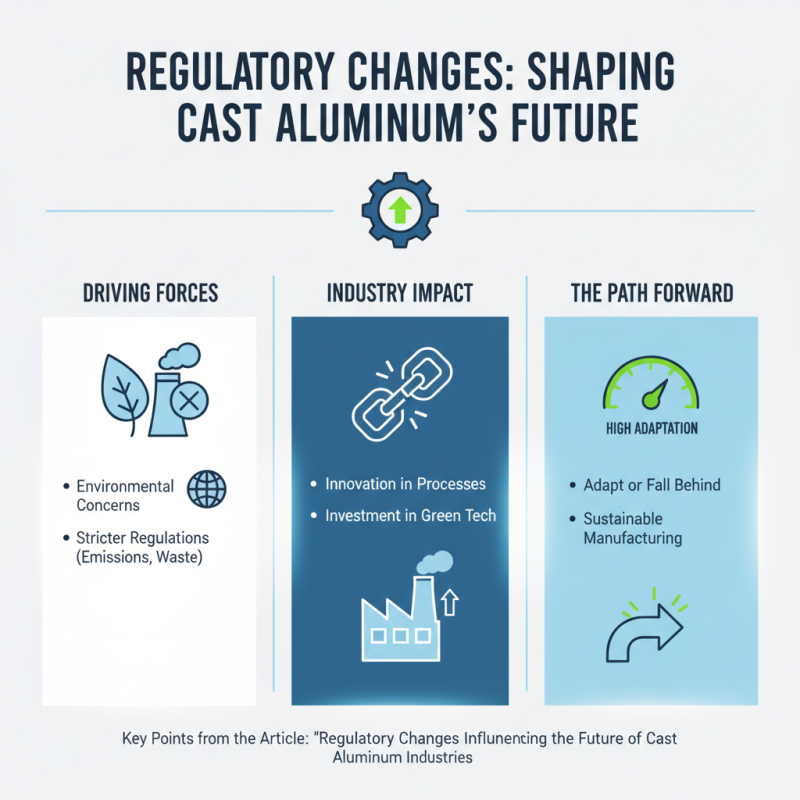
Moreover, environmental regulations are becoming stricter. Companies must adapt to survive. Those who fail to embrace sustainability may find themselves at a competitive disadvantage. Yet, integrating new practices isn't always straightforward. Some workers need training, and systems must be overhauled. Balancing operational efficiency with sustainability goals is a complex challenge that demands thoughtful reflection.
Integration of Smart Technologies in Casting Processes and Product Design
The integration of smart technologies in casting processes is transforming the landscape of cast aluminum parts. Sensors and data analytics have become essential tools. They provide real-time insights into the casting process. This ensures higher accuracy and efficiency. Smart technologies enable manufacturers to monitor temperature and pressure closely. These parameters are crucial for optimal cast quality.
Product design is also evolving. Designers now leverage computer-aided design (CAD) software with integrated simulation tools. This technology helps visualize the end product before any physical casting occurs. Engineers can assess how different designs affect material properties. Different methods, like additive manufacturing, can also enhance traditional casting processes.
Tip: Consider adopting a data-driven approach. Regularly analyze production data to identify trends and irregularities.
Some challenges arise, though. High upfront costs for technology integration can deter smaller companies. There's also the need for training workers on new systems. Moreover, relying heavily on technology can lead to overlooking manual skills.
Tip: Balance automation with skilled craftsmanship. Engaging trained professionals ensures both creativity and technical expertise in design and production.
Market Demand Shifts: Automation and Customization in Aluminum Casting
The aluminum casting industry is experiencing significant changes driven by automation and customization. Recent data shows a projected market demand increase of 5% annually through 2026. This shift is influenced by the need for more complex and lightweight components in various sectors, including automotive and aerospace. Manufacturers are embracing automation to boost production efficiency and reduce costs.
Customization is also becoming crucial. Customers want tailored solutions that meet specific requirements. Reports indicate that approximately 70% of consumers in the industry prefer personalized designs. This trend drives competition and challenges traditional mass production methods. Companies must adapt quickly to stay relevant.
Tips: Invest in modern technologies like 3D printing for rapid prototyping. It can help refine designs efficiently. Establish strong partnerships with suppliers to ensure high-quality materials tailored to your needs. Embrace feedback; it is essential for improvement. Continuous innovation is necessary. Balancing automation with skilled workforce training is challenging but essential for quality.


 0086-15925850312

 CONTACT NUMBER