How to Create a Sand Casting Mold for Perfect Metal Casting Results?
Creating a Sand Casting Mold is crucial for achieving exceptional metal casting results. According to a report by the American Foundry Society, over 75% of casting defects are attributed to mold-related issues. This highlights the significance of a well-designed Sand Casting Mold in the manufacturing process. Industry expert, Dr. James Leonard, states, "The quality of the mold directly influences the final product's integrity."
In the competitive landscape of metal casting, precision is paramount. Manufacturers often overlook the complexities of mold-making, which can lead to costly mistakes and subpar products. Understanding the intricacies of Sand Casting Mold creation can significantly reduce these pitfalls. The right techniques can ensure consistent quality and improve production efficiency.
Many may think that casting is simple, but the reality is different. A poorly constructed Sand Casting Mold can result in flaws, such as air pockets or misalignment. These imperfections can compromise the entire casting process. Therefore, a reflective approach to mold design is essential for achieving optimal results.
Understanding the Basics of Sand Casting and Its Applications
Sand casting is a widely used metal casting process, essential in various applications including automotive and aerospace industries. According to a report by MarketsandMarkets, the global sand casting market is projected to reach $7.2 billion by 2025. This process allows the production of complex shapes with varying sizes efficiently, making it invaluable for both prototypes and mass production.
When creating a sand casting mold, one must understand the composition of the sand mixture. The right ratio of sand, clay, and water affects the mold's strength and permeability. A common industry tip is to use a sand mixture containing 90% silica sand, 2-5% clay, and around 2-5% water. This blend provides a durable mold that can withstand heat and allow for gas escape, reducing defects in castings.
However, achieving perfect metal castings requires careful monitoring of conditions. Fluctuations in temperature and humidity can lead to inconsistent mold quality. This highlights the importance of consistent, controlled environment settings during the casting process. Manufacturers can mitigate these risks by regularly assessing mold integrity through non-destructive testing methods, ensuring high-quality outputs while minimizing waste and defects.
Selecting the Right Materials for Sand Casting Mold Creation
Selecting the right materials for sand casting mold creation is crucial for achieving optimal results. Traditionally, sand casting molds utilize silica sand, which has high thermal stability and excellent refractoriness. According to a report by the American Foundry Society, the right blend of sand can increase mold strength by up to 30%. This improvement can lead to enhanced dimensional accuracy in the final product.
Clay content plays an essential role as well. The addition of clay, typically around 5-10%, binds the sand grains together. However, too much clay can weaken the mold, causing defects in the casting. Some professionals recommend experimenting with different clay types to find the best combination. Sometimes, the ideal mixture might require adjustments after several trials.
Additives can enhance the sand's properties. For example, organic additives might improve mold collapsibility. However, it's important to be cautious; not all additives provide consistent results. The variability in sand quality can affect casting outcomes. Continuous testing and quality checks are necessary to ensure reliability. A thoughtful approach to material selection can transform your casting process.
Sand Casting Mold Materials Comparison
Step-by-Step Process for Creating a Sand Casting Mold
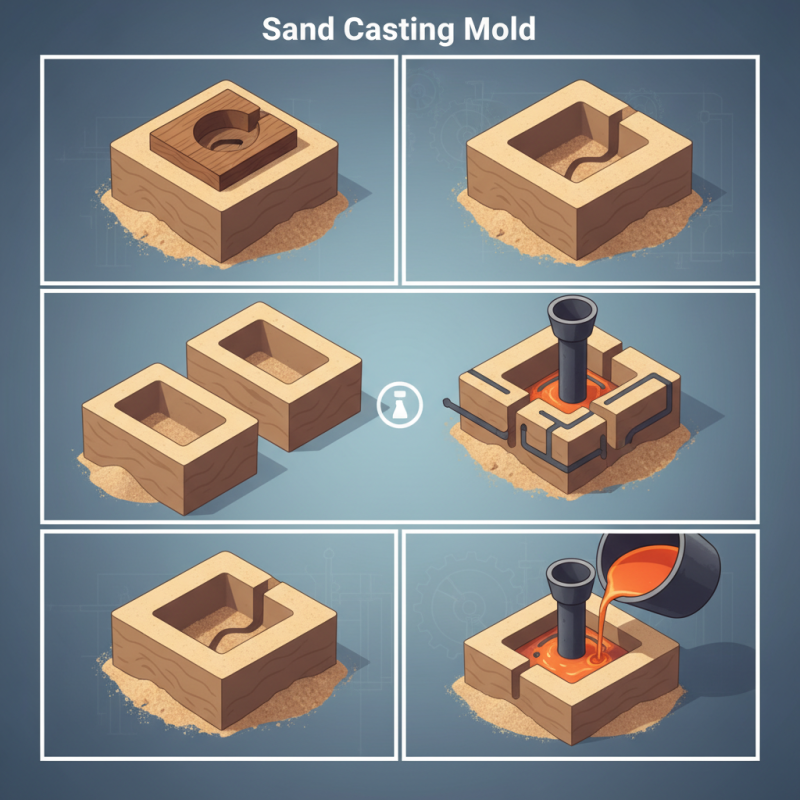
Creating a sand casting mold requires attention to detail and precision. Start by selecting the right sand. Silica sand is often preferred due to its high melting point and fine texture. Industry reports show that 60% of foundries use silica sand for its effectiveness in mold making. Mixing the sand with a binding agent can enhance its cohesiveness, ensuring a properly formed mold.
When shaping the mold, carefully pack the mixture into the mold box. It's vital to eliminate air pockets, as they can lead to casting defects. Studies indicate that nearly 15% of casting defects arise from poor mold preparation. Consider employing vibration methods to ensure even packing and reduce the likelihood of imperfections. Pay attention to the overall dimensions. A minor miscalculation can cause the final casting to be inaccurate.
Cooling is another critical step. After pouring molten metal, allow sufficient time for the mold to cool completely. The impacts of inadequate cooling are significant and can lead to cracks. In fact, nearly 10% of castings experience issues due to premature mold removal. Regularly reviewing the mold-making process and gathering feedback can lead to improvements and better outcomes. Embrace these challenges as opportunities for growth in skill and technique.
How to Create a Sand Casting Mold for Perfect Metal Casting Results?
| Step |
Description |
Materials Needed |
Time Required |
| 1 |
Prepare the pattern |
Wood or plastic pattern |
1 hour |
| 2 |
Select the sand |
Sand, clay, and water |
30 minutes |
| 3 |
Mix the sand |
Mixing tools |
15 minutes |
| 4 |
Create the mold |
Mold box |
2 hours |
| 5 |
Dry the mold |
Drying equipment |
1 hour |
| 6 |
Pour the metal |
Molten metal |
30 minutes |
| 7 |
Remove the casting |
Tools for breaking the mold |
1 hour |
| 8 |
Finish the casting |
Polishing tools |
1 hour |
Tips for Ensuring Successful Metal Casting Using Sand Molds
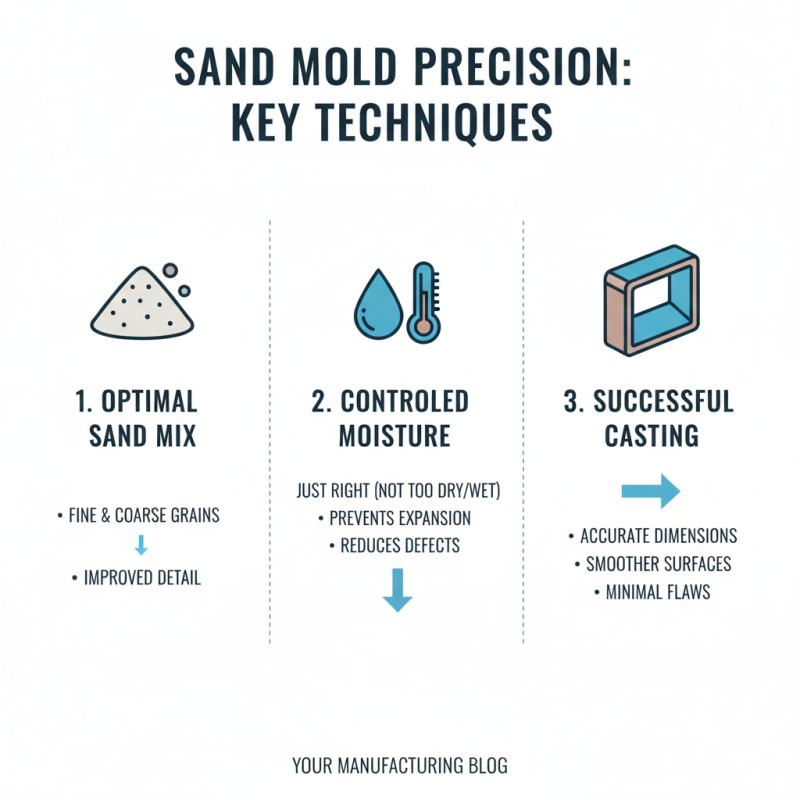
Creating a successful sand casting mold requires attention to detail. Choosing the right sand is crucial. Look for sand that has excellent cohesion and is fine enough to capture details. Consider using silica or a mixture that can handle high temperatures. Moisture control is also vital. Too much water can lead to defects. Experiment with different moisture levels to find the ideal balance.
Proper mold design significantly impacts the outcome. Shape and size matter. Complex designs can create challenges. Ensure that there are adequate draft angles for easy removal. Always include vents to allow gases to escape. This is essential; trapped gases can ruin your cast. Reinforce the mold tightly, yet don’t overdo it. A too-tight mold can lead to warping or breaking during cooling.
Pay close attention during the pouring process. Pour steadily to avoid turbulence, which can induce air bubbles. Monitor the temperature of the metal; if it’s too hot, it may burn the mold. Mistakes are part of the learning curve. Some castings may not turn out perfectly on the first try. Analyze each failure to improve your technique. Embrace the imperfections and refine your methods for better results.


 0086-15925850312

 CONTACT NUMBER