0086-15925850312

Selecting reliable manufacturers for Aluminum Cnc Turning Parts requires more than comparing catalog prices. Buyers must examine machining accuracy, alloy knowledge, equipment capacity, inspection systems, and delivery consistency. A polished website proves very little. Real evidence matters.
This guide introduces ten manufacturers serving global industrial markets. It considers their technical capabilities, production experience, quality certifications, and ability to handle prototypes or repeat orders. Details such as spindle performance, turning tolerances, surface finishes, and material traceability can strongly influence the final result. Small differences often become expensive problems during assembly.
In practice, experienced suppliers usually explain their process clearly. They discuss drawings, thread specifications, burr control, and inspection reports before production begins. That level of communication builds confidence. It also reveals weaknesses early.
Still, no manufacturer is perfect. A company may offer excellent precision but limited flexibility for small batches. Another may provide competitive pricing while requiring longer shipping times. These trade-offs deserve careful review. Rankings can guide attention, but they should not replace direct verification.
The following overview evaluates manufacturers through practical purchasing concerns, including engineering support, CNC turning capacity, quality management, customization, and international service. It avoids relying on vague promotional language. Instead, it focuses on information buyers can confirm through samples, documentation, factory communication, and project records. Some details may change over time, so readers should request current quotations and certifications. That extra step is easy to overlook. It is also essential for making a dependable sourcing decision.
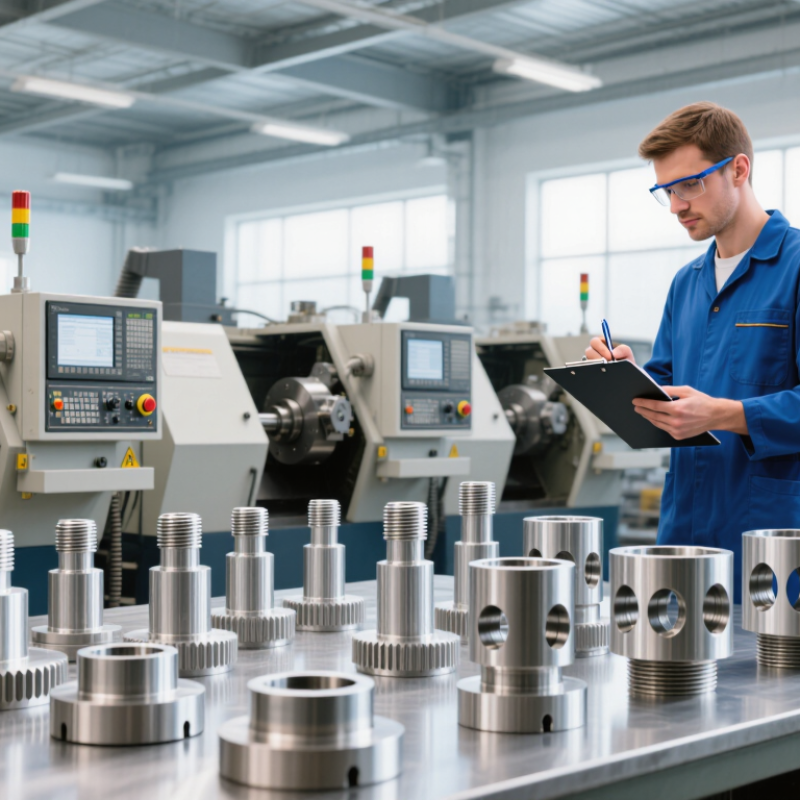
A leading manufacturer proves consistency on the shop floor, not through polished claims. It understands aluminum alloys, thermal expansion, chip control, burr formation, and tool wear. Operators should verify critical diameters with calibrated micrometers and coordinate measuring machines. Production records should connect each part to its material batch, program revision, and inspection results.
Quality systems matter. The ISO Survey 2023 recorded 1,265,216 valid ISO 9001 certificates worldwide. Certification alone does not guarantee excellent parts. It does show that documented processes remain an important global benchmark. Strong suppliers also report process capability, first-pass yield, corrective actions, and delivery performance. They explain failures clearly. No supplier is flawless.
Tips: Request a sample inspection report. Check alloy certification, surface-finish readings, and tolerance data. Ask how rejected parts are contained. Confirm whether the supplier can repeat the same dimensions after several production lots. Also review packaging, because thin aluminum edges can be damaged during transport.
Responsible production adds another test. The International Aluminium Institute reports that recycled aluminum requires about 95% less energy than primary aluminum. A capable manufacturer should identify recycled content honestly, without weakening mechanical requirements. Still, sustainability claims need evidence. Energy records, material declarations, and measurable reduction targets are more reliable than broad promises. My own view is cautious: low price may reflect efficiency, but it may also hide inspection gaps. Examine the evidence.
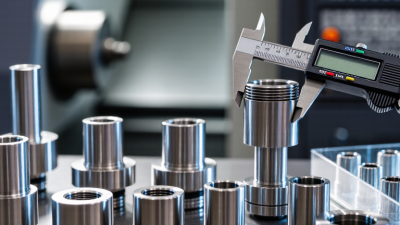
Designing aluminum CNC turning parts begins with function, not a machine catalog. Engineers define loads, mating surfaces, wall thickness, and the required service environment. A shaft may need a precise bearing seat, while a threaded fitting needs clean crest geometry. CAD models are checked for tool access, chip evacuation, and stable clamping. Small internal radii can prevent a standard tool from reaching the feature. That mistake is expensive.
Production starts with certified aluminum bar stock and a reviewed drawing. The operator sets workholding pressure carefully because soft aluminum can distort under excessive force. Cutting speed, feed rate, and tool geometry are adjusted to control heat and built-up edge. Coolant must reach the cutting zone, especially during deep boring. Parts are turned, faced, grooved, drilled, and threaded in a controlled sequence. Sharp edges are removed without damaging functional surfaces.
Inspection happens during production, not only at the end. Calipers support quick checks, while micrometers, gauges, and coordinate measurement verify critical dimensions. Inspectors record diameter, runout, thread quality, and surface condition against defined limits. Clean handling reduces stains and embedded debris before anodizing or other finishing. Traceable records improve reliability. Still, no process is perfect. A first-article review may expose an overlooked tolerance stack or an unsuitable chamfer. Good manufacturers revise the drawing, tooling, or inspection plan before repeating the problem.
Evaluating global CNC turning manufacturers requires more than comparing hourly prices. Start with machining experience, aluminum grades, tolerances, and part complexity. A capable supplier should explain tool selection, cutting speeds, chip control, and surface-finish limits clearly. Ask for inspection records, sample reports, and evidence of calibrated measuring equipment. This reveals technical discipline better than polished marketing language.
Production reliability matters just as much. Review machine capacity, backup equipment, lead-time records, and process-control methods. Traceable material certificates can reduce costly uncertainty. Confirm how the manufacturer manages drawing revisions, nonconforming parts, packaging, and international shipping documents. Communication is also measurable. During a trial order, note response speed, question quality, and whether risks are reported early. A perfect supplier scorecard does not exist. Even experienced teams can overlook packaging damage or small burrs.
Request a small pilot batch before full production. Measure critical diameters independently, especially after anodizing or other finishing processes. Compare actual delivery performance with promised dates, not estimates. Ask for a corrective-action report when defects occur. A supplier that admits a process weakness may be more dependable than one claiming flawless performance. Cost still matters, but the lowest quotation can hide inspection gaps, unstable tooling, or expensive rework. Evaluate total manufacturing risk, not only the unit price.
Top 10 Aluminum CNC Turning Parts Manufacturers Worldwide
The global aluminum machining sector is expanding with demand from aerospace, automotive, medical, and automation equipment. The International Aluminium Institute reported more than 70 million metric tons of primary aluminum production worldwide in 2023. This scale supports a strong supply chain for precision turned components.
A reliable Top 10 manufacturer should prove more than machine capacity. Buyers should examine tolerance records, material traceability, inspection equipment, and delivery performance. ISO 9001-based quality systems can support consistency, but certification alone is not enough. Actual inspection reports matter. A well-equipped workshop should show coordinate measuring machines, optical inspection, automatic bar feeders, and controlled cutting conditions for 6061, 7075, and other common alloys.
Market research from Grand View Research identifies growing demand for computer numerical control machining across transportation and industrial applications. However, broad market data does not rank aluminum turning specialists directly. That limitation deserves attention. A practical evaluation should compare sample parts, surface finishes, burr control, thread accuracy, and response time. Small details matter. A sharp thread can fail during assembly. One overlooked chip may damage a sealing surface. Manufacturers with engineering feedback, stable process documentation, and transparent corrective actions are stronger candidates for a worldwide Top 10 list. Pricing still matters, yet the lowest quotation can hide weaker inspection discipline or inconsistent material sourcing.
The table uses anonymized manufacturer profiles so that no company or brand names are displayed. Capability figures represent commonly published industrial ranges for aluminum CNC turning suppliers and should be confirmed directly before procurement.
| Rank | Manufacturer Profile | Primary Region | Production Focus | Common Aluminum Alloys | Typical Turning Diameter | Typical Turning Length | Typical Dimensional Tolerance | Surface Finishing Options | Quality Systems | Typical Applications |
|---|---|---|---|---|---|---|---|---|---|---|
| 1 | Manufacturer Profile 01 | East Asia | High-volume precision turning | 6061-T6, 6063, 7075-T6, 2024 | 6–250 mm | Up to 500 mm | Typically ±0.01 mm; tighter tolerances available by agreement | Anodizing, bead blasting, polishing, passivation | ISO 9001-based quality system | Automotive fittings, electronics housings, industrial connectors |
| 2 | Manufacturer Profile 02 | Western Europe | Prototype and small-batch production | 6061, 6082, 7075, 2011 | 5–180 mm | Up to 350 mm | Typically ±0.015 mm | Hard anodizing, clear anodizing, powder coating | ISO 9001-based quality system | Medical devices, laboratory equipment, precision machinery |
| 3 | Manufacturer Profile 03 | North America | Complex mill-turn components | 6061-T6, 7050, 7075-T6, MIC-6 | 8–300 mm | Up to 600 mm | Typically ±0.01 mm | Hard anodizing, chemical film, laser marking | ISO 9001 / AS9100-oriented processes | Aerospace fixtures, defense equipment, motion-control parts |
| 4 | Manufacturer Profile 04 | South Asia | Cost-efficient batch machining | 6061, 6063, 6082, 7075 | 4–220 mm | Up to 450 mm | Typically ±0.02 mm | Anodizing, electroplating, powder coating | Documented inspection procedures | Pumps, valves, appliances, general industrial hardware |
| 5 | Manufacturer Profile 05 | East Asia | Automatic bar-fed turning | 2011, 2024, 6061, 7075 | 2–65 mm bar diameter | Up to 200 mm | Typically ±0.005–0.015 mm | Natural anodizing, colored anodizing, polishing | In-process measurement control | Electrical terminals, fasteners, sensor bodies, small hardware |
| 6 | Manufacturer Profile 06 | Central Europe | Precision components for regulated industries | 6061, 6082, 7075, 7020 | 6–160 mm | Up to 300 mm | Typically ±0.01 mm | Hard anodizing, electroless coating, microbead finishing | ISO 9001-based traceability | Industrial automation, optical equipment, cleanroom machinery |
| 7 | Manufacturer Profile 07 | Southeast Asia | Export-oriented CNC turning and assembly | 6061-T6, 6063-T5, 6082-T6, 7075-T6 | 5–200 mm | Up to 400 mm | Typically ±0.015 mm | Anodizing, powder coating, chromate conversion coating | ISO 9001-based quality system | Consumer electronics, office equipment, industrial enclosures |
| 8 | Manufacturer Profile 08 | Southern Europe | Medium-volume custom components | 6060, 6061, 6082, 7075 | 8–240 mm | Up to 450 mm | Typically ±0.02 mm | Brushing, anodizing, polishing, protective coating | First-article inspection available | Fluid systems, marine equipment, renewable-energy hardware |
| 9 | Manufacturer Profile 09 | North America | Prototype-to-production machining | 6061-T6, 6063, 7075-T6, 2024-T3 | 5–225 mm | Up to 500 mm | Typically ±0.012 mm | Anodizing, alodine-type conversion coating, laser engraving | Digital inspection records | Robotics, telecommunications, instrumentation, transport equipment |
| 10 | Manufacturer Profile 10 | Eastern Europe | Flexible low- and medium-volume machining | 6061, 6082, 7075, 2017 | 6–190 mm | Up to 380 mm | Typically ±0.02 mm | Anodizing, powder coating, tumbling, deburring | Supplier inspection and material traceability | Mechanical assemblies, packaging machinery, custom brackets |
A credible comparison of the top ten aluminum CNC turning parts manufacturers should begin with practical capabilities. Check bar diameter limits, live tooling, Swiss-type turning, and multi-axis support. These details affect whether a supplier can produce tiny sensor sleeves or larger automotive shafts. Ask for sample inspection reports, not only polished photographs. Tolerance matters.
Quality standards reveal process discipline. ISO 9001 supports controlled quality systems, while aerospace and medical projects may require stricter industry certifications. Verify certificate scope and expiration dates directly. A capable manufacturer should provide material certificates, first-article inspection data, and traceability for each batch. Surface options also matter, including anodizing, bead blasting, and protective coating compatibility.
Applications help separate real expertise from general marketing. Electronics usually demand clean edges, thin walls, and stable dimensions. Automotive components may require repeatable high-volume production and automated gauging. Aerospace parts often need documented material control and careful defect prevention. Medical components require clean handling and dependable records. I would not rank suppliers by equipment count alone. A large machine list can hide weak process control. Conversely, a smaller workshop may offer excellent engineering support but limited capacity. That trade-off deserves attention. Ask how the team responds when a part fails inspection. Their answer often exposes practical experience better than any sales claim.
Material-performance benchmark for comparing machining capabilities, quality requirements, and industry applications
The chart uses typical ultimate tensile strength values for widely machined aluminum alloys. Higher-strength alloys are commonly selected for aerospace, defense, and high-load components, while lower-strength alloys are frequently used for electronics, automotive, fluid-control, and general industrial parts. Actual machinability, dimensional tolerance, and surface-finish capability depend on alloy temper, part geometry, tooling, process control, and inspection standards such as ISO 9001, AS9100, or ISO 13485.
Reference basis: typical alloy-property ranges published in aluminum engineering and material data references; values may vary by product form, temper, and supplier specification.