Top 10 Types of Prototype Parts for Global Buyers
For global buyers, Prototype Parts are more than early samples. They are physical evidence that an idea can survive real manufacturing conditions. A machined aluminum bracket can expose weak tolerances. A 3D-printed housing can reveal uncomfortable assembly gaps. A silicone prototype may show whether a seal actually fits under pressure. These details often matter more than attractive CAD images.
Terry Wohlers, a respected authority in additive manufacturing, has stated, “Prototype parts are valuable because they reveal what drawings cannot.” That principle remains practical for international sourcing teams. Material choice, surface finish, dimensional accuracy, production volume, and shipping protection can change the right prototype process. A buyer testing a medical-device enclosure needs different evidence from a buyer developing an automotive clip. The part must answer a question.
This guide examines ten common types of Prototype Parts used by global buyers, including CNC-machined components, 3D-printed models, sheet-metal samples, injection-molded prototypes, and soft tooling. It also considers functional testing, visual approval, supplier communication, and repeatability. The categories are useful, but not perfect. Some parts belong to more than one group, especially when hybrid manufacturing is involved. That overlap deserves attention. A fast sample is not automatically a reliable sample. Clear drawings, measured inspection reports, agreed materials, and realistic tolerances create stronger decisions. Small details, such as thread strength or a 0.2-millimeter mismatch, can become expensive later. Good prototyping does not remove every risk. It makes hidden risks visible earlier.
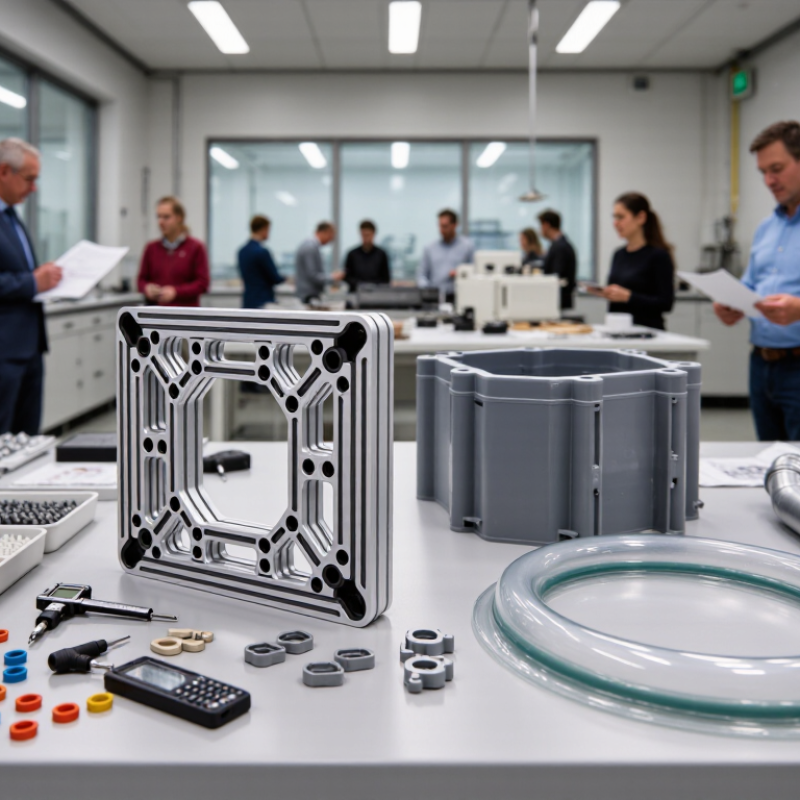
Prototype Parts: Definition, Purpose, and Development Stages
Top 10 Types of Prototype Parts for Global Buyers
Prototype Parts: Definition, Purpose, and Development Stages
Prototype parts are physical samples used to test form, fit, function, and manufacturing risks. They may include CNC-machined parts, polymer prints, metal prints, sheet-metal parts, urethane castings, silicone parts, injection-molded parts, vacuum-formed shells, composite parts, and soft-tooling samples. Each type answers a different engineering question. A prototype is not merely a smaller production part.
The purpose is practical. Engineers inspect hole alignment, wall thickness, assembly force, surface texture, and heat behavior before committing to production tooling. The Wohlers Report 2024 valued the global additive-manufacturing market at approximately 20.035 billion dollars in 2023, with 13.5% annual growth. That expansion reflects stronger demand for fast design verification, not proof that every printed part matches production performance. A prototype can be beautifully wrong.
Development usually moves through four stages: requirement definition, concept modeling, functional testing, and design refinement. Early samples may use inexpensive polymer printing, while later parts may require machined metal or production-grade molding. Material selection must follow the test objective. A soft plastic sample cannot validate a high-temperature seal. Do not skip fit checks. ISO and ASTM additive-manufacturing guidance also stresses process control, traceability, and consistent terminology. In practice, teams often underestimate finishing, tolerances, and inspection time. That mistake deserves review before global sourcing begins.
Top 10 Types of Prototype Parts for Global Buyers
Prototype parts help validate form, fit, function, manufacturability, and performance before production. The chart compares indicative typical lead times for commonly requested prototype part types.
Note: Lead times are typical business-day estimates for standard-complexity parts and may vary with material, tolerances, surface finish, quantity, and shipping requirements.


 0086-15925850312