2026 How to Select the Best Casting Parts for Your Projects?
Selecting the best casting parts for your projects is crucial. Proper casting parts can significantly impact your project’s success and quality. By understanding the types and applications, you enhance your decision-making process.
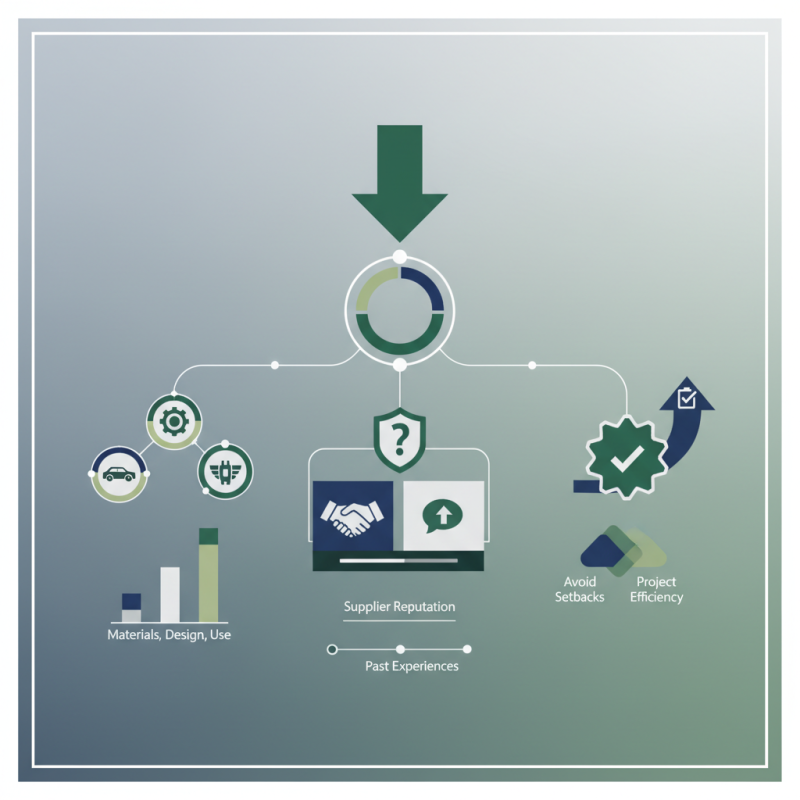
Casting parts are used in diverse industries, from automotive to aerospace. The right choice depends on factors like material, design, and intended use. Each project has unique requirements, and the wrong casting part can lead to costly mistakes.
It’s also essential to consider supplier reputation. A trustworthy supplier provides quality assurance and support. Reflecting on past experiences can help refine your choices. The more informed you are, the better your decisions will be. Making careful selections avoids future setbacks and enhances overall project efficiency.
Factors to Consider When Selecting Casting Materials for Projects
When selecting casting materials for projects, several crucial factors come into play. The type of material significantly impacts the durability and performance of the final product. For example, studies indicate that aluminum casting has a higher resistance to corrosion compared to steel. This makes aluminum an excellent choice for outdoor applications, where exposure to elements is a concern.
The complexity of the design is another critical factor. Intricate designs may require materials that can flow easily into molds. According to the American Foundry Society, around 65% of casting defects arise from improper material selection. This statistic highlights the importance of aligning material properties with project requirements.
Thermal properties also deserve attention. The thermal conductivity of a material influences how it handles heat during casting. Materials with high thermal conductivity tend to cool faster, reducing the chances of defects. Yet, not all high-conductivity materials are suitable for every project, which requires careful analysis. Investing in research can pay off. It's vital to ask questions and seek expert opinions to avoid costly mistakes and enhance project outcomes.
Understanding Different Types of Casting Processes and Their Applications
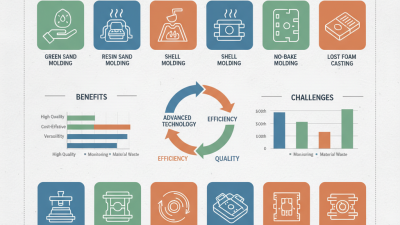
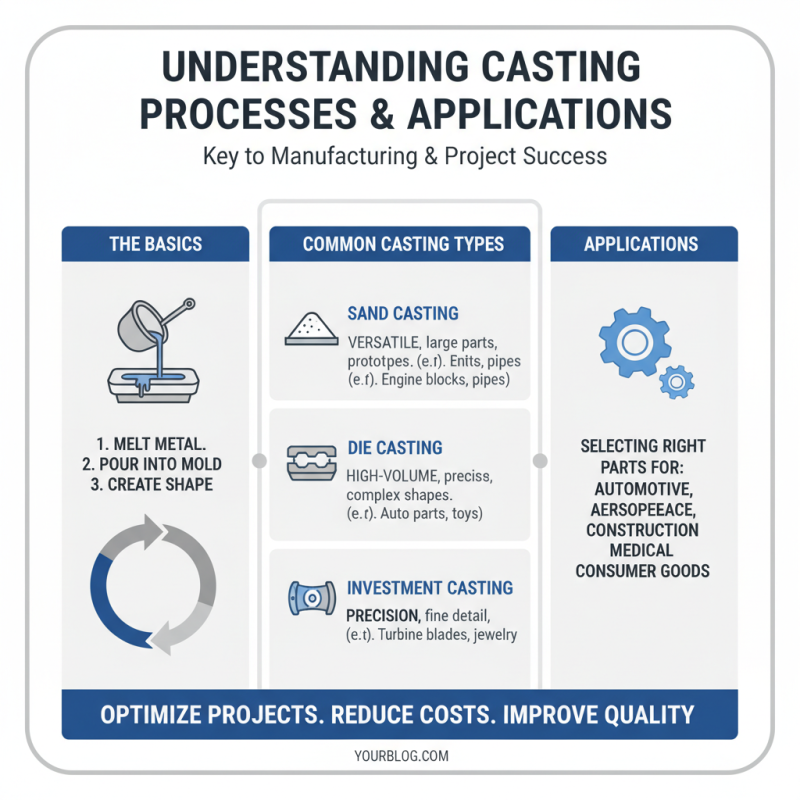
Casting processes are vital in manufacturing. They involve pouring liquid metal into molds to create desired shapes. Understanding these processes is key to selecting the right casting parts for projects.
There are several casting methods, each with specific applications. Sand casting is one of the most common techniques. It is suitable for large parts and various materials. In 2022, sand casting produced about 65% of all cast metal parts in the U.S., according to industry reports. This method provides excellent detail and can accommodate complex geometries.
Investment casting is another method. It is useful for small, intricate parts, like those in aerospace. This process can achieve tolerances as tight as ±0.005 inches. However, it is generally more expensive than sand casting. This difference can impact budget decisions for projects. Understanding the nuances of these processes allows engineers to better match the method to their specific needs. Each method has its strengths and weaknesses, prompting reflections about cost versus quality in project planning.
Evaluating Design Requirements for Casting Parts in Your Projects
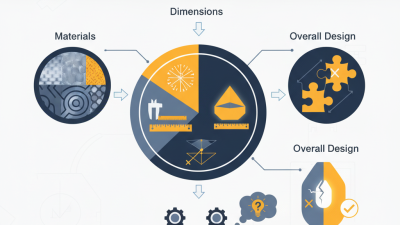
When selecting casting parts for your projects, understanding design requirements is crucial. Evaluate the specific needs of your product. Different materials impact durability and cost. According to the Metal Casting Industry report, the right material can reduce production costs by up to 15%. This emphasizes the importance of material selection.
Next, consider dimensional tolerances. Tighter tolerances can increase production complexity. A study from the American Society of Mechanical Engineers indicates that tolerances can add 10-20% to manufacturing costs. This highlights the need to balance design precision with cost efficiency. Engaging experienced engineers early on can provide insights into achievable tolerances.
Also, evaluate the functional requirements of the casting. Think about strength, weight, and thermal resistance. Each feature influences the overall performance of the part. A survey from the Institute of Cast Metals Engineers revealed that only 30% of projects adequately addressed functional requirements in their initial design phase. This gap suggests many projects could benefit from deeper analysis. Engaging relevant stakeholders may help identify overlooked needs, ensuring better design outcomes.
Assessing Supplier Capabilities and Quality Assurance Standards
When selecting casting parts, assessing supplier capabilities is crucial. A recent industry report indicated that around 30% of casting failures stem from poor supplier quality. Evaluating whether suppliers meet ISO standards can reveal their commitment to quality. Look for those with proven track records in producing reliable components. Check their certifications and customer reviews to gauge their reputation in the market.
Quality assurance standards are vital for ensuring consistency. According to a 2022 survey from a manufacturing association, 65% of industry professionals prioritize suppliers with rigorous quality management systems. This reflects a growing need for reliable casting parts. Consider whether suppliers conduct regular audits and maintain transparent supply chains. This enhances trust and reduces the likelihood of defects in your projects.
Tip: Always request sample parts before finalizing any orders. This helps in firsthand evaluation of quality. Also, maintain open communication with your suppliers. Addressing concerns early can prevent larger issues later. Trust is built through constant dialogue and feedback exchanges. Regularly reassessing supplier performance can lead to long-term improvements in your project outcomes.
Cost Implications and Budgeting for Casting Part Selection
When selecting casting parts for projects, cost implications are crucial. The choice of materials and processes can significantly affect the budget. For example, aluminum casting might be less expensive than steel casting, but it may not perform as well in certain applications. Therefore, understanding the trade-offs is essential. Evaluate the intended use and stress factors. This will guide you in making informed decisions.
Budgeting for casting parts requires careful planning. Always consider the total cost of ownership, which includes not just the purchasing price but also ongoing maintenance expenses. Sometimes, opting for higher upfront costs can reduce long-term expenses due to enhanced durability. Make a spreadsheet to track estimates and compare options transparently.
It’s also wise to factor in unforeseen expenses. Delays in delivery or quality issues may arise. These uncertainties can inflate costs unexpectedly. Revisiting your assumptions and staying flexible will help manage your budget effectively. Remaining proactive about cost evaluations can lead to better decisions in your casting part selections.


 0086-15925850312

 CONTACT NUMBER