Leave Your Message

Why Choose Die Casting Components for Global Manufacturing?

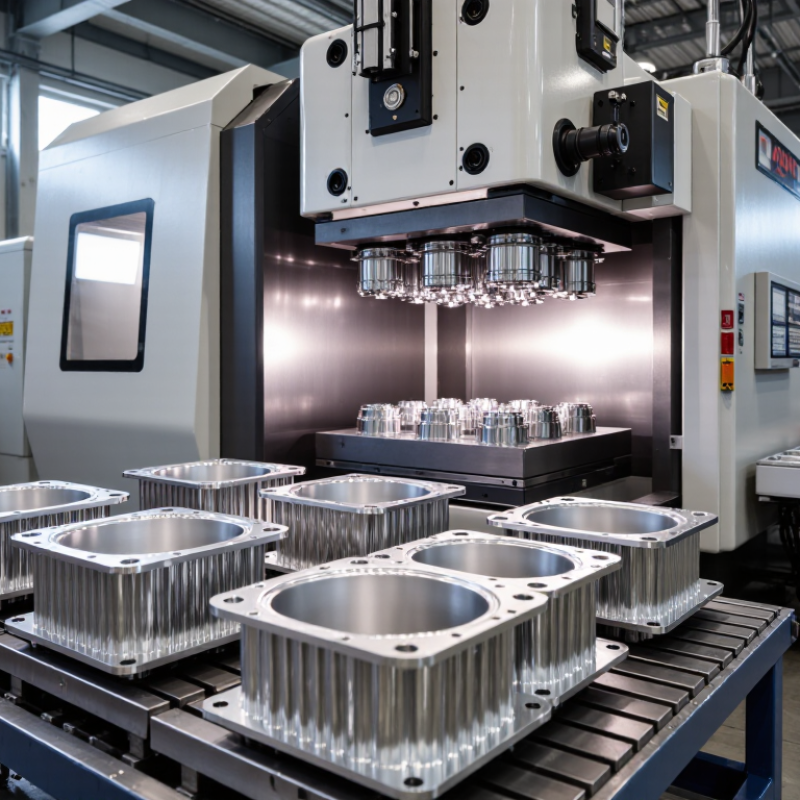
Global manufacturers are reconsidering how metal parts move from design files to factory floors. Die Casting Components offer repeatable dimensions, thin walls, and high production speed. A die-cast aluminum housing can leave the machine with mounting bosses, ribs, and cooling channels already formed. That reduces secondary machining and material waste.

Grand View Research estimated the global die casting market at approximately USD 72.15 billion in 2023. Its report projects a 5.4% compound annual growth rate from 2024 to 2030. Fortune Business Insights reports different figures, reflecting different market definitions and research methods. That difference matters. Data is useful, but never perfectly uniform. Still, both reports indicate sustained industrial demand.

“Lightweighting is the future of transportation,” says Professor Diran Apelian, a widely cited materials scientist and light-metals expert. His observation applies beyond vehicles. Lower component weight can reduce freight loads, improve energy efficiency, and simplify assembly. These benefits become meaningful when multiplied across thousands of units.

Die Casting Components also support regionalized production. Standardized tooling, automated inspection, and documented alloy specifications help suppliers maintain consistency across plants. Engineers can compare porosity levels, dimensional results, and cycle times before approving a global program. The process is not flawless. Tooling costs can be substantial, and poorly designed gates may create defects. Experienced teams therefore validate filling behavior, cooling rates, and wall thickness early. A cheaper quotation is not always the cheaper decision. Reliable manufacturing depends on evidence, disciplined design reviews, and honest supplier communication.

Why Choose Die Casting Components for Global Manufacturing?

What Are Die Casting Components?

Why Choose Die Casting Components for Global Manufacturing?

What Are Die Casting Components?

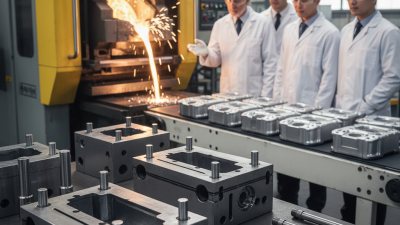
Die casting components are precision metal parts formed by forcing molten alloy into a reusable steel mold. The pressure fills narrow sections, sharp corners, and detailed surfaces quickly. Common materials include aluminum, zinc, and magnesium alloys. These parts may serve as housings, brackets, covers, heat sinks, or structural supports.

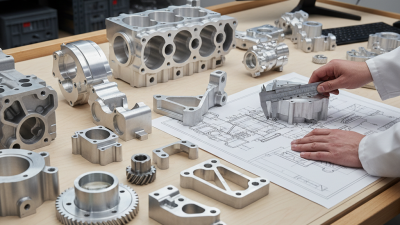
In practical manufacturing, a die casting component often begins with a carefully reviewed drawing. Engineers check wall thickness, draft angles, fastening points, and expected loads. A well-designed die can produce consistent parts with limited machining. This can reduce material waste and support repeatable production across different facilities.

Still, die casting is not automatically perfect. Thin walls can cool unevenly. Small pores may appear inside the part. We have seen that rushed mold design creates avoidable trimming and inspection work. Reliable production therefore requires alloy testing, dimensional checks, surface inspection, and process records. Independent testing may also verify strength, corrosion resistance, and internal quality.

Tips: Confirm the alloy early. Review critical dimensions with the casting engineer. Request sample inspections before large-scale production. Keep realistic tolerances. Tighter is not always better.

How the Die Casting Manufacturing Process Works

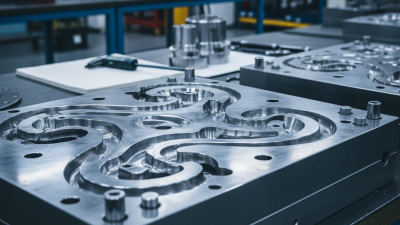
Die casting turns molten metal into precise components through a controlled, repeatable sequence. The process begins with a component drawing and a carefully designed steel die. Engineers check wall thickness, cooling channels, parting lines, and ejection points before production. Small design choices matter. A sharp corner can trap stress or restrict metal flow.

During casting, an alloy is heated until it becomes liquid. A shot sleeve then transfers the melt into the die. A plunger drives it forward at high speed and pressure. The metal fills narrow ribs, holes, and detailed surfaces within seconds.

Cooling channels remove heat from the die. Solidification must be balanced. Too quickly, and the surface may show cold shuts. Too slowly, and shrinkage or distortion can appear.

After cooling, ejector pins release the casting. Trimming removes runners, gates, and flash. Operators inspect dimensions with gauges, measuring equipment, or visual checks under suitable lighting. X-ray testing may reveal hidden porosity when performance requirements demand it. Practical experience remains valuable; machine data cannot explain every defect alone. A first trial may require changes to temperature, pressure, lubricant, or cooling time. No process is flawless. Documented inspections and controlled adjustments support reliable global production. When the die, alloy, and process match carefully, manufacturers gain consistent components with less machining and material waste.

Why Die Casting Supports Global Production

Die casting supports global production by combining repeatability, speed, and material efficiency. A properly designed die can produce thousands of identical housings, brackets, or heat sinks with minimal dimensional variation. In a busy factory, this means fewer manual adjustments and more predictable assembly. Short cycle times also help manufacturers serve regional demand without creating completely different production systems.

Material availability strengthens this advantage. The U.S. Geological Survey’s 2024 Mineral Commodity Summaries reported global primary aluminum production of roughly 70 million metric tons in 2023. Aluminum is widely used in die casting because it is lightweight, recyclable, and suitable for complex thin-wall parts. Industry market analyses also project continued growth in global die casting demand through 2030, driven by transportation, electronics, and industrial equipment.

However, global production is not automatically simple. A die may perform well in one plant but require process adjustments elsewhere. Temperature control, alloy chemistry, machine capability, and operator training can change results. This is often underestimated. Production teams should validate tooling across facilities, document inspection points, and test parts during real operating conditions. A small mismatch at a parting line can become costly after thousands of cycles. Good engineering reduces that risk, but it never removes the need for measurement, feedback, and practical experience.

Which Materials and Designs Suit Die Casting?

Die casting works best when the material matches the component’s real operating conditions. Aluminum alloys suit housings, brackets, and heat-management parts because they combine low weight with useful thermal conductivity. Zinc alloys support smaller components that need fine details, tight dimensions, and a smooth surface. Magnesium can reduce weight further, but engineers must examine stiffness, corrosion protection, and handling requirements carefully.

Material selection is only half the decision. Wall thickness should remain as uniform as practical, since sudden changes can increase shrinkage and internal stress. Ribs can improve strength without adding excessive mass, but crowded ribs may restrict metal flow. Draft angles help the casting leave the die cleanly. Small fillets are also valuable. Sharp internal corners often create avoidable stress concentrations.

In production reviews, I look closely at gates, vents, and likely air-trap areas. These details influence filling quality and surface appearance. Threaded holes, deep pockets, and undercuts may require secondary machining or movable die features. That can raise tooling complexity. A beautiful drawing is not always a practical casting.

Designers should also define tolerances by function. Decorative surfaces may need different control than sealing faces or bearing locations. Plated or painted finishes require suitable surface preparation and alloy compatibility. I have seen teams over-specify tolerances, increasing cost without improving performance. That mistake is easy to repeat. Testing sample castings under heat, vibration, and corrosion exposure can reveal weaknesses before global production begins.

Why Choose Die Casting Components for Global Manufacturing? – Which Materials and Designs Suit Die Casting?

Material or Design Dimension Typical Data or Capability Key Advantages Design Considerations Common Application Areas Suitability for Global Manufacturing
Aluminum Alloys Typical density: approximately 2.6–2.8 g/cm³. Common die-casting grades provide a strong strength-to-weight ratio and good thermal conductivity. Low weight, good corrosion resistance, efficient heat dissipation, and suitable surface appearance after finishing. Use uniform wall thickness where possible. Allow for draft, avoid abrupt section changes, and design ribs to improve stiffness without adding excessive mass. Automotive housings, electric motor covers, heat sinks, transmission cases, structural brackets, and industrial equipment enclosures. Widely available across international supply chains and suitable for high-volume production with consistent dimensional repeatability.
Zinc Alloys Typical density: approximately 6.6–6.7 g/cm³. Zinc die casting supports fine features and generally offers excellent dimensional accuracy. Good surface finish, thin-wall capability, high detail reproduction, strong wear resistance, and reduced need for secondary machining. Consider the higher material density when weight is critical. Plan for suitable draft angles and avoid unnecessarily thick sections that may increase cycle time. Small mechanical components, handles, locks, gears, connectors, consumer hardware, and precision housings. Well suited to repeatable, high-volume manufacturing where tight tolerances and near-net-shape production reduce assembly and finishing costs.
Magnesium Alloys Typical density: approximately 1.7–1.9 g/cm³, making magnesium significantly lighter than aluminum and zinc. Very low weight, good vibration damping, high machinability, and useful stiffness-to-weight performance. Control wall thickness and filling conditions carefully. The design and process must address oxidation, fire-safety procedures, and corrosion protection requirements. Lightweight electronic frames, automotive interior structures, power-tool housings, camera bodies, and portable equipment. Attractive for weight-sensitive products, but supplier process controls, safety systems, and regional compliance requirements should be verified before production transfer.
Copper-Based Alloys Typical density: approximately 8.3–8.9 g/cm³. Copper-based die-casting materials offer high electrical and thermal conductivity compared with aluminum and zinc. Excellent heat transfer, electrical conductivity, and resistance to certain forms of wear and corrosion. Higher density and higher melting temperatures can increase tooling and process demands. Confirm die material, cooling strategy, and dimensional requirements during design review. Electrical components, heat-transfer parts, terminals, conductive connectors, and specialized industrial hardware. Suitable when conductivity or thermal performance is more important than minimum weight; production should be matched with capable tooling and process infrastructure.
Wall Thickness Many aluminum die-cast components use nominal walls of roughly 1.5–4 mm, depending on alloy, flow length, geometry, and production method. Balanced walls support stable filling, lower material consumption, shorter cycle times, and reduced risk of distortion. Actual minimum thickness must be validated through flow analysis and trial tooling. Avoid large changes in thickness that can cause porosity or shrinkage-related defects. Housings, covers, brackets, structural frames, and enclosed mechanical parts. Standardized wall-thickness rules make designs easier to transfer between qualified production locations.
Draft Angles Draft is commonly required on surfaces parallel to the die-opening direction. The required angle depends on alloy, surface texture, depth, and tooling design. Improves part ejection, protects die surfaces, and reduces the possibility of sticking or scoring. Use greater draft for deep cavities, textured surfaces, and cast surfaces requiring easier release. Confirm values with the tool designer before releasing drawings. All die-cast parts with internal or external surfaces formed by the die. Clear draft standards help reduce tooling revisions and support consistent production across multiple regions.
Ribs and Bosses Ribs are generally designed thinner than the surrounding nominal wall, while bosses should be supported with ribs or blended transitions rather than heavy solid masses. Increases stiffness, supports fasteners, and reduces the need for thick structural sections. Use rounded transitions, avoid isolated heavy areas, and provide machining allowance only where required for functional surfaces. Mounting brackets, electronic housings, motor covers, and structural enclosures. Efficient rib and boss design lowers weight and material usage while improving repeatability in high-volume production.
Dimensional Accuracy Die casting can provide good repeatability, but achievable tolerances depend on alloy, part size, die stability, thermal conditions, and measurement method. Reduces machining requirements and supports consistent assembly of large production batches. Identify critical-to-function dimensions separately from non-critical dimensions. Use machining or calibration for features requiring tighter tolerances than as-cast capability. Multi-part assemblies, precision housings, gear covers, and components with locating features. Defined inspection plans and common drawing standards help maintain quality across international manufacturing sites.
Surface Finishing Typical options include deburring, shot blasting, vibratory finishing, polishing, painting, powder coating, plating, and chemical conversion treatments. Improves appearance, corrosion protection, wear resistance, and compatibility with assembly requirements. Specify the required cosmetic zones, masking areas, coating thickness, color tolerance, and post-treatment dimensional limits. Visible housings, consumer products, vehicle components, industrial controls, and outdoor equipment. Finish specifications should use measurable criteria so that suppliers in different countries can achieve comparable results.
Production Volume Die casting is generally most economical for medium- to high-volume production because the tooling investment is offset by fast, repeatable cycles. High output, reduced unit labor content, consistent part geometry, and good material utilization. Compare tooling cost, projected annual volume, product life, cycle time, and expected engineering changes before selecting the process. Automotive, appliances, electronics, lighting, power equipment, and industrial machinery. Stable high-volume programs benefit most from standardized tooling, documented process parameters, and regional backup capacity.
Global Supply and Compliance Successful international production requires controlled material specifications, traceability, inspection criteria, packaging standards, and regulatory documentation. Improves interchangeability, reduces supply disruption risk, and simplifies qualification of alternative production sites. Define alloy composition, mechanical requirements, restricted substances, sampling plans, labeling, and change-control procedures in the product specification. Export components, safety-related assemblies, regulated products, and multi-site manufacturing programs. Process documentation and objective acceptance criteria make supplier comparison and production transfer more reliable.

Note: The values shown are general engineering ranges and selection guidelines. Final material, thickness, tolerance, tooling, and finishing requirements should be confirmed through application-specific design analysis, simulation, testing, and applicable standards.

How to Evaluate Die Casting Suppliers and Components

Why Choose Die Casting Components for Global Manufacturing?

Evaluating a die casting supplier requires more than comparing unit prices. Check the supplier’s experience with your alloy, component size, wall thickness, and surface requirements. Ask for process capability data, inspection records, and sample reports. A reliable supplier should explain tooling life, maintenance plans, and expected production capacity. Clear answers matter.

Tips: Review a trial sample under real assembly conditions. Measure critical holes, flatness, and sealing surfaces. Request material certificates and traceability records for each batch. Confirm how the supplier controls porosity, flash, dimensional drift, and heat treatment. Also assess communication speed. Delayed answers can become delayed shipments.

A strong evaluation includes an audit of equipment, inspection tools, and quality procedures. Look for calibrated gauges, documented work instructions, and a practical corrective-action process. Ask how defects are isolated before shipment. A polished sample may hide unstable production. That risk deserves attention. I would also compare packaging methods, export documents, and backup capacity before approving a supplier. These details often appear small, yet they can affect assembly costs across multiple countries. Avoid choosing based only on an impressive quotation. The cheapest component can become expensive after rework, transport, and line stoppages.

Why Choose Die Casting Components for Global Manufacturing?

Typical ultimate tensile strength values help manufacturers compare material options when evaluating die-cast components, tooling requirements, and supplier capability.

Representative nominal values: aluminum alloy A380 is commonly selected for its balance of strength, castability, and cost; zinc alloy Zamak 3 provides high strength and excellent dimensional accuracy; magnesium alloy AZ91D offers low density for lightweight components. Supplier evaluations should also verify porosity control, dimensional capability, surface finish, traceability, and quality certifications.