0086-15925850312

Choosing the right supplier for Cast Metal Parts is more than comparing prices. It shapes part consistency, delivery schedules, and the amount of rework waiting on your production floor. The World Foundry Organization’s 2022 Census of World Casting Production reported approximately 109 million tonnes of castings produced worldwide. That scale signals a mature industry, but it does not make every foundry equally capable. A polished website proves little.
A useful evaluation begins with the part itself: alloy, dimensions, wall thickness, tolerances, and expected production volume. Ask how the supplier controls melting, mold preparation, pouring, and inspection. Request sample inspection records, material traceability, and examples of comparable parts. Casting authority John Campbell states, “The quality of a casting is determined by the quality of the liquid metal from which it is made.” His principle points buyers toward process control, not sales promises. Details matter.
Then examine whether the supplier can explain its limits. Can its team discuss porosity risks in a thick section, or show how it checks a critical bore? Clear answers are useful. Vague assurances are not. Compare tooling capability, quality systems, communication, lead times, and total landed cost—not unit price alone. A supplier may have impressive equipment yet lack experience with your alloy or geometry. No checklist catches everything. A factory visit, a pilot run, and a careful review of first-article results can expose gaps early. This guide outlines practical questions for selecting a dependable partner, while recognizing that the best choice depends on your part, risk tolerance, and production needs.
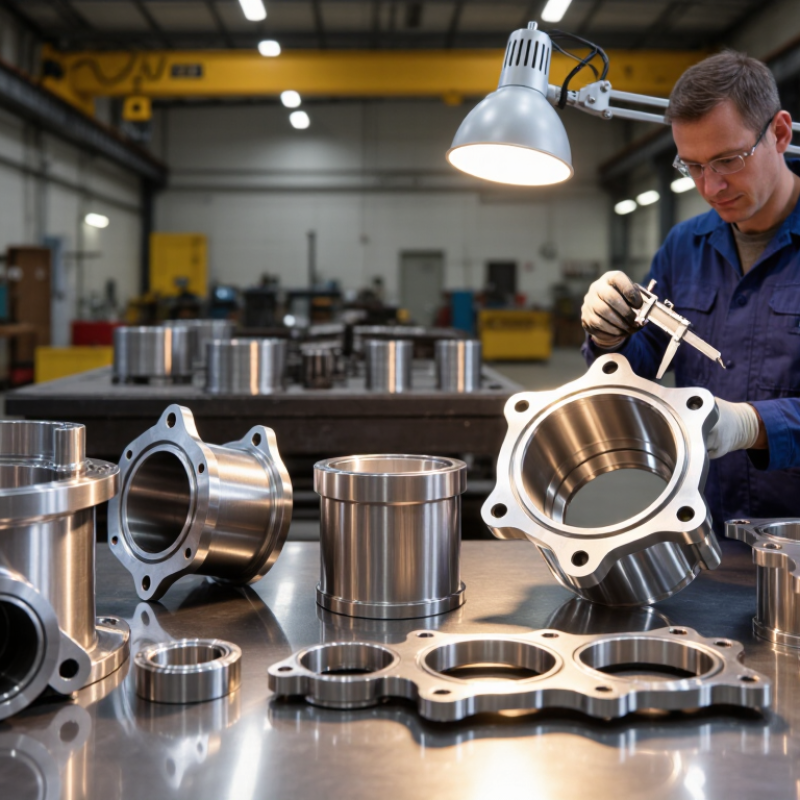
Define the part’s job before comparing cast metal parts suppliers. Describe the loads, operating temperature, exposure to moisture or chemicals, and expected service life. A small pump housing, for example, may need corrosion resistance, pressure integrity, and machined sealing faces. Be specific. Name the preferred alloy or required material properties, but note where alternatives are acceptable.
Put dimensions, tolerances, and surface requirements on a clear drawing. Identify critical features, such as bolt-hole spacing or a bearing seat, separately from noncritical cast surfaces. Include wall thickness, draft direction, machining allowances, and datum points where known. A vague finish requirement can lead to mismatched expectations. So can tolerances applied to every feature. In practice, early specifications often need revision; that is normal, but changes should be documented.
Share estimated order quantities and whether demand may vary. These details affect tooling choices, process planning, and piece cost. Ask the supplier to flag features that may cause porosity, distortion, or difficult machining before production begins. If the design is still changing, say so. A supplier can only assess feasibility against the information provided, and an overly detailed drawing is not automatically a better one.

A supplier’s casting method should fit the part, not just the quotation. Sand casting can suit larger components and flexible production runs, while die casting often supports high-volume parts with repeatable dimensions. Investment casting can handle intricate shapes, but tooling, lead time, and finishing still matter. Ask how the supplier controls porosity, shrinkage, and dimensional variation. Details matter.
Material expertise deserves equal scrutiny. Ask for the alloy designation, melt chemistry records, and test results tied to the actual production lot. For a load-bearing aluminum part, confirm the required strength and heat-treatment condition—not merely the alloy family. The World Foundry Organization’s 2022 global census reported roughly 110 million tonnes of castings produced worldwide in 2021, underscoring how broad the industry’s processes and materials are. A large market does not guarantee a capable supplier.
Request sample inspection reports, spectrometer readings, and records of mechanical testing where relevant. Then compare them with your drawing and service conditions. A tidy brochure is not evidence. Ask to see it. If a supplier cannot explain why a chosen process suits your wall thickness, tolerance, and order volume, pause before approving tooling. Even a strong supplier may miss something; a trial casting can reveal issues that a polished presentation cannot.
Assess the Supplier’s Casting Methods and Material Expertise
Approximate melting points of pure metals, in °C; alloys can have different melting ranges. Use material requirements and part geometry to discuss suitable casting methods, process controls, and relevant supplier experience.
Choosing a cast metal parts supplier means looking beyond a smooth sample. Ask how the supplier controls melt chemistry, mold preparation, pouring temperature, and cooling. These details can affect porosity, dimensional consistency, and surface finish. Request inspection records for parts similar to yours, not just a general quality statement. A clear record should connect each result to a part number, batch, and inspection date.
Check that certifications are current and cover the actual production site and process. A certificate may not include every plant or service. Review testing capabilities, too. Depending on the part, useful checks may include dimensional measurement, hardness testing, tensile testing, or radiographic inspection. Ask who performs each test, how equipment is calibrated, and what happens when results fall outside the agreed limits. A confident answer includes records and practical examples. A polished certificate file helps, but it cannot replace evidence from production. That distinction is easy to overlook.
Tips: Request a sample inspection report and traceability record. Ask the supplier to explain one rejected batch and its corrective action. If the explanation feels vague, pause. Even good systems can miss things, so agree on acceptance criteria before production starts.
A supplier’s stated capacity matters only if it matches your part and production schedule. Ask how many casting machines are available, which shifts are running, and whether finishing work happens in-house. A foundry producing thousands of small parts each month may still struggle with a large, complex component. Ask for evidence. Review recent output records and inspect how the supplier tracks defects and rework. A full order book can also mean less room for urgent changes.
Lead times should include every stage, not just casting. Request dates for tooling, sample approval, production, machining, inspection, and shipment. Check how the supplier handles a delayed mold or a failed first article. Delays happen. A realistic schedule with clear milestones is more useful than a fast estimate without details.
Compare total costs, not just the unit price. Include tooling, setup, machining, surface treatment, packaging, freight, and inspection charges. Confirm whether quoted prices assume a particular order size or acceptable scrap rate. A small pilot run can reveal variation in dimensions and finish before you commit to larger quantities. Still, one sample cannot predict every production issue. Leave room for that uncertainty when weighing capacity, delivery promises, and cost.
How to Choose the Best Cast Metal Parts Supplier?
Verify Supplier Experience, Communication, and Long-Term Reliability
Choosing a cast metal parts supplier means looking beyond a polished sample. Ask about experience with your alloy, casting method, part size, and production volume. A supplier familiar with similar components can explain common risks, such as porosity near thick sections or dimensional changes after heat treatment. Request sample inspection reports, material traceability records, and examples of how defects were corrected. Small details matter. A confident sales call is not proof of stable production.
Communication matters most when specifications change or a casting fails inspection. Notice how quickly the supplier answers technical questions and whether its engineers explain trade-offs clearly. McKinsey Global Institute’s 2020 analysis found that companies can expect supply-chain disruptions lasting a month or longer about every 3.7 years. That makes long-term reliability more than a promise. Review delivery performance, corrective-action records, and plans for maintaining tooling and capacity. No supplier is flawless; I would still check how openly they discuss past problems.
Tips: Start with a small qualification run. Compare actual dimensions, surface finish, and delivery dates against the agreed requirements. Keep a simple scorecard and revisit it regularly. A missed detail can happen, but repeated surprises deserve a closer look.
| Evaluation area | What to verify | Evidence to request | Positive indicators | Potential warning signs |
|---|---|---|---|---|
| Relevant casting experience | Experience with the required casting process, alloy, part size, geometry, and production volume. | Anonymized examples of comparable parts, process capability details, and references where available. | Can explain process trade-offs, likely casting constraints, and how these affect tooling, quality, and cost. | Claims broad capability but cannot describe comparable work or relevant process limitations. |
| Technical review and DFM | Whether the supplier reviews drawings, tolerances, wall sections, draft, machining allowances, and inspection requirements before quoting. | A sample design-for-manufacturing review, clarification log, or marked-up drawing from a comparable project. | Raises specific questions early and documents proposed changes for customer approval. | Quotes from incomplete information without identifying assumptions or technical risks. |
| Quality controls | How incoming materials, casting operations, machining, and finished parts are inspected and recorded. | Quality procedures, sample inspection reports, material test documentation, and nonconformance handling process. | Inspection methods and acceptance criteria are agreed before production; records can be traced to a lot or order. | Unclear inspection responsibility, missing records, or reluctance to explain how defects are contained and corrected. |
| Certifications and compliance | Whether quality-system certifications and material or regulatory requirements match the project and destination market. | Current certificates, scope and expiry details, material declarations, and any required compliance records. | Documents are current, applicable to the work, and verifiable with the issuing organization when needed. | Expired or out-of-scope documents, or treating a certificate as proof that every part will meet requirements. |
| Communication and responsiveness | Clarity, response ownership, escalation routes, and communication frequency during quoting, sampling, and production. | A named project contact, written update plan, and examples of how technical questions or schedule changes are handled. | Answers are specific, actions have owners and dates, and risks are communicated before they become surprises. | Conflicting answers, unanswered questions, or repeated promises without documented follow-up. |
| Lead time and delivery planning | Quoted timing for tooling, samples, approvals, production, and shipping, including key schedule assumptions. | A milestone schedule, capacity confirmation, and a process for reporting delays or recovery actions. | The plan separates major stages and identifies customer approvals or inputs that affect timing. | An unusually short delivery promise with no stated assumptions, capacity check, or contingency plan. |
| Capacity and continuity | Ability to support the expected order pattern and maintain production if equipment, staffing, or material supply is disrupted. | Capacity assumptions, critical-equipment overview, subcontracting disclosures, and business-continuity arrangements relevant to the order. | Constraints and outside processes are disclosed; contingency plans are proportionate to the project’s needs. | Capacity is assumed rather than confirmed, or important outsourced steps are not disclosed. |
| Long-term cost and tooling ownership | How tooling, maintenance, storage, engineering changes, minimum orders, and price adjustments are handled over time. | A written quotation with inclusions, exclusions, tooling terms, maintenance responsibilities, and change-control rules. | Commercial terms are clear, and tooling custody, access, maintenance, and transfer conditions are documented. | Unspecified extra charges, unclear ownership, or no agreed process for engineering and price changes. |
| Corrective action and partnership | How the supplier investigates defects, identifies causes, implements corrective actions, and checks their effectiveness. | A redacted corrective-action example and the supplier’s process for containment, root-cause analysis, and follow-up verification. | The response distinguishes containment from root-cause correction and includes owners and verification steps. | Blame is assigned without investigation, or corrective actions are closed without evidence of effectiveness. |
Use this checklist to compare suppliers against your part requirements. The indicators are evaluation prompts, not claims about any specific supplier or universal industry performance standards.