0086-15925850312
Leave Your Message
-
CONTACT NUMBER
-

-
 CONTACT NUMBER
China remains a major sourcing destination for Cast Metal Parts used in machinery, automotive systems, construction equipment, and industrial assemblies. Its manufacturers offer sand casting, investment casting, die casting, and precision machining. Choosing the right supplier requires more than comparing prices.
Experienced buyers examine alloy control, mold design, dimensional tolerances, surface finish, and production capacity. A dependable factory should explain its process clearly. It should also provide material certificates, inspection records, and traceable quality reports. Factory audits can reveal practical details, such as clean storage areas, calibrated measuring tools, and organized production lines.
Small details matter.
A supplier may claim advanced capabilities, yet its samples can show uneven walls or rough edges. That gap deserves attention. Reliable manufacturers usually discuss drawing reviews, tooling ownership, prototype approval, and corrective actions before mass production. They should understand international packaging, documentation, and delivery expectations. However, no supplier is perfect, and even strong factories can experience casting porosity, shrinkage, or schedule changes. Open communication helps reduce these risks.
This guide introduces China’s top cast metal parts manufacturers and suppliers through practical selection criteria. It considers technical expertise, inspection systems, customization ability, responsiveness, and industry experience. The goal is not to promote the largest company automatically. A suitable partner must match your material, volume, tolerance, budget, and application requirements. Careful verification remains essential. Supplier visits, independent inspections, and trial orders can provide stronger evidence than marketing language alone.
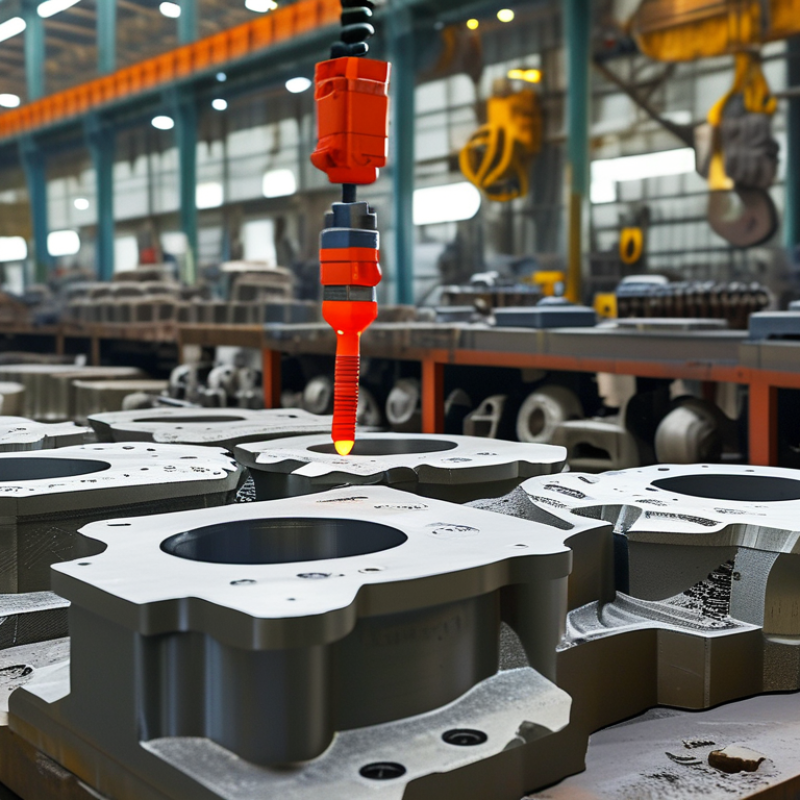
China’s casting industry produced more than 50 million tonnes in 2023, according to widely cited industry data. That volume places China at the center of global cast metal parts supply. It reflects thousands of foundries producing iron, steel, aluminum, and other alloy components. The scale is visible in practical details: molding lines operate beside heat-treatment rooms, machining cells, and inspection stations. This is industrial capacity, not just a headline.
For overseas buyers, a capable supplier should show more than a large production floor. Ask for material certificates, process records, dimensional reports, and traceability from melt batch to shipment. A serious manufacturer can explain its pattern method, pouring temperature, machining allowance, and defect-control plan. Sample parts should be checked for porosity, shrinkage, surface hardness, and critical tolerances. Clear drawings help.
Yet output volume can hide uneven performance. Some suppliers manage complex castings well but struggle with small orders, engineering changes, or consistent documentation. That gap matters when a part must fit a pump housing, construction machine, or agricultural assembly without repeated adjustment. Early inspection of trial castings often reveals more than polished sales material. The 2023 figure proves manufacturing strength, but it does not guarantee every supplier is reliable. Buyers still need audits, realistic testing, and direct technical communication before approving production.
| Data Dimension | Metric or Category | Verified Industry Information | Unit / Classification | Reference or Practical Note |
|---|---|---|---|---|
| Industry Scale | Total casting output in 2023 | More than 50 million tonnes; commonly reported at approximately 51.95 million tonnes | Million tonnes | Reported in Chinese foundry-industry statistics for 2023; includes ferrous and non-ferrous castings. |
| Product Scope | Cast metal parts | Engine blocks, pump bodies, valve bodies, brackets, housings, flanges, gears, impellers, machinery bases and structural components | Industrial components | Actual product availability depends on the supplier’s alloy, tooling, furnace and machining capabilities. |
| Ferrous Materials | Iron and steel castings | Gray iron, ductile iron, malleable iron, carbon steel, low-alloy steel and stainless-steel castings | Ferrous alloys | Typical selection is based on tensile strength, wear resistance, corrosion resistance, machinability and operating temperature. |
| Non-Ferrous Materials | Aluminium, zinc, copper and magnesium alloys | Common applications include lightweight housings, heat sinks, electrical components, plumbing parts and transportation components | Non-ferrous alloys | Die casting is widely used for high-volume aluminium and zinc parts; sand, gravity and investment casting are also used. |
| Casting Processes | Sand casting | Suitable for large parts, complex geometries and relatively low-to-medium production volumes | Reusable pattern with expendable mould | Common mould materials include green sand, resin sand and sodium-silicate sand. |
| Casting Processes | Investment casting | Used for intricate shapes, thin sections and parts requiring reduced machining allowance | Ceramic shell mould | Frequently used for stainless steel, alloy steel, aluminium alloys and precision mechanical parts. |
| Casting Processes | Die casting | High-speed process for aluminium, zinc and magnesium parts with consistent dimensions | Permanent steel die | Best suited to repeat production because tooling investment is higher than for expendable-mould processes. |
| Casting Processes | Centrifugal casting | Commonly used for pipes, sleeves, rings, bushings and other rotational components | Rotational mould filling | The process can improve metal soundness and reduce some internal shrinkage defects in suitable geometries. |
| Quality Standards | Dimensional and geometrical requirements | ISO 8062-3 provides a commonly used system for casting dimensional and geometrical tolerances | International standard | The required tolerance grade should be agreed in the technical drawing and quotation. |
| Chinese Standards | Representative material standards | GB/T 9439 for gray iron castings; GB/T 9440 for malleable iron castings; GB/T 11352 for general engineering steel castings | Chinese national standards | The applicable standard should match the alloy grade, end-use requirements and customer drawing. |
| Post-Casting Services | Secondary operations | Heat treatment, shot blasting, surface cleaning, CNC machining, drilling, tapping, coating and dimensional inspection | Value-added manufacturing | Integrated casting and machining can reduce supplier coordination and improve process traceability. |
| Supplier Evaluation | Recommended qualification evidence | Material certificates, chemical analysis, mechanical-test reports, dimensional reports, non-destructive testing records and process-control documentation | Procurement checklist | Evidence should be reviewed against the drawing, purchase specification and applicable casting standard. |
| Inspection Methods | Non-destructive testing | Visual inspection, dimensional inspection, dye penetrant testing, magnetic-particle testing, ultrasonic testing and radiographic testing | Quality-control methods | The method depends on material, section thickness, defect risk and the criticality of the component. |
| Main End-Use Sectors | Application industries | Automotive, agricultural machinery, construction equipment, pumps and valves, energy equipment, rail transport, general machinery and infrastructure | Industrial demand sectors | Material and process selection should be based on load, pressure, corrosion, temperature and service-life requirements. |
Note: Industry output figures are presented as rounded sector-level statistics. Supplier capability, alloy grade, tolerance, inspection scope and production volume should be confirmed against the applicable technical specification.