How to Choose Aluminum Turned Parts for Your Manufacturing Needs?
Choosing the right aluminum turned parts is crucial for effective manufacturing. These components play a significant role in various industries. They can affect the overall efficiency and quality of your production processes.
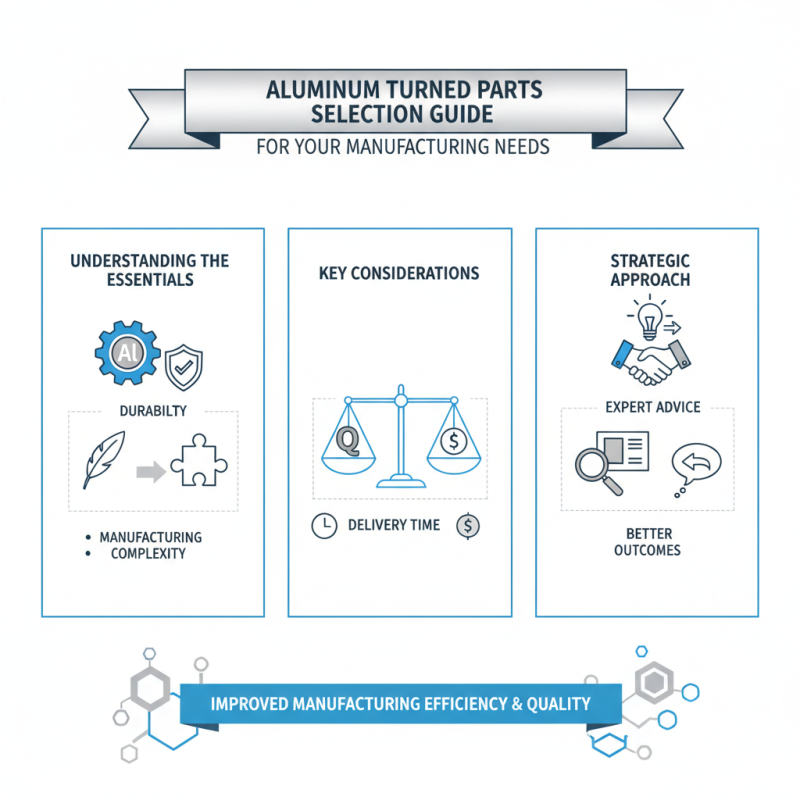
Understanding the specifications of aluminum turned parts is essential. The material’s lightweight nature provides durability, but it can also complicate manufacturing if not handled properly. Different industries have unique needs, requiring careful consideration of the design and application.
Many factors influence your choice. Quality is paramount, but cost and delivery times also matter. Seeking expert advice can enhance your decision-making. Reflecting on past experiences with suppliers can provide valuable insights. Recognizing what worked and what didn’t is important for future projects. Ultimately, careful evaluation of aluminum turned parts will lead to better manufacturing outcomes.
Identifying Your Manufacturing Requirements for Aluminum Turned Parts
Choosing the right aluminum turned parts starts with understanding your manufacturing needs. You should consider several factors. Begin by defining the size and shape requirements. Different applications demand varying specifications. For example, aerospace components require precise dimensions, while automotive parts might focus more on durability.
Material properties also play a crucial role. Aluminum offers unique strengths, making it suitable for lightweight structures. Yet, not all aluminum alloys perform the same. Knowing whether you need corrosion resistance or heat conductivity can influence your choice. Engaging experts in material science can help clarify these details.
Furthermore, think about your production volume. Large-scale operations may benefit from automated processes. Conversely, small batches may require more manual craftsmanship. Each method has its trade-offs. Engaging with a qualified manufacturer can shed light on how to balance quality with cost. It is essential to ask the right questions and consider both current and future needs. This iterative process ensures you make informed decisions.
Understanding the Types of Aluminum Alloys for Turned Parts
When choosing aluminum turned parts, understanding the types of aluminum alloys is crucial. Aluminum alloys are often categorized into series based on their primary alloying elements. The 1000 series is pure aluminum, known for high corrosion resistance and excellent workability. It is ideal for applications requiring high thermal and electrical conductivity. However, its strength is relatively low.
The 2000 series contains copper, providing enhanced strength. This series is suitable for aerospace applications, where weight savings are critical. Data from the Aluminum Association indicates that these alloys can achieve strength levels significantly higher than those in the 5000 and 6000 series. However, they may have lower corrosion resistance, necessitating protective coatings.
The 5000 series, alloyed with magnesium, offers a great balance of strength and corrosion resistance. It is widely used in marine environments. Experts highlight that these alloys maintain good weldability, making them advantageous for complex manufacturing processes. The selection of an alloy must align with the specific demands of your projects, such as durability, weight, and environmental exposure. Reflecting on these factors is essential for optimizing manufacturing outcomes.
Evaluating Precision and Tolerance Levels in Machining
Choosing aluminum turned parts for manufacturing requires careful evaluation of precision and tolerance levels in machining. Precision is vital for ensuring that each component fits seamlessly into your assembly. When parts are fabricated, even minor deviations can lead to assembly issues and affect overall performance. Thus, understanding the specific tolerances required for your application is key.
Tolerance levels dictate how much variation is acceptable in the dimensions of turned parts. These levels can range from very tight tolerances of ±0.001 inches to looser ones of ±0.01 inches or more. Choosing the right tolerance level depends on the functionality of the part. Some applications may allow for flexibility, while others may require strict adherence to precise measurements. It's essential to strike a balance between cost and precision, as tighter tolerances often come at a premium.
Manufacturers face challenges when achieving high precision. Variations in equipment and material can impact the final product. Therefore, it’s crucial to work with experienced machinists who understand these nuances. They can provide insights on adjusting machining parameters to enhance precision. Reflecting on past projects can also help refine your specifications and improve future outcomes in manufacturing.
Evaluation of Precision and Tolerance Levels in Aluminum Machining
Comparing Cost Factors in Supplier Options for Aluminum Parts
Choosing the right supplier for aluminum turned parts involves understanding several cost factors. While cost is important, it should not be the only concern. Quality and reliability are equally vital. Suppliers with a proven track record often charge more, but they may reduce overall risks. Cheaper options can lead to higher long-term costs through mistakes and rework.
Consider the production capabilities of potential suppliers. Some may offer lower prices but lack advanced technology or materials. This might compromise quality. It’s also worth looking at their lead times. Suppliers with faster turnaround can save you valuable time, which can justify a higher expense.
Engagement with suppliers about their processes is crucial. Ask questions about their quality control measures and certifications. This builds trust and ensures they meet your standards. Take the time to evaluate multiple quotes, but remember, the cheapest option may not always be the best. Investing in a dependable supplier often pays off in the long run. Strive for a balance between cost, quality, and service when making your decision.
How to Choose Aluminum Turned Parts for Your Manufacturing Needs? - Comparing Cost Factors in Supplier Options for Aluminum Parts
| Supplier |
Material Grade |
Quantity (units) |
Unit Price ($) |
Total Cost ($) |
Lead Time (days) |
| Supplier A |
6061 |
1000 |
1.50 |
1500.00 |
10 |
| Supplier B |
6063 |
500 |
1.80 |
900.00 |
15 |
| Supplier C |
7075 |
3000 |
2.00 |
6000.00 |
20 |
| Supplier D |
2024 |
1500 |
2.25 |
3375.00 |
12 |
Assessing Surface Finishing Techniques for Optimal Performance
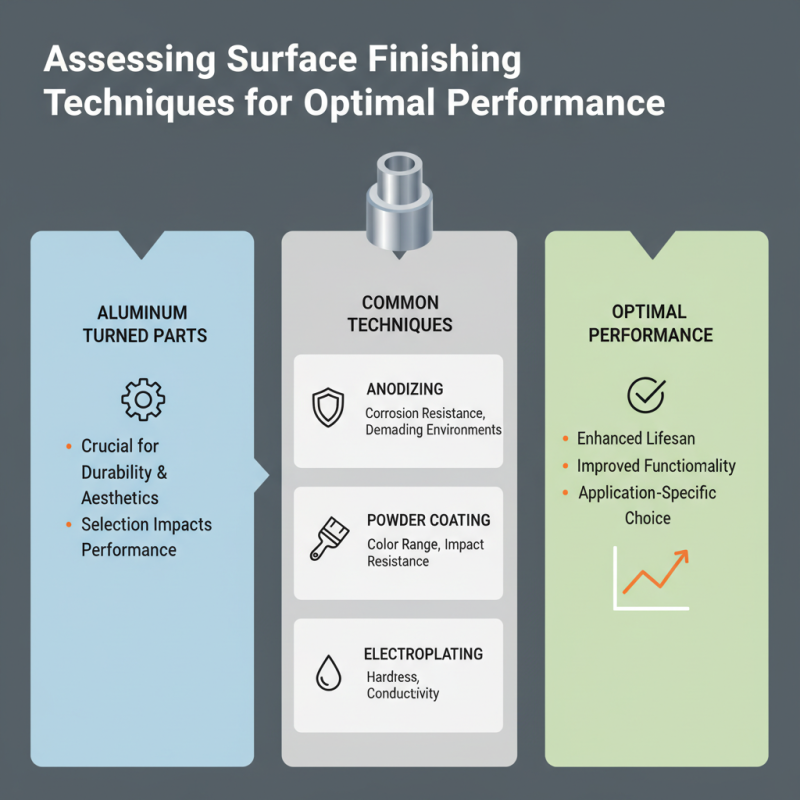
When selecting aluminum turned parts, surface finishing techniques are crucial. These techniques enhance the durability and aesthetic quality of the parts. Various methods exist, each suitable for different applications. Anodizing, for instance, provides excellent corrosion resistance. This can be beneficial in demanding environments.
Tips for choosing the right surface finish include understanding your part's function. If a part requires high wear resistance, consider hard anodizing. It increases surface hardness, reducing wear. On the other hand, if aesthetics are important, a polished finish may be more suitable. Always evaluate the environment where the part will be used.
Another factor is the manufacturing process. Some finishing techniques might add time or cost. You must balance these with the performance benefits. Consider how the finish can impact the part's dimensions. It's essential to assess not just the finish itself, but its compatibility with other components. This reflection can guide you toward optimal choices for your specific manufacturing needs.


 0086-15925850312

 CONTACT NUMBER