0086-15925850312
Leave Your Message
-
CONTACT NUMBER
-

-
 CONTACT NUMBER
Choosing the right Sand Casting Mold manufacturer can influence production quality, delivery stability, and long-term tooling costs. A reliable supplier does more than machine a pattern or assemble a mold. It studies part geometry, alloy behavior, draft angles, shrinkage, and the customer’s casting process. Small details matter. A poorly planned riser location can create costly defects inside a finished component.
This guide examines leading Sand Casting Mold manufacturers worldwide through practical and technical criteria. These include engineering experience, material selection, dimensional control, surface finish, testing procedures, and after-sales support. We also consider whether manufacturers serve heavy machinery, automotive, energy, aerospace, or custom industrial applications. Factory capacity matters, but it should not replace evidence. Verified project records, inspection reports, and clear communication often reveal more than polished marketing language.
The comparison is not perfectly objective. Regional strengths differ, and some companies publish limited technical information. That limitation deserves attention. A manufacturer may offer advanced simulation, yet struggle with small-batch flexibility. Another may provide excellent craftsmanship but lack rapid international service. Buyers should request sample drawings, process details, tolerance data, and realistic lead times before making a decision. Ask hard questions. The best choice depends on the casting alloy, mold size, production volume, budget, and required reliability. This overview aims to provide a balanced starting point, based on manufacturing practices rather than popularity alone. Independent verification remains wise, especially when tooling affects safety-critical or high-value components.
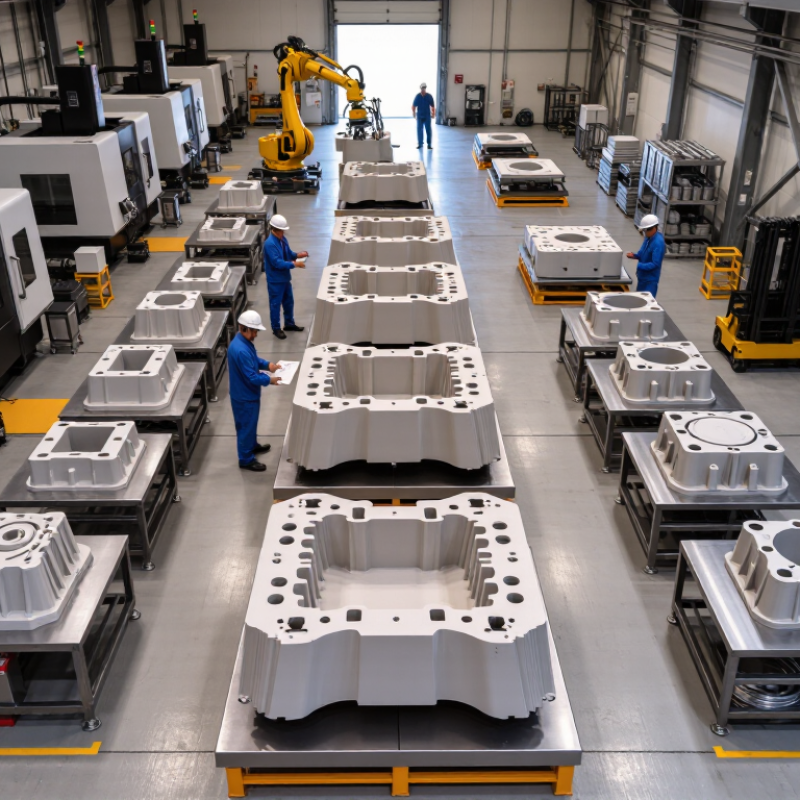
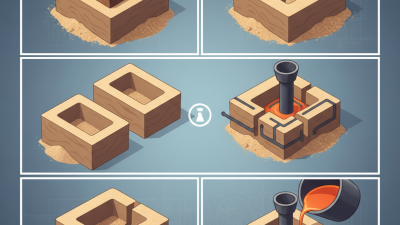
Sand casting is a metal-forming process that uses a cavity pressed into prepared sand. Molten metal enters this cavity and cools into the required shape. The sand mold is usually broken after casting, so each production cycle may need a new mold. The method suits engine housings, pump bodies, machine frames, and other large components.
Mold manufacturers are important because mold quality directly affects dimensional accuracy, surface texture, and production safety. Experienced specialists select suitable sand, binders, venting methods, and pattern materials for each alloy. They also inspect shrinkage allowances and weak corners before production begins. A practical example is a thick metal section, where poor feeding design can create internal cavities after cooling. Small errors spread.
Reliable manufacturers use measured test results rather than visual judgment alone. They check moisture levels, mold strength, cavity dimensions, and casting defects. Their engineers may use simulation software, but shop-floor experience remains essential. A computer model cannot always predict damaged sand, uneven ramming, or hurried handling. The pattern matters.
Choosing a capable supplier requires more than comparing prices. Buyers should review inspection records, material traceability, tooling control, and communication practices. Clear drawings and repeatable processes help reduce rejected castings. Even a well-designed mold can fail when storage conditions are poor. That possibility deserves attention. Good manufacturers explain these limitations honestly and improve the process through documented testing, corrective action, and production feedback.
| Evaluation Dimension | Verified Industry Information | Typical Technical Data | Why It Matters When Evaluating a Mold Manufacturer |
|---|---|---|---|
| Basic Process | Sand casting forms a cavity in bonded sand, introduces molten metal, allows solidification, and then removes the casting from the mold. | The mold is normally destroyed during shakeout, while a pattern may be reused for multiple production cycles. | Manufacturing capability should cover pattern design, molding, core production, pouring, shakeout, and finishing rather than mold fabrication alone. |
| Common Mold Systems | Widely used systems include green-sand molding, chemically bonded sand molding, and no-bake molding. | Green sand uses moisture and clay; chemically bonded systems use resin or inorganic binders; no-bake molds cure without external ramming pressure. | The selected process affects dimensional repeatability, surface quality, production speed, tooling cost, and suitable casting size. |
| Compatible Metals | Sand casting is suitable for ferrous and non-ferrous alloys, including gray iron, ductile iron, carbon steel, stainless steel, aluminum alloys, copper alloys, and magnesium alloys. | Actual alloy capability depends on furnace type, melt-temperature control, refractory practice, and metallurgical testing. | A qualified supplier should demonstrate alloy-specific process controls instead of claiming that one mold system performs identically for every metal. |
| Typical Casting Size | Sand casting is used for components ranging from small housings to very large industrial castings. | There is no universal maximum size; practical limits are determined by molding equipment, flask dimensions, handling capacity, furnace capacity, and pattern construction. | Equipment capacity and lifting limits are more meaningful than a generic size claim when comparing suppliers. |
| Dimensional Accuracy | As-cast accuracy depends on the molding process, pattern material, alloy shrinkage, mold rigidity, and process control. | Many conventional sand-cast components fall within approximately ISO 8062-3 casting tolerance grades CT10 to CT13; tighter requirements may require machining or improved molding methods. | Manufacturers should confirm achievable tolerances feature by feature and identify which dimensions require post-casting machining. |
| Surface Roughness | Sand molds generally produce a rougher surface than permanent molds or die-casting tools. | A common as-cast range is approximately Ra 12.5–50 µm, depending on sand grain size, binder system, mold coating, and finishing operations. | Surface requirements should be linked to sand specification, mold coating, cleaning method, and any grinding or machining allowance. |
| Pattern and Core Capability | Patterns define the external geometry, while cores create internal passages, cavities, and undercuts. | Patterns may be made from wood, polymer, or metal; cores may use resin-bonded sand, shell processes, or other approved core systems. | Reliable pattern and core design reduces dimensional variation, gas defects, misruns, and difficulty during shakeout. |
| Tooling Flexibility | Sand casting generally requires less permanent tooling than processes using metal dies, making design changes comparatively practical. | Pattern and core-box changes are still controlled engineering changes and may require new tooling, validation, and dimensional approval. | This flexibility is valuable for prototypes, replacement parts, complex geometries, and medium-volume production. |
| Quality-Control Evidence | Common controls include dimensional inspection, visual examination, radiographic testing, ultrasonic testing, magnetic-particle testing, dye-penetrant testing, and mechanical testing. | Inspection selection depends on alloy, geometry, safety requirements, customer specifications, and applicable standards such as ASTM, ISO, or EN requirements. | A strong manufacturer should provide traceable inspection records, calibration status, material certificates, and nonconformance procedures. |
| Defect Prevention | Typical sand-casting defects include porosity, inclusions, shrinkage cavities, cold shuts, misruns, sand inclusions, dimensional shifts, and gas-related defects. | Prevention relies on gating and risering design, melt cleanliness, pouring-temperature control, venting, moisture control, and simulation or process trials. | Proven process engineering is often more important than mold appearance because it directly affects yield, reliability, and rework cost. |
| Material Utilization | Runners, risers, gates, and rejected castings can create additional metal and sand waste. | Sand reclamation can recover a substantial portion of used molding sand, but the recovery rate varies by sand type, binder, equipment, and contamination control. | Suppliers with documented reclamation and yield-improvement programs can reduce environmental impact and total material cost. |
| Production Volume Fit | Sand casting is suitable for prototypes, low-volume orders, replacement parts, and many medium- to high-volume applications. | Automatic molding lines generally support higher repeatability and throughput than manual or jobbing molding, while manual methods provide greater flexibility for large or irregular parts. | The best manufacturing partner should match its molding method to order volume, geometry, tolerance, and delivery requirements. |
| Cost Structure | Total cost includes pattern or core-box tooling, sand and binder, alloy, melting, labor, energy, inspection, finishing, machining, packaging, and logistics. | Sand casting often has lower tooling costs than permanent-mold or die-casting processes, but machining and finishing costs may be higher. | A complete quotation should separate tooling, casting, inspection, machining, and transport so that suppliers can be compared consistently. |
| Environmental and Safety Controls | Foundries must manage heat, fumes, dust, noise, spent sand, binder emissions, and molten-metal hazards. | Relevant controls include ventilation, dust collection, personal protective equipment, sand reclamation, waste classification, and documented operating procedures. | Environmental and occupational-safety systems indicate operational maturity and help reduce regulatory and supply-chain risks. |
| Recommended Selection Criteria | Supplier comparison should consider process capability, alloy range, equipment capacity, engineering support, quality systems, inspection resources, delivery performance, and total cost. | Useful evidence includes sample inspection reports, process-flow documents, material traceability records, capability studies, and customer-approved first-article documentation. | Using measurable criteria avoids relying only on company size, marketing claims, or nominal production capacity. |
Note: Technical ranges are representative industry values. Final requirements should be confirmed against the applicable drawing, alloy specification, casting standard, inspection plan, and supplier process capability.