0086-15925850312
Leave Your Message
-
CONTACT NUMBER
-

-
 CONTACT NUMBER
Choosing the top Steel Casting manufacturers in 2026 requires more than comparing production volume or international visibility. The strongest suppliers combine metallurgical expertise, modern simulation tools, strict inspection, and dependable delivery. Their capabilities should be tested against real applications, from mining crusher parts to pressure-resistant energy components.
John Campbell, a respected casting researcher and author, stated, “The quality of a casting is determined by the quality of the liquid metal.” That principle still matters. A polished factory may impress visitors, but furnace control, melt cleanliness, mold design, and heat treatment determine performance. Small details matter. Look for spectrometer checks, ultrasonic testing, dimensional reports, and traceable heat numbers on every batch.
This guide examines manufacturers through practical criteria. These include alloy range, maximum casting size, machining support, certification, defect rates, engineering response, and after-sales service. A leading producer should also explain how it reduces energy use and handles production risks. Claims without records deserve caution.
No shortlist is perfect. Market rankings change as companies expand, merge, or lose key customers. Some manufacturers excel at large carbon steel castings but struggle with tight tolerances. Others provide excellent prototypes yet lack stable mass production. That difference can affect a project’s budget and schedule.
The following overview is designed for engineers, procurement teams, and industrial buyers. It does not treat brand reputation as enough. Instead, it connects visible factory strengths with measurable evidence, helping readers identify Steel Casting partners that are capable, transparent, and suitable for demanding applications.
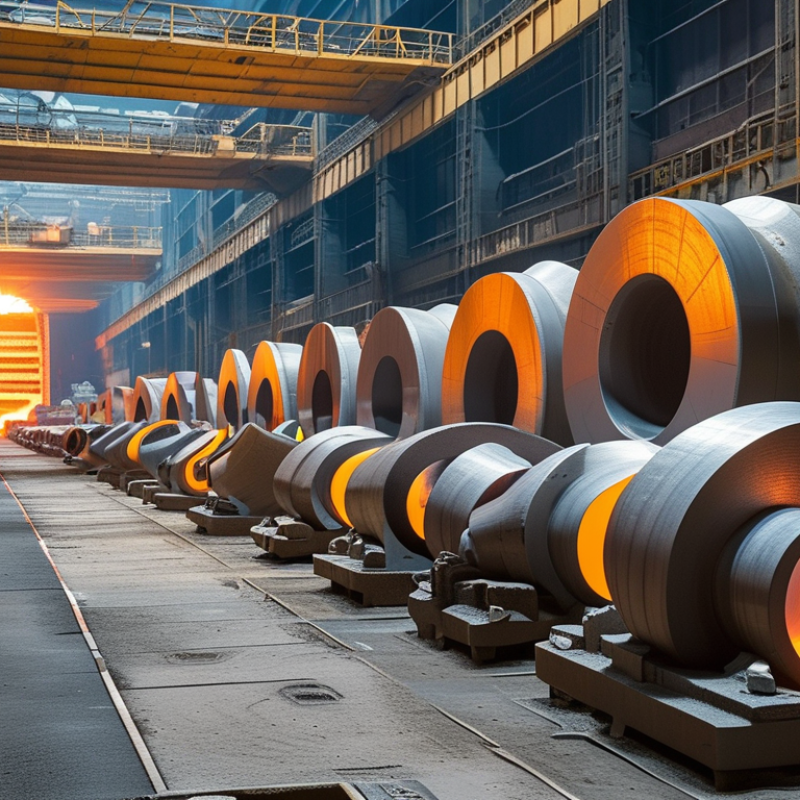
A top steel casting manufacturer in 2026 must prove performance beyond polished samples and low quotations. The World Steel Association reported approximately 1.88 billion tonnes of crude steel production in 2024. That scale increases pressure on foundries to deliver consistent chemistry, stable mechanical properties, and dependable delivery. A serious manufacturer should provide heat-number traceability, calibrated test records, and inspection results for every critical batch. Traceability matters.
Engineering capability also defines leadership. Strong foundries use simulation to identify shrinkage, porosity, and hot-tear risks before pouring. They combine dimensional scanning with radiographic, ultrasonic, or magnetic-particle inspection when the application requires it. ISO-based quality systems help, but certificates alone prove little. Audited processes, trained inspectors, and clear corrective-action records offer stronger evidence. Customers should ask for examples from comparable alloys, section thicknesses, and service conditions.
Environmental performance is now part of technical competence. The International Energy Agency estimates that steelmaking creates roughly 7% to 9% of global energy-related emissions. Therefore, a top casting partner should measure furnace energy, recycled content, water use, and foundry waste. Lower emissions matter, but incomplete data remains common. A low scrap rate can hide rework. A fast delivery promise can conceal overtime and quality risk. I would examine both results and limitations. No supplier is flawless. The most reliable manufacturer explains its weak points, improves them, and keeps evidence ready.
| Evaluation Dimension | 2026 Top-Tier Benchmark | What the Benchmark Demonstrates | Importance |
|---|---|---|---|
| Material Capability | Carbon steel, low-alloy steel, stainless steel, and heat-resistant grades supported by documented material specifications | Broad grade coverage enables the supplier to match strength, corrosion resistance, wear resistance, and temperature requirements to the application. | |
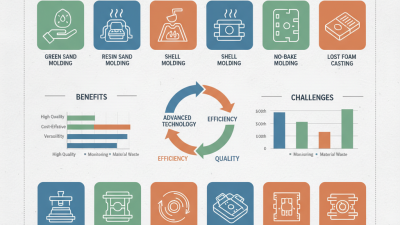
| Casting Processes | More than one production route, such as investment casting, sand casting, or precision shell molding | Different casting routes are suited to different part sizes, geometries, surface-finish requirements, production volumes, and cost targets. | |
| Dimensional Control | Process-specific tolerances supported by calibrated gauges, digital inspection, and documented control plans | Steel casting tolerances vary with the process, alloy, geometry, and casting size; therefore, reliable suppliers define tolerances for each part rather than applying one universal value. | |
| Quality Management | A certified quality management system, traceable inspection records, corrective-action procedures, and lot-level documentation | Formal quality controls make production results repeatable and provide evidence that nonconforming material is identified and controlled. | |
| Non-Destructive Testing | Access to visual inspection, dimensional inspection, dye penetrant or magnetic-particle testing, ultrasonic testing, and radiographic testing when specified | Different methods detect different discontinuities. Surface methods, volumetric methods, and dimensional checks should be selected according to the component’s service risk. | |
| Heat Treatment | Controlled annealing, normalizing, quenching, tempering, or solution treatment according to the selected steel grade | Heat treatment changes hardness, strength, toughness, ductility, and microstructure. Furnace records and hardness or mechanical-test results support batch traceability. | |
| Mechanical Testing | Documented tensile, hardness, impact, or other required tests performed against the applicable material specification | Mechanical testing verifies that the finished casting meets the specified performance requirements rather than relying only on visual acceptance. | |
| Traceability | Heat number, melt record, charge materials, pouring data, heat-treatment history, inspection results, and material certificates linked to each lot | End-to-end traceability supports audits, root-cause analysis, regulated-industry documentation, and controlled product recalls when necessary. | |
| Tooling and Engineering | CAD-based mold and pattern design, casting simulation, riser and gating optimization, manufacturability review, and controlled drawing revisions | Engineering controls reduce shrinkage, porosity, misruns, inclusions, distortion, and avoidable tooling changes before production begins. | |
| Surface and Machining Support | Defined cleaning, fettling, shot blasting, grinding, heat-treatment finishing, and optional CNC machining capabilities | Integrated post-casting services reduce handling between suppliers and help maintain dimensional relationships from casting through final machining. | |
| Production Scale | Demonstrated ability to manage prototype, low-volume, and repeat-production work with capacity planning and documented lead times | A strong manufacturer can select an economical production route while maintaining quality when volumes or delivery requirements change. | |
| Delivery Reliability | Published production milestones, realistic quotation assumptions, safety-stock or capacity planning where appropriate, and performance tracking | Reliable scheduling depends on tooling, melt capacity, heat treatment, inspection, machining, and logistics—not only on furnace availability. | |
| Environmental Management | Measured energy, metal yield, sand use, emissions, water use, and waste streams, supported by a formal environmental management approach | Steel foundries are energy- and resource-intensive. Measurement and process improvement can reduce environmental impact and operating cost. | |
| Safety and Compliance | Documented controls for molten metal, heat, dust, noise, lifting equipment, personal protective equipment, and worker training | Foundry safety requires specific controls because molten metal, furnaces, cranes, silica-containing materials, and high-temperature operations create significant hazards. | |
| Customer Communication | Clear design-for-casting feedback, technical quotation, sample approval process, nonconformance reporting, and responsive engineering support | Early technical communication prevents unsuitable geometry, unrealistic tolerances, incomplete specifications, and avoidable production delays. |
Note: The benchmarks above are general industry evaluation criteria. Actual acceptance limits should be defined by the applicable material standard, drawing, purchase specification, casting process, and service requirements.