0086-15925850312

Choosing the Top 10 Die Casting Mold Parts Manufacturers Worldwide requires more than comparing product catalogs. These components affect mold accuracy, cycle time, maintenance, and final casting quality. A small ejector pin defect can create flash, downtime, or repeated machining work. This guide examines manufacturers through practical and technical criteria. We consider material grades, heat treatment, dimensional tolerances, surface finishing, and production consistency. We also review mold bases, slides, cores, inserts, guide systems, and custom components. Technical documentation matters. So does the supplier’s ability to explain it clearly.
Reliable manufacturers usually provide inspection records, application guidance, and responsive engineering support. Their experience should appear in real production details, not only polished marketing language. We look for evidence of quality systems, export capability, customization, and after-sales communication. Delivery stability also matters when a delayed component stops an entire tooling project. Short samples help. Factory capacity matters too. However, public information is uneven, and not every company discloses comparable data. That limitation deserves attention.
The manufacturers in this overview are compared for suitability, not simply fame or size. Buyers should verify current certifications, tolerances, lead times, and regional service before placing an order. A supplier that performs well for automotive molds may not suit compact electronics tooling. Local machining conditions, steel preferences, and technical communication can change the decision. No ranking is perfect. Markets change, and supplier performance can vary by project. Still, this comparison offers a practical starting point for engineers, mold makers, and purchasing teams seeking dependable Die Casting Mold Parts.
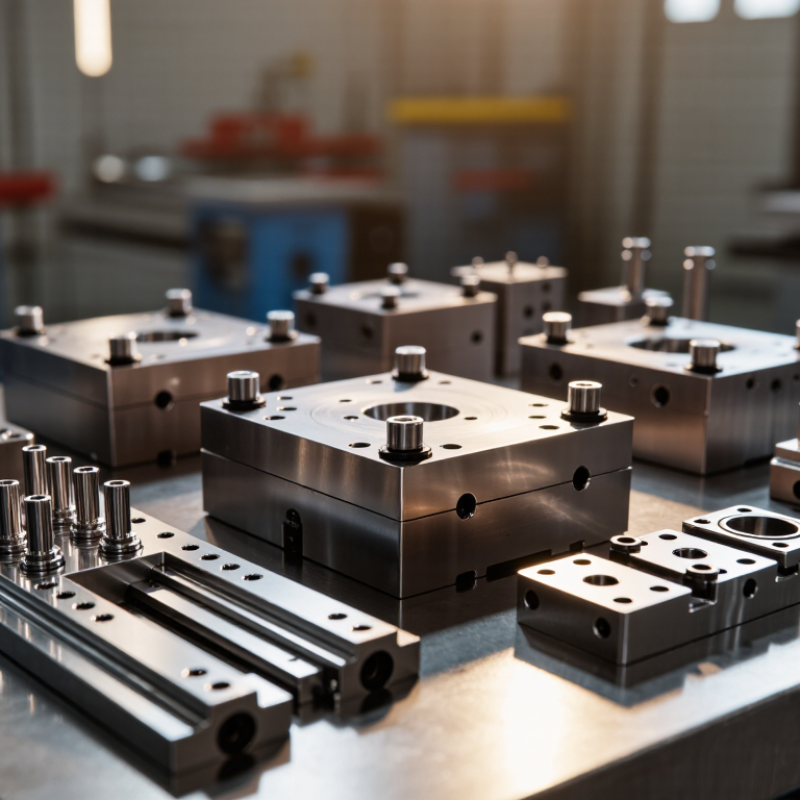
Die casting mold parts are the working components inside a die casting tool. They include mold inserts, cores, slides, ejector pins, guide pillars, gates, and cooling channels. Each part controls how molten metal fills, cools, and leaves the mold. A small mismatch can create flash, air pockets, sticking, or uneven wall thickness.
Their importance is growing with demand for lighter aluminum components. Grand View Research’s 2024 market analysis estimated the global die casting market at about USD 87 billion in 2023. It also projected continued growth through 2030. This pressure makes mold reliability a production issue, not merely a tooling detail. NADCA’s Product Specification Standards emphasize controlled dimensions, surface quality, and repeatable casting performance. In practice, a worn ejector pin may stop an automated line, while a poorly designed cooling channel can extend cycle time. The expensive lesson is often discovered late.
Tips: Check part hardness, coating, tolerances, and heat resistance before approval. Match steel selection to alloy temperature and production volume. Inspect vents and cooling channels during maintenance, not only after defects appear. Keep inspection records with actual measurements. A catalog number alone proves little.
Experience shows that mold parts rarely fail alone. Thermal fatigue, lubrication, alignment, and operator habits interact. Still, reports can simplify reality. A projected market figure does not guarantee every tool will perform well. Trial shots, measured wear, and honest process reviews remain essential for dependable die casting.
Evaluating die casting mold parts manufacturers worldwide requires more than comparing unit prices. Grand View Research estimated the global die casting market at about USD 77.1 billion in 2023, with continued growth through 2030. That expansion increases pressure on mold suppliers, especially for automotive and energy components. Ask for material certificates, heat-treatment records, dimensional inspection reports, and traceable production batches. A polished sample proves little.
I would examine cavity inserts, cores, ejector pins, slides, and cooling components separately. Check hardness, surface finish, thermal-fatigue resistance, and replacement lead times. For critical parts, request coordinate-measuring-machine results and process capability data. ISO 9001 certification supports reliability, but it does not replace technical evidence. I learned that lesson after accepting a supplier’s broad tolerance statement.
Look closely.
The International Energy Agency reported that global electric-car sales exceeded 17 million in 2024. This trend may increase demand for larger aluminum castings and more complex tooling. Manufacturers should therefore explain how they manage distortion, porosity risks, and thermal cycling. Ask for documented case studies, not vague claims. Also compare communication quality across time zones, packaging methods, and emergency support. My own evaluation would include a small trial order, although even that can miss long-term failure patterns. A lower price can hide faster wear, inconsistent steel, or expensive downtime.
A credible top-ten ranking of die casting mold parts manufacturers needs more than sales figures. The strongest companies usually supply ejector pins, sleeves, cores, inserts, slides, and cooling components for aluminum, magnesium, and zinc applications. They also support tight tolerances, heat treatment, surface finishing, and fast replacement programs. Global buyers often compare tool life, dimensional stability, delivery reliability, and technical assistance across regions.
Market reports show why this comparison matters. Grand View Research estimated the global die casting market at more than USD 90 billion in 2023, with automotive applications holding the largest share. The International Energy Agency reported that electric vehicle sales exceeded 17 million units worldwide in 2024. That shift increases demand for larger structural castings and durable mold components. The top ten manufacturers should therefore demonstrate experience with high-pressure cycles, complex cooling paths, and reduced scrap rates.
Numbers can mislead.
A reliable ranking should combine audited production capacity, international service coverage, quality certifications, and customer retention. ASTM-based material testing and ISO 9001 systems provide useful evidence, but they do not guarantee practical performance. Some suppliers publish impressive catalogs yet offer limited engineering support. That is where buyers should remain cautious. Pilot orders, sample inspections, and documented wear data reveal more than polished marketing claims.
Comparing the top ten die casting mold parts manufacturers requires more than checking catalog size. Product depth matters. Strong suppliers typically produce H13 inserts, ejector pins, slides, cores, cooling components, and replacement assemblies. Their machining range should support tight fits, polished cavities, and complex conformal channels. According to Grand View Research’s 2024 die casting market assessment, the global market is expected to expand at roughly 6% annually through 2030. This growth increases demand for durable tooling components and shorter replacement cycles.
Capability separates experienced manufacturers from simple machining vendors. Look for vacuum heat treatment, controlled nitriding, wire EDM, five-axis machining, and coordinate-measuring inspection. Simulation support also matters when engineers must reduce porosity or improve cooling balance. The North American Die Casting Association recommends documented process control for die materials, heat treatment, and dimensional verification. In practice, suppliers with traceable steel certificates and inspection reports usually provide more consistent service. Small details count.
However, comparisons are not perfectly clean. Published tolerances often use different measurement conditions. One supplier may quote machining accuracy, while another reports final assembled accuracy. That difference can mislead purchasing teams. The best evaluation combines sample parts, measured wear data, repair response, and realistic lead times. The International Energy Agency’s Global EV Outlook 2024 reports continued electric vehicle growth, increasing pressure for lightweight aluminum components and reliable high-volume tooling. Manufacturers prepared for that pressure usually offer rapid insert replacement, advanced cooling design, and engineering feedback—not merely lower prices.
Die casting mold parts are moving from passive hardware toward measured, replaceable systems. In current shop trials, sensors track insert temperature, cavity pressure, and cooling flow. This data helps engineers spot blocked channels before flashes or short shots spread. Ejector pins and slides are also receiving closer attention. Small alignment errors can create burrs, uneven wear, and costly downtime. The trend is clear, but implementation remains uneven. Many facilities still record readings manually.
Additive manufacturing is changing cooling insert design. Conformal channels can follow difficult cavity shapes and shorten thermal paths. Better heat control may reduce cycle variation and extend die life. However, printed metal parts need density checks, surface finishing, and leak testing. They are not automatically better. That warning matters. Advanced coatings are also gaining ground. Hard, low-friction surfaces can resist soldering and abrasion in high-load areas. Engineers increasingly combine simulation with physical inspection, comparing predicted stress against wear marks after production runs.
Future mold parts will likely become more modular and traceable. Standardized inserts, replaceable wear plates, and digital maintenance records can simplify repairs. Recycled steel and lower-energy heat treatment may reduce environmental impact. Suppliers must still verify material performance. Skilled technicians remain essential. Software can flag abnormal temperatures, but it cannot explain every crack. Not every part succeeds. The strongest progress will come from practical testing, not impressive dashboards. Some designs will fail early. That is useful evidence when teams document why. Reliable production still depends on clean steel, accurate machining, proper venting, and disciplined maintenance.
| Rank | Die Casting Mold Part Category | Common Materials | Primary Applications | Typical Manufacturing Methods | Key Quality Requirements | Trend Shaping Future Demand |
|---|---|---|---|---|---|---|
| 1 | Cavity and Core Inserts | H13 tool steel H11 tool steel Premium hot-work steel | Main forming surfaces for automotive structural parts, transmission housings, motor housings and industrial castings. | CNC milling, wire EDM, sinker EDM, heat treatment, polishing and surface texturing. | High thermal-fatigue resistance, stable hardness, accurate parting-line geometry and controlled surface roughness. | Greater use of optimized cooling channels, conformal cooling and simulation-driven insert design to reduce cycle time and porosity. |
| 2 | Slide Cores and Side Actions | H13 steel Hardened alloy steel Carbide wear inserts | Formation of undercuts, lateral holes, ribs and complex locking features that cannot be released by straight mold opening. | Precision milling, EDM, grinding, nitriding and wear-resistant coating. | Smooth movement, accurate alignment, low friction, high wear resistance and reliable return positioning. | More compact side actions, low-friction coatings and sensor-assisted position monitoring for automated die casting cells. |
| 3 | Ejector Pins and Ejector Sleeves | H13 steel High-speed steel Nitrided steel | Removal of solidified castings from the die while minimizing marks, deformation and sticking. | Centerless grinding, heat treatment, nitriding, cylindrical grinding and precision lapping. | Straightness, dimensional consistency, smooth sliding fit, resistance to buckling and thermal wear. | Increased demand for longer-life pins, improved lubrication systems and condition monitoring to reduce unplanned stoppages. |
| 4 | Guide Pillars and Guide Bushings | Hardened tool steel Bearing steel Bronze-based alloys | Accurate alignment of die halves, inserts, plates and moving mold components during repeated production cycles. | Turning, grinding, heat treatment, honing and precision assembly. | Tight concentricity, controlled clearance, high load capacity and resistance to galling. | Modular alignment systems and self-lubricating bushings are becoming more important for high-speed, low-maintenance production. |
| 5 | Sprue Bushings | H13 tool steel Hot-work steel Surface-coated steel | Transfer of molten aluminum, magnesium or zinc alloy from the injection sleeve into the die runner system. | CNC turning, deep-hole machining, polishing, heat treatment and coating. | Accurate bore geometry, thermal-shock resistance, erosion resistance and smooth metal flow. | Improved flow analysis, thermal management and protective coatings are supporting longer service life and fewer soldering defects. |
| 6 | Runners, Gates and Overflow Inserts | Hot-work tool steel Hardened steel Wear-resistant alloys | Control of molten-metal filling, air evacuation, oxide collection and feeding of complex casting geometries. | High-speed machining, EDM, flow simulation, polishing and localized heat treatment. | Balanced filling, low turbulence, accurate cross-sections and resistance to thermal erosion. | Digital filling simulation and optimized gating are reducing scrap, improving casting integrity and supporting thinner wall sections. |
| 7 | Cooling Channel Components | Tool steel Copper alloys Stainless steel fittings | Removal and control of heat in cavity inserts, cores, slides and high-temperature die areas. | Deep-hole drilling, gun drilling, sealing, additive manufacturing and precision installation. | Leak-free circuits, uniform heat transfer, accurate channel placement and resistance to corrosion and blockage. | Conformal cooling, thermal imaging and digitally balanced cooling layouts are becoming central to cycle-time and die-life improvements. |
| 8 | Die Clamps, Plates and Retainers | Alloy steel Pre-hardened steel Structural steel | Structural support and secure positioning of inserts, slides, ejector systems and cooling components. | CNC milling, drilling, tapping, grinding, stress relieving and modular assembly. | Flatness, stiffness, bolt-hole accuracy, resistance to distortion and repeatable assembly. | Standardized modular plates and digitally controlled assembly are helping shorten mold-change time and simplify maintenance. |
| 9 | Wear Plates and Replaceable Bushings | Hardened tool steel Carburized steel Bronze alloy | Protection of sliding interfaces, support of moving components and reduction of maintenance cost in high-cycle dies. | Grinding, heat treatment, coating, honing and replaceable-component assembly. | Low friction, high contact strength, wear consistency and easy replacement without damaging the main die body. | Advanced coatings, dry-running materials and predictive maintenance programs are extending replacement intervals. |
| 10 | Sensors and Die Monitoring Components | Industrial sensors Thermocouples Pressure-rated components | Measurement of die temperature, cavity pressure, cooling performance, lubrication status and component position. | Precision machining, sensor integration, wiring protection and data-system commissioning. | High-temperature stability, repeatable readings, electrical protection and compatibility with production-control systems. | Industry 4.0 connectivity, real-time quality control, artificial intelligence and predictive die maintenance are expanding rapidly. |