0086-15925850312

Choosing the right prototype supplier can shape an entire product development cycle. A missed tolerance, unclear material grade, or late shipment may delay testing by weeks. For global buyers, selecting reliable Prototype Parts suppliers requires more than comparing prices. It requires evidence, technical communication, and consistent quality.
This guide reviews ten suppliers that serve international engineering teams, startups, and established manufacturers. The evaluation considers machining capabilities, 3D printing technologies, sheet metal work, finishing options, inspection methods, and production flexibility. We also examine quotation speed, engineering support, sample quality, packaging, and delivery coordination. These details matter when a prototype must fit a real assembly, survive functional testing, or impress investors.
Practical experience shows that the cheapest quote is rarely the complete answer. A supplier may offer an attractive unit price but charge heavily for tooling, revisions, or shipping. Ask about tolerances, surface finishes, quality reports, and nonconforming parts before placing an order. Small questions prevent expensive surprises.
Some rankings remain subjective. That deserves attention. Supplier performance can vary by project, region, material, and order volume. A company that excels at aluminum enclosures may not suit medical-grade plastics or complex silicone components. Therefore, this overview is a starting point, not a final purchasing decision. Buyers should request current samples, verify certifications independently, and test communication before committing to a large project. Good prototypes should reduce uncertainty, not simply create attractive samples.
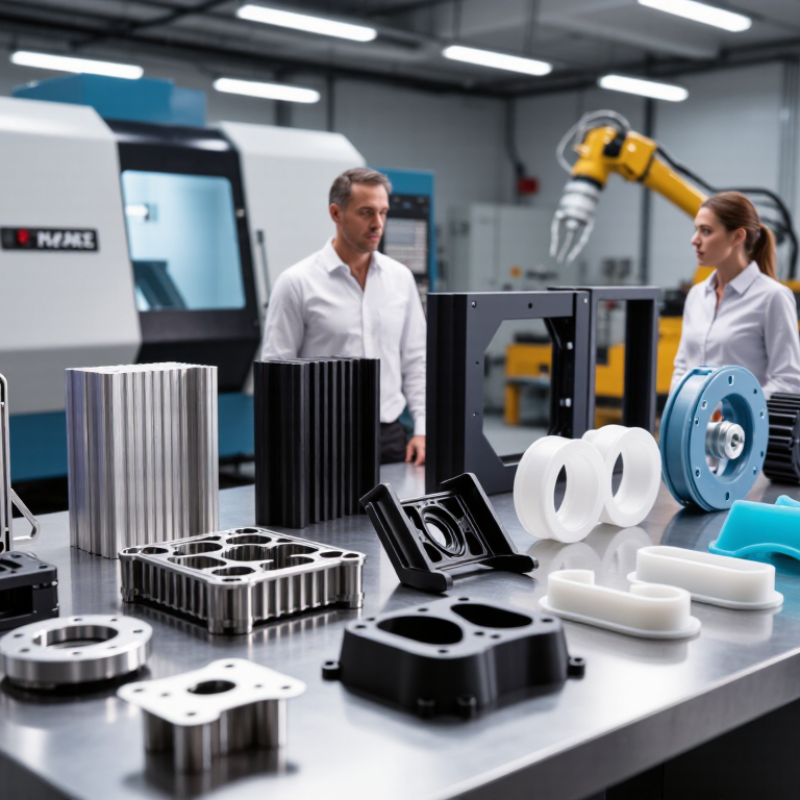
Prototype parts suppliers turn early designs into physical components for testing, measurement, and engineering review. Their work may include CNC machining, 3D printing, sheet-metal fabrication, surface finishing, and small-batch assembly. A capable supplier also checks drawings, tolerances, material choices, and inspection requirements before production begins. This practical feedback can reveal a weak wall, an unreachable hole, or an expensive manufacturing step.
Global buyers need these suppliers because development teams rarely work within one location or one manufacturing process. The 2024 Wohlers Report valued the global additive manufacturing industry at 20.035 billion dollars in 2023, showing the growing importance of rapid digital production. Yet speed alone is not enough. Prototype parts must match engineering specifications, arrive safely, and include traceable inspection records. ISO 9001-based quality systems can support consistent purchasing and corrective actions across borders.
Supplier selection still involves uncertainty. A polished website does not prove stable tolerances. I would examine sample inspection reports, material certificates, process capability data, and response times before approving a trial order. The 2023 State of Manufacturing Report found that supply-chain disruption remains a major operational concern for manufacturers. Prototype suppliers can reduce that exposure through local process knowledge, transparent communication, and flexible production capacity. However, they cannot remove every risk. Designs change, shipping delays happen, and early assumptions sometimes fail. Small pilot orders and clearly defined acceptance criteria remain wiser than rushing directly into volume production.
When comparing prototype parts suppliers worldwide, price should not dominate the decision. A supplier’s process control, engineering support, and communication often determine whether a prototype becomes a reliable production design. The 2024 Wohlers Report valued the global additive manufacturing industry at approximately $20.0 billion in 2023, with 13.5% annual growth. This expansion increases supplier choice, but also makes verification more important.
Start with measurable criteria. Compare quoted lead time against actual delivery records, not marketing promises. Request material certificates, inspection reports, dimensional data, and sample production photos. Ask whether the supplier supports design-for-manufacturing reviews before fabrication. Useful checks include tolerance capability, surface finish, minimum wall thickness, and batch consistency. Evidence matters. A supplier offering many materials may still lack depth in your specific process.
Digital communication deserves careful attention. Deloitte’s 2023 Global Smart Manufacturing Survey reported that 86% of manufacturers expect smart manufacturing to become a major competitiveness driver within five years. Suppliers should therefore provide clear online quoting, revision tracking, secure file handling, and rapid technical feedback. Yet software cannot replace engineering judgment. I would test responsiveness with a small, clearly documented order before assigning complex work. A low quote can hide rework, customs delays, weak packaging, or unclear ownership of design changes. Compare total landed cost, not only the invoice. My own evaluation would leave room for uncertainty, because supplier performance can change after scale, material, or regional logistics change.
Choosing among the top 10 prototype parts suppliers requires more than comparing hourly prices. Global buyers should examine machining accuracy, material control, communication, and delivery stability. A capable supplier can produce aluminum housings, stainless steel brackets, or small plastic enclosures with clear inspection records. Ask for dimensional reports, surface-finish samples, and realistic tolerances before approving production. Vague promises often create expensive revisions.
Experience matters in prototype work. Suppliers should understand CNC machining, 3D printing, sheet metal forming, and low-volume molding. They should also explain design risks instead of accepting every drawing without questions. Reliable teams confirm critical dimensions, thread details, edge conditions, and packaging requirements. Manufacturing evidence, calibrated tools, and traceable material certificates strengthen trust. Still, no supplier performs perfectly on every project. A rushed sample may expose weaknesses that a polished quotation hides.
Tips: Send a fully dimensioned drawing, 3D model, material grade, finish, quantity, and delivery target. Request a first-article inspection before repeating the order. Compare response quality, not just price. A supplier that notices a thin wall or unreachable tolerance may save both time and money. However, buyers should verify every claim independently, especially when shipping across borders. Small misunderstandings remain common. Clear written approval reduces them.
Top 10 Prototype Parts Suppliers for Global Buyers
How to Evaluate Materials, Processes, Quality, and Lead Times
A reliable supplier should explain material choices, not simply offer the lowest quote. Ask for resin grades, metal specifications, and traceability records. For plastics, confirm shrinkage, heat resistance, and surface requirements. For metals, review hardness, alloy composition, and finishing options. Sample certificates should match the actual production batch. Small details matter.
Process capability deserves close inspection. A supplier may support CNC machining, 3D printing, sheet metal forming, or injection molding. However, advertised equipment does not prove consistent results. Request process photographs, tolerance examples, and inspection reports from similar parts. Check whether critical dimensions receive documented measurement. A clear quality plan should define sampling, gauges, and corrective actions.
Lead time needs more than a promised shipping date. Separate engineering review, material purchasing, production, inspection, and transport. Ask what happens when a drawing changes late. Reliable teams provide milestone dates and identify capacity risks early. Communication should include time-zone coverage and written change control. Yet no evaluation is perfect. A polished report can hide weak shop-floor discipline, so a small paid trial often reveals more than a long presentation. Review packaging, labeling, surface protection, and the first inspection data before approving larger prototype volumes.
| Rank | Supplier Profile | Typical Production Region | Common Materials | Core Prototype Processes | Typical Dimensional Capability | Quality Evidence to Request | Typical Lead Time | Typical MOQ | Best Fit for Global Buyers | Indicative Evaluation Score |
|---|---|---|---|---|---|---|---|---|---|---|
| 1 | Integrated CNC and Finishing Partner | East Asia | Aluminum, stainless steel, carbon steel, brass, engineering plastics | 3-axis and 5-axis CNC machining, bead blasting, anodizing, passivation, powder coating | Approximately ±0.05 mm for standard features; tighter tolerances subject to drawing and inspection plan | First Article Inspection report, material certificates, CMM reports, process traceability | 5–15 working days | 1–10 pieces for most prototype work | Functional housings, brackets, fixtures, and precision mechanical parts | 9.1 / 10 |
| 2 | Rapid Sheet-Metal Fabrication Specialist | East and Southeast Asia | Cold-rolled steel, stainless steel, aluminum, galvanized sheet | Laser cutting, CNC bending, welding, riveting, powder coating, silk screening | Typically ±0.10–0.25 mm, depending on material thickness and bend geometry | Dimensional inspection report, weld inspection records, coating-thickness results | 5–12 working days | 1–20 pieces | Enclosures, control panels, chassis, covers, and low-volume assemblies | 8.9 / 10 |
| 3 | Industrial 3D Printing Bureau | North America and Europe | Nylon, photopolymer resin, TPU, carbon-fiber-filled polymer, metal powder | SLS, MJF, SLA, FDM, selective laser melting, vapor smoothing | Usually ±0.10–0.30 mm for polymer parts; metal capability varies by geometry and machine | Build orientation record, material batch information, dimensional report, surface-finish specification | 2–7 working days | 1–25 pieces | Fast design validation, complex internal geometries, ergonomic models, and lightweight parts | 8.8 / 10 |
| 4 | Prototype Injection-Molding Specialist | China, South Korea, and Southeast Asia | ABS, PC, PC/ABS, POM, PA, PP, TPE, glass-filled polymers | Aluminum prototype tooling, soft tooling, injection molding, insert molding, texture finishing | Commonly ±0.10–0.30 mm; shrinkage and resin behavior must be included in the design review | Tooling trial report, resin certificate, first-piece approval, dimensional inspection report | 15–30 working days including prototype tooling | 10–500 pieces | Plastic parts requiring production-like appearance, fit, and functional testing | 8.7 / 10 |
| 5 | European Precision Machining Partner | Central and Eastern Europe | Aluminum, stainless steel, titanium, brass, PEEK, POM, PA | High-precision CNC milling and turning, grinding, laser marking, electropolishing | Approximately ±0.02–0.05 mm on controlled features, subject to part size and inspection method | ISO 9001 quality system, CMM report, calibration records, full material traceability | 10–25 working days | 1–10 pieces | Medical, laboratory, robotics, and high-accuracy industrial components | 8.6 / 10 |
| 6 | North American CNC Prototype Shop | United States and Canada | Aluminum, stainless steel, tool steel, brass, Delrin, nylon, PEEK | 3-axis and 5-axis CNC, turning, wire EDM, laser marking, assembly | Often ±0.05 mm for standard work; critical dimensions can be quoted to tighter limits | Inspection plan, FAI report, material and finishing certificates, nonconformance procedure | 7–20 working days | 1–25 pieces | Engineering teams needing close communication, domestic support, and rapid design changes | 8.5 / 10 |
| 7 | Silicone and Urethane Casting Provider | Europe and East Asia | Polyurethane, silicone rubber, ABS-like resin, PP-like resin, transparent resin | Silicone mold making, vacuum casting, soft tooling, color matching, overmolding | Typically ±0.15–0.30 mm, with additional variation possible around parting lines and flexible features | Resin technical data sheet, color approval sample, mold-life estimate, visual inspection standard | 7–15 working days | 5–100 pieces | Low-volume housings, soft-touch parts, appearance models, and pre-production testing | 8.3 / 10 |
| 8 | Metal Additive Manufacturing Specialist | Western Europe and North America | 316L stainless steel, aluminum alloys, tool steel, cobalt-chrome, titanium | Laser powder-bed fusion, heat treatment, machining, shot peening, surface finishing | Commonly ±0.10–0.20 mm before secondary machining; orientation and support removal affect results | Powder-batch certificate, density test, heat-treatment record, CT or dimensional inspection where required | 10–25 working days | 1–10 pieces | Lightweight lattices, conformal cooling, complex metal channels, and low-volume specialist parts | 8.2 / 10 |
| 9 | Low-Volume Forming and Composite Partner | Europe and Southeast Asia | Carbon-fiber composites, fiberglass, epoxy, polyurethane, sheet aluminum, ABS | Vacuum forming, compression molding, composite lay-up, trimming, bonding, painting | Usually ±0.30–0.80 mm for formed parts; tooling and material thickness strongly influence accuracy | Material batch records, laminate schedule, cure record, visual acceptance criteria, bond-test results | 12–30 working days | 5–100 pieces | Automotive trim, drone structures, sports equipment, large covers, and lightweight panels | 8.0 / 10 |
| 10 | Prototype Assembly and Test Integrator | Global multi-site operations | Machined metals, molded plastics, sheet metal, electronics, cables, elastomers | Multi-process sourcing, subassembly, wiring, functional testing, packaging, export logistics | Depends on the selected manufacturing process; inspection is normally defined by the customer drawing and control plan | Supplier quality plan, incoming inspection, functional test report, serialization, change-control records | 15–35 working days | 1–50 complete assemblies | Projects requiring one accountable partner for parts, assembly, testing, and international delivery | 7.9 / 10 |
Choosing a prototype parts supplier requires more than comparing hourly rates. Match the supplier’s process to your part geometry, material, tolerance, and expected quantity. A CNC supplier may suit aluminum housings, while additive manufacturing can support complex internal channels. The 2024 Wohlers Report valued the global additive manufacturing industry at approximately 20 billion dollars in 2023. This growth gives buyers more options, but quality varies widely.
Ask for inspection samples, material certificates, process capability data, and clear dimensional reports. Verify whether the supplier can maintain your critical tolerances across several parts, not only one impressive sample. ISO’s 2023 Survey recorded more than 1.2 million ISO 9001 certificates worldwide. Still, certification alone does not guarantee strong prototype control. I have seen technically qualified suppliers miss basic communication details. That lesson remains uncomfortable, but useful.
Tips: Send a complete drawing package with marked critical features. Request a manufacturing review before ordering. Compare lead time, revision handling, inspection methods, and shipping protection. Ask how rejected parts are corrected. A low quote can hide weak feedback and costly rework. For global projects, confirm units, time zones, packaging, and export documentation early. Leave room for one revision cycle. Prototype plans often change.