0086-15925850312

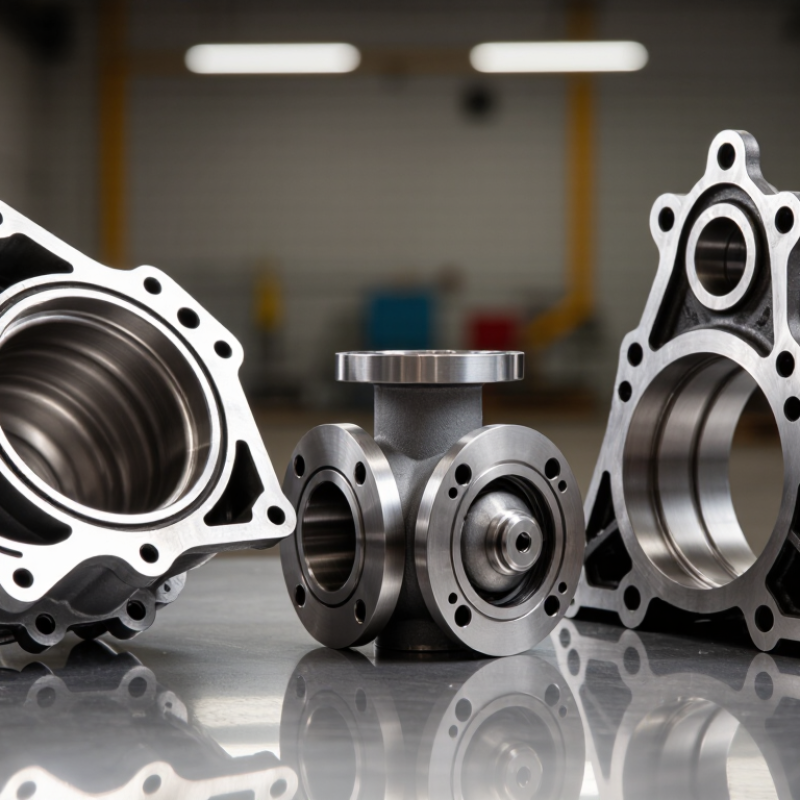
Casting Parts can help manufacturers turn complex shapes into durable components with fewer separate pieces. A pump housing, valve body, or machine bracket may include curves, ribs, and internal passages that are difficult to produce from solid stock. Casting can form these features near their final shape, reducing some machining and assembly work. The right process depends on the part, production volume, material, and required tolerances.
Details matter. Wall thickness, draft angles, and gating design affect how metal fills and cools inside the mold. Poorly considered features can lead to shrinkage, porosity, or extra finishing. A casting supplier should be able to explain process limits, material options, inspection methods, and how sample parts will be evaluated. Drawings and early design reviews help reveal problems before tooling costs are committed.
Casting is not automatically the cheapest or best choice. Tooling can be costly, and critical surfaces may still need machining or inspection. That is worth weighing. For a high-volume component with a stable design, the initial tooling investment may be balanced by repeatable production and reduced assembly. For a short run, another process could make more sense. Reliable decisions come from comparing the part’s function, expected quantities, quality needs, and total production costs—not from choosing a process by name alone.
Why Choose Casting Parts for Your Manufacturing Needs?
What Casting Parts Are and How They Are Made
Casting parts are components shaped by pouring molten metal into a prepared mold. The metal cools and hardens inside the cavity, taking on its shape. This method can produce complex forms, including pump housings, valve bodies, and brackets. Some parts need little machining; others require careful finishing.
A foundry begins with a part design and a pattern, which helps form the mold cavity. Workers or automated systems prepare the mold, then melt and pour metal through channels called gates. After cooling, the casting is removed, cleaned, and inspected. Sand casting suits varied shapes and production volumes, while die casting uses a reusable metal mold for repeatable parts. Details matter. Thin walls, sharp corners, and uneven cooling can cause defects or costly rework.
The scale of the industry reflects casting’s broad use. Modern Casting’s 2023 World Casting Production Census reported 113.6 million metric tons of castings produced worldwide in 2022. Grand View Research estimated the global metal casting market at USD 165.3 billion in 2023. These figures describe a large, established manufacturing process, but they do not guarantee that every design suits casting. A small radius or revised wall thickness may improve mold filling, though design changes can affect weight and cost. Trade-offs deserve review early.
Casting parts can be made from aluminum, iron, steel, stainless steel, and copper alloys. Each material behaves differently when heated and cooled. Aluminum is relatively light and can suit housings or brackets. Iron offers useful wear resistance, while stainless steel can help when corrosion resistance matters. Copper alloys conduct heat well, but material cost and part weight may affect the decision.
The casting method should match the part’s shape, required quantity, and finish. Sand casting handles large or complex shapes and works with many metals, though surfaces may need machining. Investment casting can produce detailed features with less finishing. Die casting is suited to higher-volume production, especially with aluminum or zinc alloys. Permanent-mold casting can offer consistent results for some nonferrous parts. No method is perfect. A thin wall that looks simple on a drawing may fill poorly, so engineers should review wall thickness, tolerances, and machining needs with the foundry before fixing the design.
Tips: Share the part’s operating temperature, expected loads, and critical dimensions when requesting a quote. Ask for sample inspection data, not just a process description. Small details matter. Also consider whether the selected alloy is available in the chosen casting process; otherwise, a promising design may need revision.
Casting parts help manufacturers meet requirements that are difficult to achieve with machining alone. A mold can form ribs, curved passages, mounting bosses, and thick-to-thin transitions in one component. That can reduce assembly steps and material waste. It also gives engineers room to select metals for strength, heat resistance, or weight. Small details matter: a poorly placed gate or uneven wall thickness can cause defects, so design and process review should happen early.
Production volume is another key factor. The American Foundry Society’s industry profile estimates U.S. metalcasting shipments at roughly $44 billion annually, reflecting casting’s established role across manufacturing. For high-volume parts, reusable tooling can spread its cost across many units. The process also supports a wide range of sizes, from compact fittings to large machine housings. That flexibility is useful. But casting is not automatically the cheapest choice; tooling, finishing, tolerances, and inspection all affect the final cost.
Casting can also support changing product needs. The International Energy Agency’s Global EV Outlook 2024 reports nearly 14 million electric car sales in 2023, about 18% of global car sales. This shift increases demand for carefully engineered components, including lightweight housings and structural parts. A casting supplier can help assess alloy selection, tooling, and achievable tolerances before production. Still, early estimates can miss real-world variation. Trial runs and measured inspection results are worth the time.
Casting compares favorably with machining when a part has complex contours, thick sections, or internal cavities. Molten metal fills a mold, creating shapes that might require several machined pieces or welded joints. For example, a pump housing can include curved passages in one component. This can reduce assembly work and material waste. The advantage is clearest when production volume can justify the mold and tooling costs.
Tips: Compare the complete part, not just the unit price. Include tooling, machining, inspection, and expected production volume. Ask how critical dimensions and internal features will be checked.
Machining remains a strong choice for prototypes, small batches, and features needing tight tolerances. It removes material from solid stock, so simple parts can be made without casting tooling. Fabrication may suit straightforward plate or sheet designs, especially when easy access and repair matter. Casting is not automatically cheaper or more precise; results vary with alloy, mold design, and process control. Some cast surfaces need machining, and defects can occur. A careful review of the drawing and intended use may change the best choice.
Why Choose Casting Parts for Your Manufacturing Needs? Which Factors Guide the Selection of Casting Parts
Choosing a casting starts with the part’s job, not the mold. Define its loads, operating temperature, corrosion exposure, and required service life. Then compare alloys: aluminum can reduce weight, while iron often offers stiffness and vibration damping. Geometry matters too. Deep cavities, thin walls, and changing section thicknesses affect filling, cooling, and defect risk. A sharp corner on a drawing may become a stress concentrator in service. Small detail, big consequence.
Production volume changes the economics. Sand casting can suit larger or complex parts with modest tooling investment; permanent-mold or die casting may fit repeat, high-volume production. The World Foundry Organization’s 2022 census reported roughly 109 million metric tonnes of global casting output, illustrating the process’s industrial scale, not that one method fits every part. Ask suppliers for achievable tolerances, machining allowance, surface finish, and inspection plans before approval. Compare the full cost, including tooling, scrap, machining, and lead time. I would question any quote that treats these as fixed. A prototype can reveal a gate or wall-thickness problem, but it cannot fully represent years of production variation. Check the assumptions.
| Selection factor | Sand casting | Investment casting | Die casting | Permanent-mold casting |
|---|---|---|---|---|
| Common materials | A wide range of ferrous and nonferrous alloys, including iron, steel, aluminum, and bronze. | Many steel, stainless-steel, and nonferrous alloys; alloy availability depends on the foundry. | Commonly aluminum, zinc, and magnesium alloys; copper alloys are also used in some processes. | Often aluminum, magnesium, and copper alloys; the process is generally suited to nonferrous metals. |
| Part geometry | Accommodates simple or complex shapes, large cavities, and cores for internal passages. | Well suited to intricate shapes, thin sections, and details that may reduce machining needs. | Effective for detailed parts with thin walls and repeatable features, subject to die design and metal flow. | Supports repeatable shapes and useful detail; geometry must allow removal from the reusable mold. |
| Part size and weight | Can produce very large and heavy components, depending on the foundry’s molding and handling capacity. | Commonly selected for small-to-medium precision parts; practical limits depend on equipment and alloy. | Part size is constrained by die dimensions, locking force, and the capacity of the casting machine. | Size is limited by mold design and handling; often used for small-to-medium nonferrous components. |
| Dimensional consistency | Typically less precise than processes using permanent tooling; critical features may require machining. | Generally offers good dimensional detail; tolerances depend on part size, geometry, and foundry capability. | Reusable dies support consistent dimensions in production; specified tolerances should be confirmed with the supplier. | Reusable molds can provide more repeatable dimensions than expendable sand molds; machining may still be needed. |
| Surface finish | Usually has a comparatively rough as-cast surface; cleaning, coating, or machining may be required. | Can produce a relatively smooth surface and fine detail, though finishing may still be needed. | Often produces a good as-cast surface; gates, flash, and functional faces may need finishing. | Generally provides a smoother surface than sand casting, with finishing needs depending on the application. |
| Production volume | Often practical for prototypes, low volumes, and large parts; molds are generally made for individual pours. | Suitable for prototypes and production runs where complex geometry or detail justifies the process. | Often economical for medium-to-high volumes because the die is reused over many cycles. | Often suited to repeated production where reusable molds can spread tooling costs across parts. |
| Tooling and cost considerations | Pattern costs are often comparatively modest, but labor and finishing requirements affect total part cost. | Requires pattern and ceramic-shell preparation; overall cost reflects process steps, material, and detail. | Dies require substantial upfront investment; high output can help offset tooling costs. | Reusable molds need upfront investment, generally less complex than high-pressure die tooling. |
| Typical selection fit | Large housings, machine bases, and parts where alloy flexibility or low tooling cost matters. | Complex, detailed components where near-net shape and material choice are important. | Repeat-production components such as housings and brackets made from suitable nonferrous alloys. | Repeat-production nonferrous parts where reusable molds and improved consistency are beneficial. |
Process capability and cost vary with alloy, part dimensions, design, tooling, and foundry equipment. Confirm tolerances, surface requirements, and production assumptions with the selected foundry.